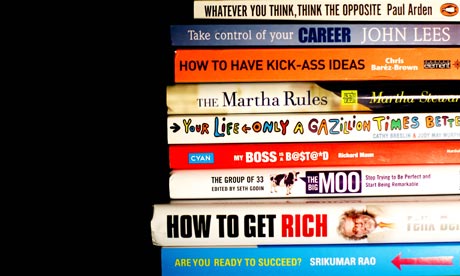
Why resolutions can often just increase problems

Carl Rogers suggested that a lot of the distress or anxiety in our lives comes when there is incongruence between the ideal image of the self which we have,  and our actual lived experience. This anxiety is expressed differently in each person, due to the many ways that the self-image is formed. Around New Years Day we are encouraged, even on some well-meaning sites, to form resolutions for the coming year, to look at the many ways in which we need to change. Now,  reflecting on the discipline needed to establish healthy practices in our lives is a good thing, as is being inspired by other people. And there is often a desire in the winter months to reflect on what brought the deepest joy over the past year and  shed dead wood in preparation for new growth  – or symbolically throw old plates out the window, as the Italians do. So working at our edge gently is always necessary in our lives.  However, over the years, I have come to believe that, instead of helping, a lot of these notions –   and the pre-digested strategies offered –  actually feed the problem, by strengthening the thoughts about an ideal self which we wish to have, and our need to fix ourselves to get it. Ironically, continually setting expectations of sudden growth – frequently encouraged in today’s society – can introduce a subtle violence in how we relate to ourselves and prevent us from deeper happiness, because it feeds three tendencies which our minds have. The first is the temptation to believe that there is a magic time in the future – maybe next year – when we are going to get it “all together”, and our lives will be perfect,  once we do such and such a practice or adopt some latest idea. Second, it encourages us to move away from the life which we actually have , and spend our time in thoughts about the life we would like to have. And,  as we notice again and again in practice, the mind prefers to spend more time in thinking about life than in working with what is actually in front of us, right now.  Thirdly, it stimulates the “comparing mind”, which is happy to evoke a better version of ourselves, which seems a good thing but frequently triggers discouragement and fear rather than a real ability to change. Often making expectations for the future is just a way of running away from relating to the life we actually have.  So,  maybe the best “resolution” is to give up on this notion of fixing oneself, and  rather focus on how we can deepen our lived experiences right now, with all their imperfections.  For most of us, that is where we are called to grow, and our slow commitment to more conscious living is better served by that, rather than by seeking magic changes in the coming weeks which will bring us suddenly to perfection.

Give up on yourself. Begin taking action now, while being neurotic or imperfect, or a procrastinator, or unhealthy, or lazy, or any other label by which you inaccurately describe yourself. Go ahead and be the best imperfect person you can be and get started on those things you want to accomplish before you die.

Shoma Morita

How we avoid meeting our deepest needs

“Hundreds of shoppers flood Oxford Street, London, before 7am” Daily Mail,  December 26th 2011

It is curious how modern people will go to almost any length to stay busy and thereby avoid examining unlived life. Contemporary people have an almost insatiable appetite for amusements and addictions – to drugs, food, television, shopping, wealth, power, and all the other diversions of our culture. For many years I believed that our avoidance of soulful engagement is the result of a fear of being overtaken by “uncivilized” qualities from the unconscious. But I have come to understand that we resist our highest potentials even more persistently than we reject our so-called primitive energies. Much of what remains undeveloped in us, psychologically speaking, is excluded because it is too good to bear. We often refuse to accept our most noble traits and instead find a shallow substitute for them. For example…. instead of our god-given right to the ecstatic, we settle for temporary highs from consuming something or possessing someone.

We all have places where we cut ourselves off from potentially exciting and fulfilling experiences due to habit, fear or laziness. A simple way to locate some fo your complexes (which are by definition, unconscious) is to reflect upon the past week and notice what situations disturbed you. Where did you have a run-in with someone? When and how did you procrastinate or avoid something? In what ways did you fail to engage life fully? There are a diverse number of complexes, as many as there are typical situations in life. These clusters of experiential energy are trying to protect you…by drawing on past experiences, but they also limit your freedom and bind you to the past.

Robert A Johnson, Jungian Analyst, Living your Unlived LIfe.

Where meaning is found


The holiest of all holidays are those

Kept by ourselves in silence and apart;

The secret anniversaries of the heart

When the full river of feeling overflows

Longfellow, Holidays

Just being aware today

This is what we mean when we use such terms like: ‘It is as it is.’ If you ask someone who is swimming in water, ‘What is water like?’, then they simply bring attention to it and say, ‘Well, it feels like this. It’s this way.’ Then you ask, ‘How is it exactly? Is it wet or cold or warm or hot. ..?’ All of these words can describe it. Water can be cold, warm, hot, pleasant, unpleasant.  The realm we’re swimming in for a lifetime is this way! It feels like this! You feel it! Sometimes it’s pleasant. Sometimes it’s unpleasant. Most of the time it’s neither pleasant nor unpleasant. But always it’s just this way. Things come and go and change, and there’s nothing that you can depend on as being totally stable.

Now we’re not judging it; we’re not saying it’s good or it’s bad, or you should like it, or you shouldn’t; we’re just bringing attention to it – like the water. The sensory realm is a realm of feeling. We are born into it and we feel it. We feel hunger; we feel pleasure; we feel pain, heat, and cold. As we grow, we feel all kinds of things. We feel with the eyes, the ears, the nose, the tongue, the body; and with the mind itself. There is the ability to think and remember, to perceive and conceive. All this is feeling. It can be lots of fun and wonderful, but it can also be depressing, mean and miserable; or it can be neutral – neither pleasant nor painful. To be able to truly reflect on these things, you have to be alert and attentive. Some people think that it is up to me to tell them how it is: ‘Ajahn Sumedho, how should I be feeling right now?’ But we’re not telling anybody how it is; we’re being open and receptive to how it is. There’s no need to tell someone how it is when they can find out for themselves.

Ajahn Sumedho, The Way it is

Taking our thoughts very seriously

These trains of thought and states of mind are constantly changing, like the shapes of clouds in the wind, but we attach great importance to them. An old man watching children at play knows very well that their games are of little consequence. He feels neither elated nor upset at what happens in their game, while the children take it all very seriously. We are just exactly them.

Dilgo Khyentse Rinpoche

Every moment gives an opportunity

There is no question that the real mindfulness teacher, and the real meditation practice, is life itself. Every moment is an opportunity to realign ourselves with the actuality of what is unfolding, however challenging or mundane, and thereby choose not lose ourselves in our interpretations and stories about what is going on. This is easier than you may think. It is also hugely liberating each time we make even a momentary gesture in that direction. And those moments, those conscious realigning gestures can add up to a different life, a more mindful and emotionally balanced life. Not only that: they can influence your future in ways that may be not only beneficial to you, but transformative. Because if you take care of this moment, now, with kindness and awareness, the next moment will be different because of your having taken care of this one, because of your gesture of sanity, trust, and balance.

Jon Kabat Zinn