Just being aware today

This is what we mean when we use such terms like: ‘It is as it is.’ If you ask someone who is swimming in water, ‘What is water like?’, then they simply bring attention to it and say, ‘Well, it feels like this. It’s this way.’ Then you ask, ‘How is it exactly? Is it wet or cold or warm or hot. ..?’ All of these words can describe it. Water can be cold, warm, hot, pleasant, unpleasant.  The realm we’re swimming in for a lifetime is this way! It feels like this! You feel it! Sometimes it’s pleasant. Sometimes it’s unpleasant. Most of the time it’s neither pleasant nor unpleasant. But always it’s just this way. Things come and go and change, and there’s nothing that you can depend on as being totally stable.

Now we’re not judging it; we’re not saying it’s good or it’s bad, or you should like it, or you shouldn’t; we’re just bringing attention to it – like the water. The sensory realm is a realm of feeling. We are born into it and we feel it. We feel hunger; we feel pleasure; we feel pain, heat, and cold. As we grow, we feel all kinds of things. We feel with the eyes, the ears, the nose, the tongue, the body; and with the mind itself. There is the ability to think and remember, to perceive and conceive. All this is feeling. It can be lots of fun and wonderful, but it can also be depressing, mean and miserable; or it can be neutral – neither pleasant nor painful. To be able to truly reflect on these things, you have to be alert and attentive. Some people think that it is up to me to tell them how it is: ‘Ajahn Sumedho, how should I be feeling right now?’ But we’re not telling anybody how it is; we’re being open and receptive to how it is. There’s no need to tell someone how it is when they can find out for themselves.

Ajahn Sumedho, The Way it is
Taking our thoughts very seriously

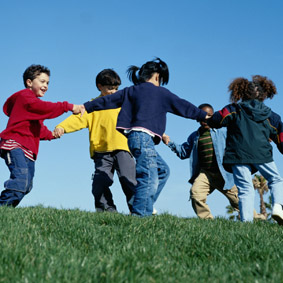
These trains of thought and states of mind are constantly changing, like the shapes of clouds in the wind, but we attach great importance to them. An old man watching children at play knows very well that their games are of little consequence. He feels neither elated nor upset at what happens in their game, while the children take it all very seriously. We are just exactly them.

Dilgo Khyentse Rinpoche

Every moment gives an opportunity

There is no question that the real mindfulness teacher, and the real meditation practice, is life itself. Every moment is an opportunity to realign ourselves with the actuality of what is unfolding, however challenging or mundane, and thereby choose not lose ourselves in our interpretations and stories about what is going on. This is easier than you may think. It is also hugely liberating each time we make even a momentary gesture in that direction. And those moments, those conscious realigning gestures can add up to a different life, a more mindful and emotionally balanced life. Not only that: they can influence your future in ways that may be not only beneficial to you, but transformative. Because if you take care of this moment, now, with kindness and awareness, the next moment will be different because of your having taken care of this one, because of your gesture of sanity, trust, and balance.

Jon Kabat Zinn

Having what we need

There is a lot of emphasis placed around Christmas on getting things which are always linked to greater happiness or contentment. Gift-giving is nice, and can be a way of showing our love and appreciation for others. However, advertising is based on the presupposition that there is something out there, that I do not have now, that would make me happier if and when I get it. When repeated over and over again this message can distract us from working with the real source of happiness.

Right now, at this moment, we have a mind,

which is all the basic equipment we need

to achieve complete happiness.

The Dalai Lama

Seeing how precious things are

Joy has to do with seeing how big, how completely unobstructed, and how precious things are. Resenting what happens to you and complaining about your life are like refusing to smell the wild roses when you go for a morning walk, or like being so blind you don’t see a huge black raven when it lands in the tree you’re sitting under. We can get so caught up in our own personal pain or worries that we don’t notice that the wind has come up or that somebody has put flowers on the dining room table or that when we walked out in the morning, the flags weren’t up, and that when we came back, they were flying. Resentment, bitterness, and holding a grudge prevent us from seeing and hearing and tasting and delighting.

Pema Chodron, The Wisdom of No Escape

Being happy in our life

“Rejoice always.” 1 Thess 5:16

It is not fitting, when one is in God’s service, to have a gloomy face or a chilling look. – St. Francis of Assisi

Last Sunday was the third Sunday of Advent, which is known as Gaudete Sunday –  from the Latin word Gaudete, meaning “rejoice”. The season of Advent originally was a fast of forty days in preparation for Christmas, starting the day after the feast of St. Martin (12 November), and was called “St. Martin’s Lent” from as early as the fifth century. This Sunday was a break from the penitential atmosphere in that it focused on joy because the coming celebration was near. There seems to be a number of fundamental themes occurring in all cultures around this time of year, reflecting deep anthropological or archaic desires. One of them is the desire to keep hope and joy alive in the face of shortening days. We can see this theme expressed as hope, patience and looking forward in the Christian season,  due initially to the belief in the immanent return of Jesus. Nowadays the injunction becomes an inner wisdom, directing us to notice what is good and not stay with the mind’s habitual tendency to struggle and focus on what is negative. It also points us towards finding true contentment with how our life is actually at this moment. Practically this means that we cultivate the practice of joy, smiling at the beauty we see each day and being grateful for the good things we receive. Not taking ourselves too seriously, but keeping light and unforced,  is also a useful practice, as the Thich Nhat Hahn quote this morning said,  and as Chesterton reminds us here:

Angels can fly because they can take themselves lightly. This has been always the instinct of Christendom, and especially the instinct of Christian art. Remember how Fra Angelico represented all his angels, not only as birds, but almost as butterflies. Seriousness is not a virtue. It is really a natural trend or lapse into taking one’s self gravely, because it is the easiest thing to do. For solemnity flows out of men naturally; but laughter is a leap. It is easy to be heavy: hard to be light. Satan fell by the force of gravity.