The island within…..

Two posts today on creating a quiet space within –  an island – to which we can retreat when things get frazzled or too hectic. This is our “hermitage”, where we can feel at home. To do this we can simple take a moment’s break from time to time, or use the breath as a way of centering or grounding when the events of the day speed up. Or simply  by creating gaps, taking time before answering the phone, or pausing before taking the elevator.

You should go home to your hermitage; it is inside you. Close the doors, light the fire, and make it cozy again. That is what I call ‘taking refuge in the island of self.’ If you don’t go home to yourself, you continue to lose yourself. You destroy yourself and you destroy people around you, even if you have goodwill and want to do something to help. That is why the practice of going home to the island of self is so important. No one can take your true home away.

Thich Nhat Hahn, Peace Begins Here

Do not force things

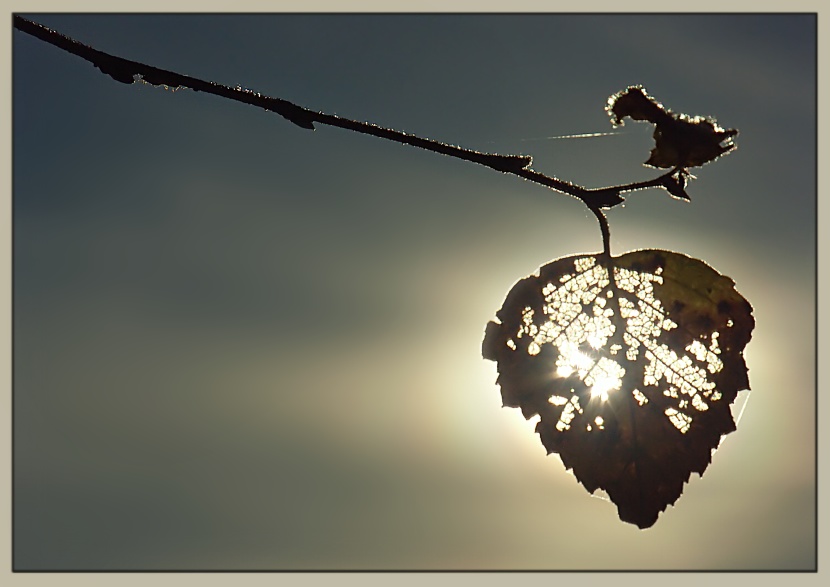
When there is sunshine,  it just shines across the land and it doesn’t try to  force the land to absorb its rays. The sun just shines. We too practice in a very non-violent, very loving way with our breathing. When you are sitting with a bent back you just recognise your back is bent and quite naturally your body adjusts itself to become a little straighter. There is no forcing. If you are agitated but you are mindful of this feeling of agitation you simply recognise,  ‘I have irritation.’ You should not say, ‘Irritation is very bad, I have to get rid of my irritation.’ No, you just be aware of your irritation. If there is irritation you simply recognise you have irritation.  You do not judge, you do not force, and you do not condemn them. You only look at your irritation with compassion. I go back to my body with non-violence, with care, with compassion.

When the sunshine falls on the vegetation, the vegetation itself becomes green. When your mindfulness is shining upon what is happening in you,  then you do not need to force but you know right away and you smile with compassion to your irritation and then your irritation will disappear. You know that everything changes including your irritation. If you are aware then your irritation becomes weaker, but if you are not aware then the irritation can grow very fast turning into anger and stress, and other negative feelings. If you are aware, it will weaken naturally, because it is impermanent.

Thich Nhat Hahn

On using our time responsibly

Western laziness is quite different. It consists of cramming our lives with compulsive activity, so that there is no time left to confront the real issues. If we look into our lives, we will see clearly how many unimportant tasks, so-called “responsibilities” accumulate to fill them up. One master compares them to “housekeeping in a dream.” We tell ourselves we want to spend time on the important things of life, but there never is any time. Helpless, we watch our days fill up with telephone calls and petty projects, with so many responsibilities  – or should we call them “irresponsibility’s”?

Sogyal Rinpoche

Caring for what is troubling

In matters of soul,

it is advisable never to compensate or to try to escape,

but instead to tend better

the very thing that is causing trouble.

Thomas Moore, Soul Mates

Allowing emotions, not running from them

One or two posts these days on how to work with difficult and frightening emotions: Awareness is the key to living fully in each moment, even if the moment contains difficult emotions. It is the same practice  – insofar as it is possible – to spend time with and hold emotions in a non-judgmental awareness without making them into a statement about ourselves or the direction of our lives. Gentleness, kindness and self-compassion are the key to this work, leading to a genuine friendliness toward ourselves and towards whatever passes through the body-mind.

With radical accountability, all emotions are observed as experiences only, pointing nowhere, implicating no one and signifying nothing. Though it is no one’s fault that we have an emotion, it is still essential to hold the emotion fully within awareness without wavering. Emotions need observation and allowance, not our analysis or fixation. The story that accompanies the emotion dies with accountability. The story was never true to begin with; we needed it to provide relief from the pain of being “me”. Though we did not know it at the time, sustaining the story’s untruth through inattention was causing even greater suffering than if we had allowed the pain to express itself in awareness. Radical accountability allows all experience to be itself. 

Rodney Smith, Stepping out of Self-Deception

On not criticizing oneself

As I have said before, I often find in Ajahn Sumedho’s writings a clarity which cannot be matched. It is the case here. Simply stated, it gets to the heart of the dynamic which causes us so many problems – our tendency to add on to and identify with what passes through the mind and make it into a criticism of ourselves. I recognize these phrases he uses here as ones I use myself and which I frequently hear in talking with people.

You can’t get more simple than mindfulness because it is not anything you can create. It is just a matter of paying attention and being present, it’s not a complicated technique or a complexity. It’s so simple, but we are conditioned for complexity, so we tend to make things complex all the time. You are sitting and observing and then a negative thought arises in your mind and you think “That’s bad”. ‘That’s a compounding. The act of judging it, of putting the label “bad” onto it, makes it more than what it is.

Mindfulness is just aware of presences and absences. It is not concerned whether they are good or bad. It is not looking at them from that critical position. So “bad” is a criticism, or “that’s good”, “that’s right” and “that’s wrong”. And then it goes into “I’m good”, “I’m bad”, “I shouldn’t feel like this” ,  “I shouldn’t have these thoughts or desires”, ” I should be more compassionate and patient”. So you see it gets increasingly more complicated with judgments, criticisms and a sense of self that is identified with these different conditions. It gets even more complicated. If you have a bad thought you think “I am bad, I am a bad person, I am not very good…[then] These thoughts arise because people are inconsiderate and don’t respect me. And because of their lack of sensitivity and understanding, I have these bad thoughts”,  so it gets increasingly more complicated.

Ajahn Sumedho, The Sound of Silence