Being held

It took a long time for the analytical world to look at the importance of the way a baby is held, and yet when you come to think of it, this is of primary importance. The question of holding brings up the whole issue of human reliability.   Winnicott

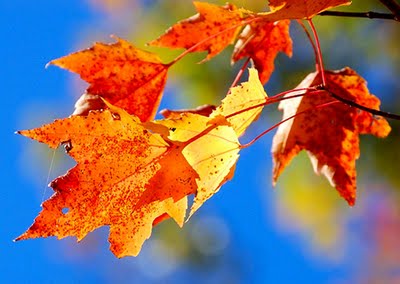
I love the sense of natural movement in this poem by Rilke, and the delicate gentleness of the last line. We change, are shaken and fall, as nature does, and this can seem frightening at times. It can agitate us as it goes against the security we have when things are firm. To give us confidence we need some sense of being held. Because, as Winnicott reminds us, a person’s  most formative experiences comes from the way their caregivers “hold” them, as that allows them feel grounded in the face of the uncertainties of life. Meditation practice allows us create that security within, and develop an inner stability, which is hard to shake, no matter what comes up. We trust and can let our lives unfold gently, lightly, each breath and each moment floating and falling, held in awareness.

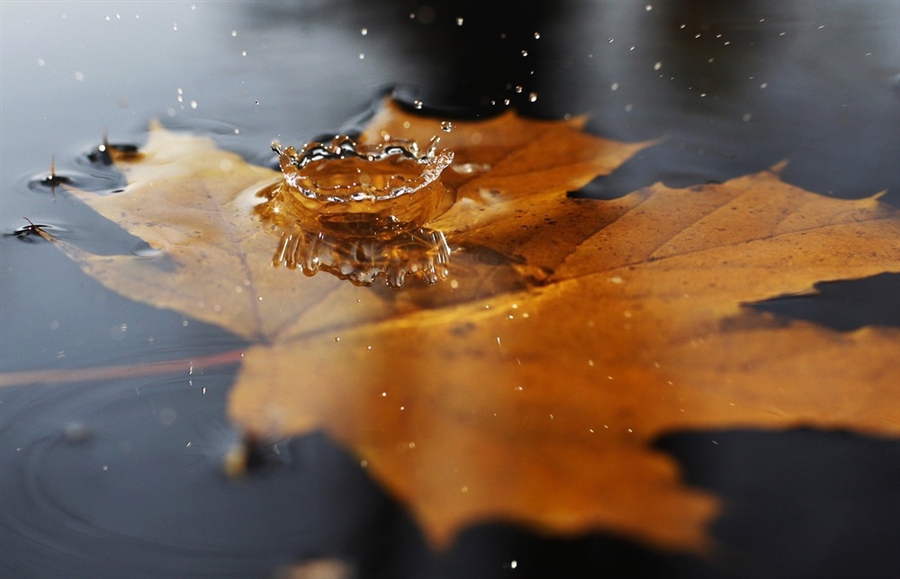
The leaves are falling, falling as if from afar,
as if withered in the distant gardens of heaven;
with nay-saying gestures they fall.

And in the nights falls the heavy earth
from all the stars into loneliness.

We all are falling. This hand there falls.
And look at the others: it is in all of them.

And yet there is one, who holds all this falling
with infinite gentleness in his hands.

Rainer Maria Rilke, Autumn

Why having no story can be good…

Everything is meant to be let go of.

Meister Eckhard

Listening to people this week I was struck by how frequently we tend to define ourselves in terms of solid, unchanging qualities. However, when we talk about ourselves in terms that are fixed, such as  “I’m no good at ……”, or “I am a timid person” … we freeze our whole selves into just one  limited part. Or if we attach our identity to some things that are fixed –  like a job,  a relationship as it is now, where we live or something that we have –  we are sooner or later going to run into difficulty because everything changes.  It is a good practice to keep defining ourselves in fluid terms, as always changing – continually constructing ourselves in way that is able to deal with the ongoing changes in life. We know that if we try to prevent change and freeze things as they are,  we are attempting something impossible.  So let us work on really understanding the inevitability of the change we see all around us by applying this to how we narrate our life story, even our story of just this week. In this way we  can more easily see our true underlying openness of mind,  which can be aware of all the words which we attach to ourselves.  This leaves us open to all possibilities in our future,  not limiting ourselves  or having just one fixed  identity or  goal.

Just as a snake sheds its skin, so we should shed our past, over and over again

The Buddha

Always judging our lives

We tend to run our whole life trying to avoid all that hurts or displeases us, noticing the objects, people, or situations that we think will give us pain or pleasure, avoiding one and pursuing the other. Without exception, we all do this. We remain separate from our life, looking at it, analyzing it, judging it, seeking to answer the questions, ‘What am I going to get out of it? Is it going to give me pleasure or comfort or should I run away from it?” We do this from morning until night.

Charlotte Joko Beck

Learning, deep down in our bones

I used to hurry everywhere, and leaped over the running creeks.

There wasn’t time enough for all the wonderful things I could think of to do in a single day.  

Patience comes to the bones

before it takes roots in the heart as another good idea.

I say this as I stand in the woods and study the patterns of the moon shadows,

or stroll down into the waters that now, late summer, have also caught the fever,

and hardly move from one eternity to another.

Mary Oliver, Patience

A calming stillness…

The ancient rhythms of the earth have insinuated themselves into the rhythms of the human heart. The earth is not outside us; it is within: the clay from where the tree of the body grows. When we emerge from our offices, rooms and houses, we enter our natural element. We are children of the earth: people to whom the outdoors is home. Nothing can separate us from the vigor and vibrancy of this inheritance. In contract to our frenetic, saturated lives, the earth offers a calming stillness. Movement and growth in nature takes its time. The patience of nature enjoys the ease of trust and hope. There is something in our clay nature that needs to continually experience this ancient, outer ease of the world. It helps us remember who we are and why we are here.

John O’Donohue

The difficulty of just being

It is hard to be fully present to another person, focusing completely on them and their needs, withour our own concerns, desires and needs getting in the way. We practice so that we can be really present, fully aware of the other, losing ourselves in a certain sense, so that the other can feel completely understood and appreciated.

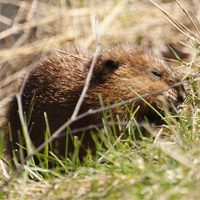
No matter how quiet we are, the muskrats stay hidden.

Maybe they sense the tense hum of consciousness, the buzz from two human beings who in silence cannot help but be aware of each other, and so of themselves.

Annie Dilliard, Pilgrim at Tinker Creek