 Go, go, go, said the bird: Human kind
Cannot bear very much reality.
Time past and time future
What might have been and what has been
Point to one end, which is always present.
T.S. Eliot, Burnt Norton
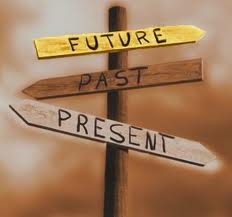
Another post on remaining in the present moment, this time as a practical way of working with fear. It is prompted by a nice comment I got from Eric regarding a previous post, where he quoted Einstein. That set me thinking of another quote from the same famous scientist, which echoes some of the ideas we find in our meditation practice: People like us, who believe in physics, know that the distinction between past, present, and future is only a stubbornly persistent illusion.
When we meditate we come to see that – in one sense – the past and the future exist only in the mind. And often with regard to the future we create scenarios which will never happen, leading to worry. Last night in the MBSR Course, we had a discussion about how we can work when strong emotions, such as fear, arise. One thing we can do is to recognize that some of the thoughts connected to the fear concern future scenarios which may never happen. If we can let go of those thoughts – and that is not always easy – what have we got to work with when we just stay in the present? The main thing is the sensation in our body at this moment. We notice there is a tightness in the chest, a clenching or a knot in the stomach, or rushed breathing. So this is our practice: We recognize this, and stay with the present, experiencing fear or anxiety as it is actually happening, as an embodied feeling. We then try not to add any judgment about the feeling or about ourselves to the moment. We let go of trying to fix it. We practice just being with the sensation for as long as we can, seeing what is going on. Thich Nhat Hahn writes about this practice as a way of taking care of ourselves, almost like we would take care of a frightened child:
Mindfulness is there in order to recognize. To be mindful of something is to recognize that something is there in the present moment. Mindfulness is the capacity of being aware of what is going on in the present moment. “Breathing in, I know that fear has manifested in me; breathing out, I smile towards my fear.” This is not an act of suppression or of fighting. It is an act of recognizing. Once we recognize our fear, we embrace it with a lot of awareness, a lot of tenderness.
 An interesting quote. Sometimes we look in all kinds of places for our happiness – a new relationship, a better car, a holiday, other people, a more prestigious job. However most research and practice shows that very little of happiness is due to changes in external circumstances, or getting the world to be as we think it should be. These things change all the time, and even when we think we have gotten the mix right, and feel we are in control, it is often a short-lived illusion. Rather, happiness is a skill, or a group of skills, that we can cultivate, based on a source of natural goodness already within us, with which we approach both good and bad in life as they arise and pass away before us. Looking for happiness creates a duality which is not always helpful. Always focusing outside of ourselves means that we do not often realize what we already have, and fail to live in this moment, as we work to change ourselves and our circumstances to “improve” them and ourselves.