Reasons to be cheerful

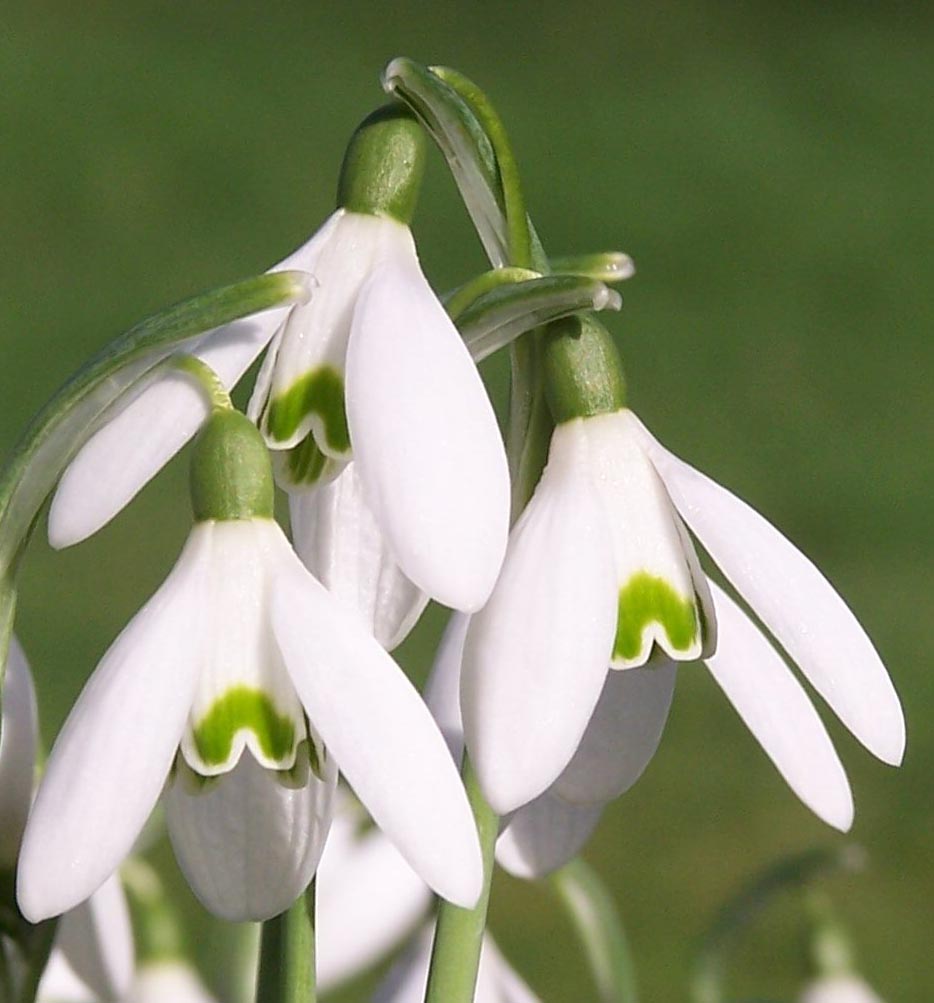
In this mild weather the first snowdrops are beginning to appear in the garden. I love the old legend about this flower. Adam and Eve were banished from the warmth and security of the Garden of Eden. They longed for the original sense of belonging and attunement which they once had. And then,  to make matters worse,  it became cold and started to snow. Eve began to cry, believing that she would never see  warmth and love again. Seeing this,  an angel felt sorry for her,   caught a snowflake in his hand, breathed on it, and when it hit the ground it turned into these delicate flowers. This beauty gave  her comfort and hope in the winter of her difficulties. Like Eve,  we all search for that original safety which we know deep down. We all need little signs to keep us going. We can look for them today.

Cheerfulness comes naturally with meditation. It is a quality of space created within the mind. When there’s space in the mind, the mind relaxes, and we feel a simple sense of delight. We experience the possibility of living a life in which we are not continuously aggravated by emotions, discursiveness, and concepts about the nature of things…. Despite all the ups and downs of our life, we are fundamentally awake individuals who have a natural ability to become compassionate and wise. Our nature is to be cheerful. This cheerfulness is deeper than temporary conditions. The day does not have to be sunny for us to be cheerful.

When we practice meditation, we are encouraging this natural state of cheerfulness. We don’t have to regard meditating as a somber activity; we can think of it as sitting there and being cheerful. We are using a technique to build clarity, strength, and flexibility of mind. In training our mind in pliability and power, we’re learning to relax, to loosen up, so that we can change our attitude on a dime. Strength of mind and pliancy are the causes and result of cheerfulness.

Sakyong Mipham Rinpoche
Working with things we wish were different

When meditating I use an App on my phone as a timer. When the timer elapses it rings a bell and a phrase appears on the screen. So for the last two years I have been greeted at the end of my practice by the words Anyone who understands impermanence ceases to be contentious.  By this time I know the words of this ancient phrase very well.  However, I realize there is a big difference between knowing the words and knowing this in reality. Sure, I know that things change, the seasons come and go, and mental states change frequently. But I still have a strong investment in things staying as they are. And so I struggle. And whenever we struggle with how life actually is we suffer to some extent.  So it seems to me that we really need to experience change in a very real and personal way in order to learn what it means to accept it as a fundamental principle of life. And sometimes  this is forced upon us when we lose something or someone dear to us, when we have to deal with  illness or when we are with someone who is close to death.

Sooner or later we all have to work with things in our life that we wish were different.  And distinguishing when to fight for something and when to let go is not always easy.  However, ther are times when we have to accept the message from others or from life that there is nothing we can do. When this is the case  we allow ourselves feel the sadness which these situations provoke because that is only natural and the pain is often substantial.   And then we try to do what  the wisdom traditions teach :  the best response to things that are beyond our control is to work at not struggling with them.  It is not an easy lesson to learn, and I find that this learning it is always ongoing. But it is the big challenge in this life, to become a knower of change and to let it teach us.

Deepening our appreciation of this day

When we know how to listen deeply and how to breathe deeply in mindfulness

everything becomes clear and deep

Thich Nhat Hahn

A lot of ordinary things happen each day

We tend to overlook the ordinary. We are usually only aware of our breath when it’s abnormal, like if we have asthma or when we’ve been running hard. But [with mindfulness] we take our ordinary breath as the meditation object. We don’t try to make the breath long or short, or control it in any way, but to simply stay with the normal inhalation and exhalation. The breath is not something that we create or imagine; it is a natural process of our bodies that continues as long as life lasts, whether we concentrate on it or not. So it is an object that is always present; we can turn to it at any time. We don’t have to have any qualifications to watch our breath. We do not even need to be particularly intelligent — all we have to do is to be content with, and aware of, one inhalation and exhalation. Wisdom does not come from studying great theories and philosophies, but from observing the ordinary.

Ajahn Sumedho

Blue Monday again: Looking deeper

Supposedly, today is another “Blue Monday”, when we are more prone to depression. Or maybe just an ordinary Monday, when we find it hard to get going, and notice more the difficulties when they arise. Or simply another day when we struggle with the aspects of our life that feel are  stuck at this moment. One way or the other we have to deal with the ups and downs of life. Looking deeper and gaining insight into the overall nature of life may help.

The Buddha did not teach that life is constant misery, nor that you should expect to feel pain and unhappiness at all times. Rather, he proclaimed that suffering is an unavoidable reality of ordinary human existence that is to be known and responded to wisely. While you, like all beings, may try your hardest to experience only the good and avoid the bad, there is simply no way for any of us to escape unpleasant experiences. They are part of the dance, life being true to its own nature.

Philipp Moffitt, Dancing with Life

Ways we get shaken from the present:1: The improving mind

Mindfulness practice reminds us to be fully present now, and in doing that we live a more integrated life.  However, it is not easy to stay completely in the present moment, open to what is actually happening. The mind has a number of simple ways that distract us from being fully at ease just with what is going on, and which shake us from being firm in this experience. If we can spot these thoughts in the small moments of each day and notice their effect, we can come to gradually notice them in the bigger picture of our life.

The first one is what I call the “improving mind”. We find ourselves in a situation, maybe quite pleasant, and we suddenly find ourselves wanting just a little bit extra. Very quickly after the arrival of a pleasant sensation  – This is just lovely here–  comes a thought that moves us from just being with how things actually are –It’s a pity we cannot stay a bit longer. There is nothing wrong with a thought like this; it’s just a thought; but what we notice is that it slightly moves us away from fully enjoying this moment. They move us from simple happiness of now, to “how happiness could be better”. And if we hook into these thoughts we get blown away and moved on from fully attending to here and now.

A simple practice: See if you can spot this “improving mind”. What is it like to stay solid in the moment in all its flavours and colours, just as it is?