The point is to live everything.
Live the questions now.
Perhaps then, someday far into the future, you will gradually,without even noticing it,
live your way into the answer.
Rainer Maria Rilke
The point is to live everything.
Live the questions now.
Perhaps then, someday far into the future, you will gradually,without even noticing it,
live your way into the answer.
Rainer Maria Rilke
 “Well,” said Pooh, “what I like best,” and then he had to stop and think.
Because although Eating Honey was a very good thing to do, there was a moment just before you began to eat it which was better than when you were, but he didn’t know what it was called.
A. A. Milne, The House on Pooh Corner
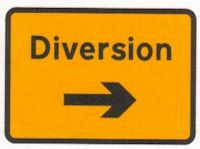 Often we can get caught up in our fixed idea for the day and get anxious or upset when things go differently or “wrong”. This can extend to our whole life, too. We have a picture as to how our future will be and spend a lot of our time day dreaming about how things will be better when it comes to pass. It is not easy just to rest in the present, wisely planning for the day or the future but allowing it unfold in ways that we do not always anticipate. Sometimes we miss the opportunities that are presented by focusing on one that we think should come.
While visiting the University of Notre Dame, where I had been a teacher for a few years, I met an older experienced professor who had spent most of his life there. And while we strolled over the beautiful campus, he said with a certain melancholy in his voice, ‘You know … my whole life I have been complaining that my work was constantly interrupted, until I discovered that my interruptions were my work.‘
Henri Nouwen, Reaching out: the Three movements of the Spiritual Life
 One reason we need to create periods of rest is to counteract some of the effects of modern society on the brain, and nurture habits of stability and patience.
Nicholas Carr is the author of the book, The Shallows: What the Internet is Doing to our Brains. In it he outlines some of the ways that modern technologies are not only affecting our ability to pay attention but are also changing our brains. These technologies tend to fragment our attention, speeding up our need to know and plan, thus reducing our capacity to just rest in ourselves and our own space. This can increase the sense that our day to day is running from here to there, with no time for ourselves, just a succession of things to get done.
In an interview with CNN he said, “I became aware of changes in my own thinking a couple of years ago….… I came to realize [that] I was losing my ability to pay deep attention to one thing over a long period of time. When I’d sit down to read a book, for instance, I was only able to sustain my concentration for a page or two. My mind would begin to crave stimulation and distraction — it wanted to click on links, jump from page to page, check email, do some Googling….The habits of mind the net encouraged had become my dominant habits of mind.
It is no surprise that when we have an activity that demands patience and perseverence, we find it difficult to concentrate, missing the inner quiet needed for sustained activities. We become what we practice: If we are continually practicing distraction and small, bite-sized bursts of information, the brain can get used to distraction. If we practice resting and calm, the brain can become more calm. As Carr continues: Other people – and I’m one of them – believe that while it’s important to be able to skim and scan and multitask, our deepest and most valuable thinking requires a calm and attentive mind. If you exist in a perpetual state of distractedness, you’ll never tap into the deepest sources of human insight and creativity.
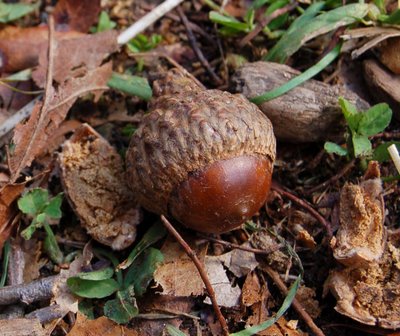
Once again, we can learn from nature in these days. Real growth takes time and is patient. As the proverb reminds us “Mighty oaks from tiny acorns grow”, not immediately, but slowly, over time. Let us create gentle periods of less “productive”, more reflective activities – walking, reading, reflecting, meditating – and thus nurture other habits of mind.
 Normally the mind is a whirlwind of thought, and meditation is a practice that calms this down and helps us develop a peaceful state of mind. Not only is our mind busy thinking, we’re usually thinking about the past or the future. We’re either reliving old dramas or imagining what could happen tomorrow or in ten years and trying to plan for it. We usually aren’t experiencing the present moment at all. We can’t change the past, and the future is always ahead of us — we never reach it, have you ever noticed? So, as long as this process continues, our mind never comes to rest. The mind can never just settle down and feel at ease.
When we practice sitting meditation over time, we get better at catching our thoughts and releasing them. Gradually the mind begins to settle naturally into a resting state. This is great because it allows us to be fully present in our lives. When we aren’t being pulled into the past or future, we can just be right here, where we actually live. To be in the present moment simply means to be awake and aware of yourself and your surroundings. That‘s the beginning of peace and contentment.
Dzogchen Ponlop Rinpoche
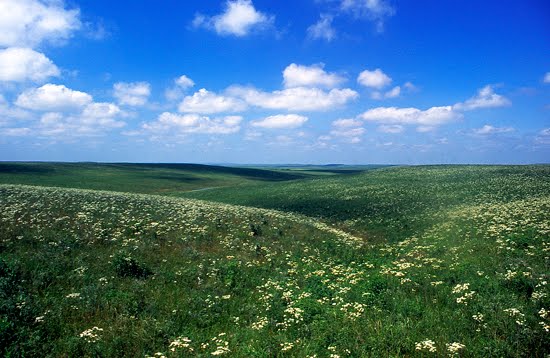 In my room, the world is beyond my understanding;
when I walk I see
that it consists of
three or four hills and a cloud.
Wallace Stephens, Of the Surface of Things

