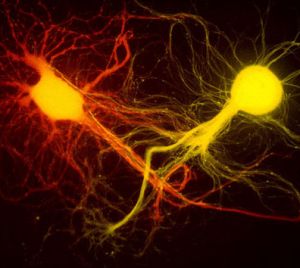
 There is no doubt that the effects of online and technology usage on the brain will be the subject of a great deal of research in the years ahead. Such research is in its early days, and few conclusions can be drawn on the basis of it. One person who is looking at it is UCLA psychiatry professor Gary Small – Director of the Memory and Ageing Research Centre at the University of California, Los Angeles, and a specialist in the effects on the brain of the ageing process – who was named by Scientific American magazine as one of the world’s top innovators in science and technology. In 2007 he began research which found that even moderate internet use – subjects were asked to spend an hour a day online, searching the Internet – changed the activity patterns in the brain dramatically. This news was greeted initially with delight, seeing that internet surfing can make the brain sharper and more intelligent, and a potential help in the aging process. In itself, there is nothing strange about this as temporary synaptic rewiring happens whenever anybody learns anything. As Dr. Small states: It’s a basic principle that the brain is very sensitive to any kind of stimulation, and from moment to moment, there is a very complex cascade of neurochemical electrical consequences to every form of stimulation. If you have repeated stimuli, your neural circuits will be excited. But if you neglect other stimuli, other neural circuits will be weakened.
But, as Dr Small continues his research, the problems implicit in the second part of that statement are becoming more clear. He has noted that other neural circuits, and other human behaviours – such as social skills and communication – can be weakened as we strengthen processes in other parts of the brain. For example, the more we reduce our concentration by expecting information to be entertaining, by concentrating on soundbites and by using short messages such as those favoured by Twitter, the less our ability to concentrate on material that requires deeper processing. As Dr. Elias Aboujaoude, director of Stanford University’s Impulse Control Disorders Clinic states: The more we become used to just sound bites and tweets, the less patient we will be with more complex, more meaningful information. And I do think we might lose the ability to analyze things with any depth and nuance. Like any skill, if you don’t use it, you lose it. This idea seems to be backed up by Dr Patricia Grenfield, who reviewed more than 40 studies of the effects of different types of media on intelligence and learning ability. She came to the conclusion that every medium develops some cognitive skills at the expense of others. Because we use the internet and other hand-held devices much more now, we have seen the widespread and sophisticated development of visual-spatial skills. But this advantage can mean the weakening of our capacity for the kind of deep processing that underpins mindful knowledge acquisition, inductive analysis, critical thinking, imagination, and reflection.
These processes have led Dr. John Ratey, Clinical Professor of Psychiatry at Harvard Medical School, to use the term “acquired attention deficit disorder” to describe the way technology is rewiring the modern brain. It reminds me of Jon Kabat Zinn’s phrase which I heard some years ago, that from the point of view of Mindfulness practice, the whole of modern society suffers from ADD. Dr Small has noted what too much time spent online can do to other mental processes, such as the ability to maintain eye contact, or interact easily with others, but other studies have linked voluntary and excessive online use to depression, poor school performance, increased irritability and ordinary Facebook use to lower self-esteem.
A new study published this year goes even further, and suggests that excessive time online rewires structures deep in the brain, and indeed, seems to shrink surface-level brain matter in relation to excessive amounts of time spent online. It looked at 18 college-age students who spent long hours online, up to 10 hours a day. They were compared to 18 healthy controls who spent less than two hours a day online. All of the subjects were subjected to MRI scans of the brain. The results of the study were that several small regions in the brains’ of the excessive online users shrunk, in some cases as much as a 10 to 20%. The affected regions included the dorsolateral prefrontal cortex, rostral anterior cingulate cortex, supplementary motor area and parts of the cerebellum. The longer the usage, the more pronounced the tissue reduction. The researchers suggest this shrinkage could lead to negative effects, such as diminished goal orientation. With its small sample size, this research can only suggest possible directions for future, more in-depth study. However, taken with the reflection from other philosophical and mindfulness perspectives, it challenges us to reflect on the role new technologies are playing in all our lives.
 When we come into therapy, instead of pursuing some ideal, we may be trying to escape some part of ourselves. Our anger. Our depression. Our sexuality. Then we think that therapy may be some kind fo mental surgery, cutting out all those disagreeable aspects of the mind and leaving behind only what is calm or compassionate. But neither therapy or… [meditation] practice works that way. The mind cannot escape itself – that would be like riding a donkey fleeing a donkey.



 Mindfulbalance