Having two hearts, and a choice

The early Church Fathers had a simple way of expressing our struggle. They taught that each of us has two hearts, two souls:

In each person, they affirmed, there is a small, petty heart, a pusilla anima. This is the heart that we operate out of when we are not at our best. This is the heart within which we feel our wounds and our distance from others. This is the heart within which are chronically irritated and angry, the heart within which we feel the unfairness of life, the heart within which we sense others as a threat, the heart within which we feel envy and bitterness, and the heart within which greed, lust, and selfishness break through. This too is the heart that wants to set itself apart from and above others.

But the Church Fathers taught that inside of each of us there was also another heart, a magna anima, a huge, deep, big, generous, and noble heart. This is the heart we operate out of when we are at our best. This is the heart within which we feel empathy and compassion. This is the heart within which we are enflamed with noble ideals.  Inside each of us, sadly often buried under suffocating wounds that keep if far from the surface, lies the heart of a saint, bursting to get out.

Not everything can be fixed or cured, but it should be named correctly. Nowhere is this more important than in how we name both the size and the struggles of the human heart. We are not petty souls who occasionally do noble things. We are rather noble souls who, sadly, occasionally do petty things.

Ron Rolheiser, The Size of our Hearts
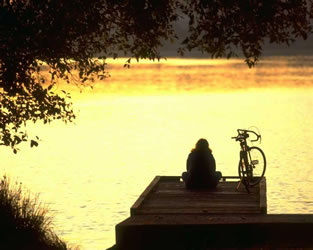
Everything comes down to how we work with time

Everything comes down to time in the end – to the passing of time, to changing. Ever thought of that? Anything that makes you happy or sad, isn’t it all based on minutes going by? Isn’t happiness expecting something time is going to bring you? Isn’t sadness wishing time back again? 

Anne Tyler, Dinner at the Homesick Restaurant

Time that nurtures

It’s important to be heroic, ambitious, productive, efficient, creative, and progressive, but these qualities don’t necessarily nurture the soul. The soul has different concerns, of equal value: downtime for reflection, conversation, and reverie; beauty that is captivating and pleasuring; relatedness to the environs and to people; and any animal’s rhythm of rest and activity.

Thomas Moore

Accepting life and letting it happen

Happiness is not to be found through great effort and willpower.

It is already present in open relaxation and letting go.

Don’t strain.

There’s nothing to do or to undo. Whatever momentarily arises in body–mind has no real import at all, has very little reality whatsoever.

Why identify with it and become attached to it, passing judgment on it and on yourself and others?

Far better simply to let the entire play just happen on its own,

Springing up and falling back again like waves

Without ‘rectifying’ things or manipulating things.

Just noticing how everything vanishes and then magically reappears, again and again and again. Time without end.

It’s only our searching for happiness that prevents us from seeing it.

Lama Gendun Rinpoche, Free and Easy

Recommended Summer Reading 4

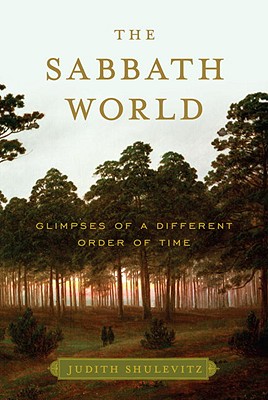
A book that is not directly about Meditation or Mindfulness, but which does impact upon stress reduction, The Sabbath World: Glimpses of A Different Order of Time, is a beautiful work which discusses our use of time by reflecting on the millenia-old practice of the Sabbath rest. The author, Julie Shulevitz,  a successful journalist at the New York Times, found herself increasingly uneasy with  the speeded-up and frantic pace of modern life. She decided to return to look at the meaning and value of  the practice which had been honoured in her Jewish childhood – and which she rebelled against –   the setting aside of a special time which was the Sabbath, and see if it made any sense in this modern age:

Americans, once the most Sabbatharian people on earth, are now the most ambivalent on the subject. On the one hand we miss the Sabbath. When we pine for escape from the rat race; when we check into spas, yoga centers, encounter weekends, spiritual retreats; when we fret about the disappearance of a more old-fashioned time, with its former, generally agreed-upon rhythms of labor and repose; when we deplore the increase in time devoted to consumerism; when we complain about the commercialization of leisure, which turns fun into work, and requires military-scale budgeting and logistics and interactions with service personnel – whenever we worry about these things we are remembering the Sabbath, its power to protect us from the clamor of our own desires.

The book that unfolds from this starting point is partly a personal memoir, partly a reflection on the role of the spiritual in life, part history and cultural analysis, and is written in a lovely, engaging prose. I picked it up two weeks ago and read it easily over a few days as it deals with its big topic – and the philosophical and life reflections prompted by it –   quite lightly, without being superficial. Although it takes as its starting point a religious practice, it is really a long reflection on the anthropological roots beneath all religious acts, the need for balance and the difficulty we have today in finding it. What makes it appealing is that one can sense the author’s desire to find what is meant by home and meaningful ritual,  and her search for the  inner space to find rest in them. Her reflections can help us all consider the need to set aside some silence to reflect upon why we work in the first place  and to see the wonder and depth in life:

So why remember the Sabbath? Because the Sabbath comes to us out of the past – out of the bodies of our mothers and fathers, out of the churches on our streets, out of our own dreams – to train us to pay attention to it. And why do we need to be trained? Consider the mystery surrounding God’s first Sabbath. Why did God stop anyway? In the eighteenth century, Rabbi Elijah of Vilna…ventured this explanation: God stopped to show us that what we are creating becomes meaningful only once we stop creating and start remembering why it was worth creating in the first place.

Internal focus

Mindfulness practice tells us that the best way to work with the changes that face us today is to look inside,  and that a large part of our contentment comes from the internal ways we work with what faces us. As I was reminded in a talk I heard last week, a fundamental characteristic of life is not just that it is continually changing but that it does so in ways we cannot predict. It is an ongoing challenge to remain curious and increase our interior freedom in the face of these surprises. However, this curiosity can help us to avoid holding onto situations or seeking alternatives that are actually unhealthy. This is expressed extremely well in this quotation which outlines the underlying principles beneath this day-to-day practice.

The compulsion to change the world  to calm our desires is based on an idea of how things should be, and as such is dependent upon the degree of wisdom we can bring to bear at any moment. Because we are so imbued with this notion that happiness is something to be pursued by the continual transformation of the external, it can sound odd to hear the Buddha talk of uncovering happiness within. He acknowledged the inevitable presence of disequilibrium, which he called dukkha or suffering, but suggested we seek out its internal causes, understand them and solve the problem by means of internal adjustments. According to his analysis, it is not the objective discrepancy between the internal and the external condition that is the source of unhappiness; it is the desire for the external to change (or not to change as the case may be) which is itself an internal state. Conditions in the world are notoriously unstable and subject to forces beyond our control, while internal desire are more intimate and more accessible. It is simply more efficient to adapt to the world than to alter it.

Andrew Olwendzki, Unlimiting Mind