Restlessness

I have been reflecting these days on how our sense of self is related to finding a space where we can feel safe, which we can be “at home”. It may be a place, but it is more likely found in the acceptance and love of others. We search for this all our lives. Without it we are restless, even lost.


One way to express the crisis of our time is to say that most of us have an address but cannot be found there.

Henri Nouwen

I long, as does every human being, to be at home wherever I find myself.

Maya Angelou

Why we are afraid to show our true selves

It is striking that the first words spoken by the angels in the Christmas story are “Do not be afraid”. It is as if one of the most important messages needed to be communicated to us is for us not to be limited by our fears. Everyday we see that the mind likes to dwell in fear. In fact, it is striking to notice how much of our day-to-day life is governed by an undercurrent of fear, which lurks behind a lot of our behaviours. This is why it is so hard to just sit still or stand still and just be ourselves — not doing anything to prove ourselves — without feeling anxious or fidgety. For these reason, we frequently develop a False Self when young, a mask which we think will be more acceptable to others. This False self is in response to failures encountered when we were growing, which led us to believe that we were not  acceptable just as we are. We feel we are not “good enough” and thus have to create a persona that we believe is better, maybe a “compulsive harder working self,” or an “always trying to please self”,  or an always” taking care of others while neglecting our own needs” self.

However, the different wisdom traditions teach that our True Self is worthwhile in and of itself.  Real freedom and joy is possible,  without hiding, and our exterior self can reflect our ture interior being, provided we know where to start. We need to begin with developing a kindness and warmth towards ourselves, by cultivating the eyes of these angels towards our inner self. Maybe these divine visitors see more clearly into our true nature, and remind us to look to that, and not to the fearful thoughts that discourage us. At times we find it easier to see ourselves in a limited and impoverished way, with our repeated patterns of thinking reminding us that we are weak or struggling. These texts remind us that there is a natural courage deep inside us. They encourage us to believe, to dare, to open up to possibilities. Fully becoming who we are begins with where we are, actually, at this point in our lives. If they can see goodness and courage in us, why can’t we?

A short practice to increase our strength

O Adonai, and Leader of the house of Israel, You appeared to Moses in the burning bush,
and gave him the Law on Sinai: come and save us with an outstretched arm.

As Christmas draws closer,  the Christian liturgy chants the ancient “O Antiphons”  originating in the 5th Century. They testify to the desires of people down through the ages, and our ongoing human needs based on the different situations we find ourselves in. This one asks for  strength and protection, –  a strong arm to support us when we ourselves do not feel strong. It’s imagery comes from the story of the escape from slavery in Egypt and the journey across the desert.

There are so many times that we need to take in strength, to remind ourselves of our resources. One of the things which the mind does when we are stressed or depressed is to underestimate our resources and overestimate the threats which we feel. We divert our energies into the defense against threats, fearful that others may disappoint or take advantage of us.  These ancient words are a metaphor for what happens in those moments. The Hebrew word for Egypt – Mitzraim –  means “a narrow place.”  The escape from captivity in Egypt means the escape from the narrow places where we are stuck, to a wider place, a place where we can breathe freely. We can feel trapped in our lives,  in different forms of captivity. We can frequently feel as if we are travelling in unfamiliar territory, unchartered waters, and this can overwhelm us. We feel fortunate if we get through a day, or through the night when our fears come to worry us,  let alone know where we are going in our lives.

At times like this, we need to keep our focus on words and ideas that give us strength, that link us into to our fearless nature. We can try this simple exercise to increase awareness of the resources we have:

Find a quiet place and sit, gently closing your eyes. Become aware of your normal breathing and the wider sense of your body sitting here. See if you can sense the energy  in the core of your body. Notice your breathing, how it is constant and has a strength of its own. Feel the solidity in your posture, the strength in your upright back and shoulders, the dignity in the way you are sitting, the support in the contact with the chair or the floor. Become aware of the way your body functions in getting you around day after day. Consciously focus on your own strength, savouring this awareness, taking it in and drawing it out.

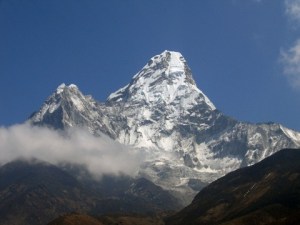
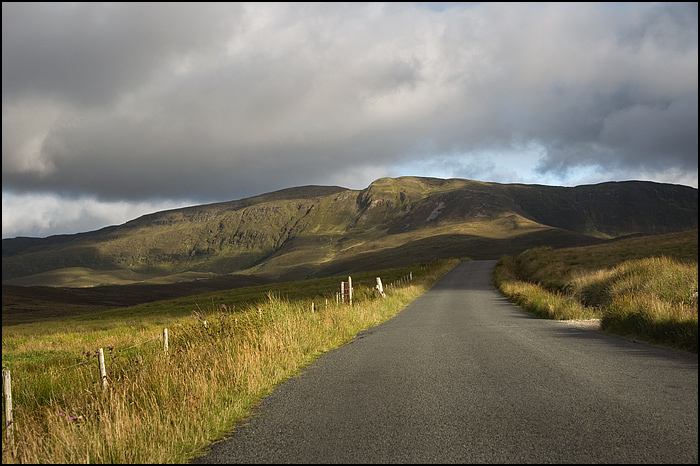
Now, picture in your mind something in nature that feels strong, like a mountain, noticing how massive and unmoving it is. In your mind’s eye, bring the mountain into your own body so that you become the mountain – your head the top,  your body the solid base,  rooted on the cushion or on the chair. See if you can imagine a sense of uplift, the strong quality of the mountain deep in your own spine. Invite yourself to become like a breathing mountain, unshakeable and still.

Now let that sense of strength sink into you and rest in you. Imagine it and prolong it. Breathe it into your emotions. Feel it in your spine, your head,  your chest, the muscles of your face. Let it become part of you, breathing it in deeper and deeper. Gently, let it touch the places in your life where you feel challenged or weak. Keeping the sense of the mountain in your awareness, seeing if you can place the difficulties in relation to that, almost like the clouds that pass over a mountain without affecting the mountain itself. See if you can make the awarenss of strength the present reality, even if just for a moment. If this is too difficult just do it briefly and return to the awareness of the mountain.

Rest in this awareness for five or ten minutes, if it feels right. Make conscious,  as best as possible,  the strength which is in your body and in your mind. Register it in your bones and in your muscles, your thoughts and your emotions. Continue to breathe gently as you finish the exercise and resume your daily activities.
Be happy

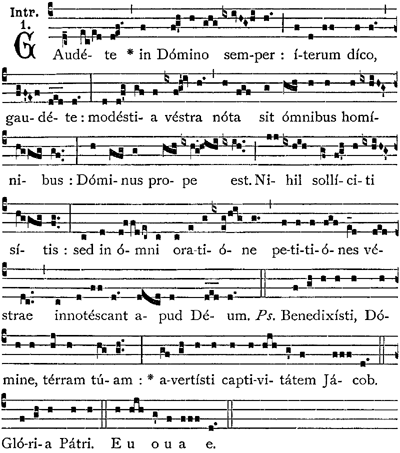
The third Sunday of Advent, is traditionally called Gaudete Sunday, or Be Happy Sunday.  For those preparing for Christmas,  this joy comes from knowing that the coming of Jesus is near. which puts the up’s and down’s of daily life be put into context.  This exhortation is shared by most wisdom traditions.  We are reminded  of a fact, sometimes forgotten by earnest religious practioners, that at the heart of all inner practice is joy, which leads us to understand the true nature of happiness.

Joy does not come from having everything perfect as we want it, by having a preconceived perfect day, but by accepting how life actually is and not fighting against it. It is possible even in the midst of difficult moments. It comes from seeing deeper into the heart of things. understanding that it is born from within and not from the external conditions of our lives.  It is based on choices we make. It has its roots in the security we find within ourselves and from love:

Joy is the experience of knowing that joy and freedom comes from knowing you are unconditionally loved and that nothing — sickness, failure, emotional distress, oppression, war, or even death — can take that love away.

Joy is not the same as happiness.  We are inclined to think that when we are sad we cannot be glad, but ….. sorrow and joy can exist together. That isn’t easy to understand, but when we think about some of our deepest life experiences, such as being present at the birth of a child or the death of a friend, great sorrow and great joy are often seen to be parts of the same experience. Often we discover the joy in the midst of the sorrow. I remember the most painful times of my life as times in which I became aware of a spiritual reality much larger than myself, a reality that allowed me to live the pain with hope. I dare even to say: ‘My grief was a place where I found joy.’ Still, nothing happens automatically in the spiritual life. Joy does not simply happen to us. We have to choose joy and keep choosing it every day.

Joy is what makes life worth living, but for many it seems hard to find. They complain that their lives are sorrowful and depressing. What then brings the joy we so much desire? Are some people just lucky, while others have run out of luck? Strange as it may sound, we can choose joy. Two people can be part of the same event, but one may choose to live it quite differently than the other. One may choose to trust that what happened, painful as it may be, holds a promise. The other may choose despair and be destroyed by it.

What makes us human is precisely this freedom of choice.

Henri Nouwen

Not looking to the past or the future, only now

A quote from the writings of Meister Eckhard, the the great genius of medieval mysticism. He emphasized the need to quieten and empty the mind of all concepts in order to deepen our understanding of what is essential. Though written from a Christian perspective in the 13th Century, these words could come from the current writings on mindfulness:

There exists only the present instant… a Now which always and without end is itself new.

There is no yesterday nor any tomorrow, but only Now, as it was a thousand years ago and as it will be a thousand years hence.

Meister Eckhard (1260 – 1328)

Sunday quote: Sharing

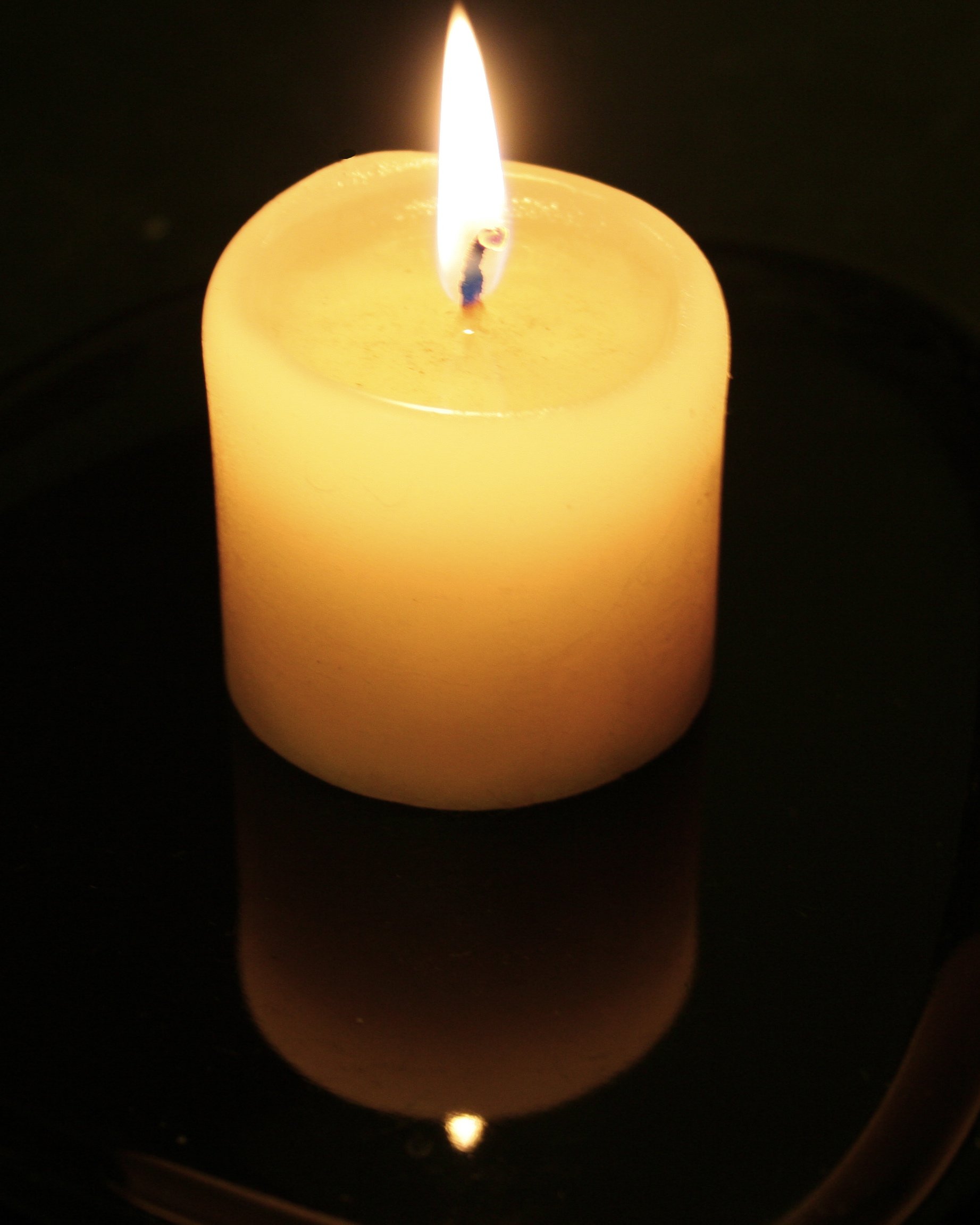
Thousands of candles can be lit from a single candle,
and the life of the candle will not be shortened.

Happiness never decreases by being shared.

The Buddha