New to Mindfulness Practice 9: See things when they arise

Understanding how our emotions have the power to run us around in circles helps us discover how we increase our pain, how we cause harm to ourselves. Because of mindfulness we see things when they arise…we can stop harming ourselves and harming others. We don’t buy into the chain reaction that makes things grow from minute to expansive – we leave things minute.

Pema Chodron

Stopping for breath

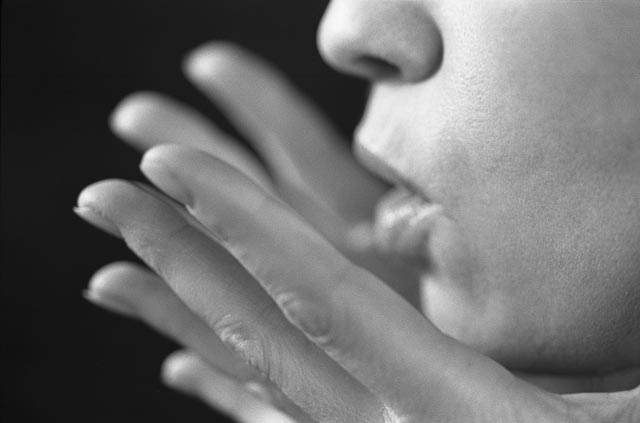
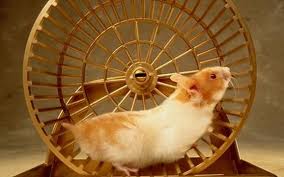
The difficulty most of us face is that we’re afraid of our humanity. We don’t know how to give our humanity space. We don’t know how to give it love. We don’t know how to offer our appreciation. We seize upon whenever difficult  emotions or painful thoughts arise – in large part because we have been taught from a very early age that life is a serious business. We’re taught that we have to accomplish so many things and excel at so many things because we have to compete for a limited amount of resources. We develop such high expectations for ourselves and others, and we develop high expectations of life. Such a competitive, goal-orientated approach to life makes us very speedy inside. We become so tight physically, mentally  and emotionally as we rush through each day, each moment, that many of us forget – often quite literally – to breathe.

Tsoknyi Rinpoche, Upgrading our Practice

The eye of the storm

One reason why people  meditate is to remain calm and focused in the face of the storms and pressures which face they encounter each day.  Here Ajahn Sumedho breaks down how to do that, in practical terms.  The simple ability to be aware – which we all have –  is the key.  Awareness is the calm place from which we can observe and notice those things that  change – moods, good and bad, thoughts, positive and negative – without trying to hold on to them, or becoming identified with them. This is how we can remain at the eye of the storm and not get blown by the winds. We are aware of what we are feeling emotionally, but do not get caught up in it by analyzing it, judging it, or becoming it.

The stillpoint, the centredness, that’s awareness. When I cannot notice it and go out into the turning world, I become a person and get caught in my habits, my loves and hates, my likes and dislikes.  But if I am centered at this point, it’s like the island you cannot go beyond, or the stillpoint of the turning world, the eye of the storm. And then the world revolves around it. The mood you are in is not the stillness. The mood comes and goes. It changes, revolves; it’s happy, sad, elated, depressed, inspired, bored, loving, hateful, and on and on like this….It’s so easy to say “I’m in a bad mood” or “I’m in a good mood” Our langauge is like that, so we become the mood – “I feel happy today, everything’s fine” or “Today is one of my bad days”. That’s why I encourage this investigation of thought, so that you are not creating yourself, endlessly reinforcing the sense of self through your proliferating thoughts.

Ajahn Sumedho, The Sound of Silence
The decisive question

The decisive question for man is: Is he related to something infinite or not? That is the telling question of his life. Only if we know that the thing which truly matters is the infinite can we avoid fixing our interests upon futilities, and upon all kinds of goals which are not of real importance. Thus we demand that the world grant us recognition for qualities which we regard as personal possessions: our talent or our beauty. The more a man lays stress on false possessions, and the less sensitivity he has for what is essential, the less satisfying is his life. He feels limited because he has limited aims, and the result is envy and jealousy. If we understand and feel that here in this life we already have a link with the infinite, desires and attitudes change.

Jung, Memories, Dreams, Reflections

Simple Daily Practices: Schedule the time


If meditation is a priority, then it is helpful to take the word literally and put meditation first. An example would be my rule of not turning on the computer before I’ve meditated. Simple, but effective. Probably the most trenchant advice I ever heard was in eight words from Suzuki Roshi, “Organize your life so that you can sit well”.

Dealing with reality, step by step

What is actually important is here and now. Now is definitely now. There’s no point in thinking that the past that exists  we could have now. This is now. This very moment. Nothing mystical, just now, very simple and straightforward. From that nowness however, arises a sense of intelligence, always, that you are constantly interacting with the reality, one by one, spot by spot, constantly. We actually experience fantastic precision, always. But we are threatened by the now so we jump to the past or the future. That’s the problem. And that is not trusting the nowness properly. Now possesses a lot of powerful things. It is so powerful that we can’t face it, therefore we have to borrow from the past to invite the future, all the time

Chogyam Trungpa Rinpoche