Meditation better than morphine for relief of pain

A new study conducted by Dr. Fadel Zeidan at Wake Forest University in North Carolina and published on Tuesday in the Journal of Neuroscience, has found that meditation is very effective for pain relief even in people who have just learned how to practice it, better than some of the most powerful drugs.

The study used 15 volunteers who had never meditated before. They attended four, 20-minute classes to learn a meditation technique known as focused attention.  In these training sessions the  participants were taught simply to concentrate on their breathing and to let go of distracting thoughts and emotions. Then a heated probe was pressed against their leg, steadily raising the skin temperature to a painful 32C, while scans measured activity in the brain. It was found that the perception of pain and its unpleasantness was greatly reduced.
According to lead author Dr Zeidan, the effect was a 40%  diminution in intensity of pain and 57%  reduction in pain unpleasantness. This compares with the effects of powerful drugs such as morphine, as Dr Zeiden went on to say:  Meditation produced a greater reduction in pain than even morphine or other  pain-relieving drugs, which typically reduce pain ratings by about 25 per cent. One of the reasons that meditation may have been so effective in blocking pain  was that it did not work at just one place in the brain but instead reduced  pain at multiple levels of processing. 

Why not use all the moments today?

The concept of wasted time doesn’t exist for a meditator. Little dead spaces during your day can be turned into profit. Every spare moment can be used for meditation. Sitting anxiously in the dentist’s office, meditate on your anxiety. Feeling irritated while standing in a line at the bank, meditate on irritation. Bored, twiddling your thumbs at the bus stop, meditate on that boredom. Try to stay alert and aware throughout the day. Be mindful of exactly what is taking place right now, even if it is tedious drudgery. Take advantage of the moments you are alone. Take advantage of activities that are largely mechanical. Use every spare second to be mindful. Use all the moments you can.

Gunaratana

Reducing stress: Just be aimless for a while

This is good advice when the weather is as beautiful as it is today. Sometimes stress comes at us in the form of busyness or deadlines at work, which do not give up. Therefore it is good for us to take time out from them – even ten minutes – and to simply have time for ourselves without the pressure  to respond to others or to timetables. All the better if this can be done outdoors, in a park or by the Lake:

Each of us needs to withdraw from the cares which will not withdraw from us.  We need hours of aimless wandering or spates of time sitting on park benches, observing the mysterious world of ants and the canopy of treetops.

Maya Angelou

What really stresses us

Work can never tire you!

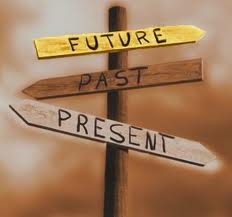
What tires you are your worries about the past and anxieties about the future.

Swami Parthasaraty, TIME Magazine, October 2007

What we can change


We cannot always change the perplexing conditions of our lives

– but we can change how our minds relate to them.

Tara Bennett-Goleman

Make the most of life:Stay in the present

A similar idea to yesterday’s one posted about Saint David. We make our future happiness by taking care of the present moment.

The past is gone, and I don’t know what’s coming in the future. It’s obvious that if I want my life to be whole, to resonate with feeling and integrity and value and health, there’s only one way I can influence the future: by owning the present. If I can relate to this moment with integrity, and then this moment with integrity, and then this moment with integrity, wakefully, then the sum of that is going to be very different over time, over many moments that stretch out into what we call a life, than a life that is lived mostly on automatic pilot, where we are reacting and being mechanical and are therefore somewhat numb.

Jon Kabat Zinn