The goodness in life

It is a beautiful morning here, and as I said, being Irish, the Spring season has already started for me.  This Mary Oliver poem captures the day perfectly. It shows how attention to what is present in any moment, especially in the beauty of nature, and having the space to taste and hear it, leads to a deep joy in life. It is not always possible with the troubles and hassles of work, so we should take her advice: Go outside and just look, listen. Life is good.


It was spring
and finally I heard him
among the first leaves—
then I saw him clutching the limb

in an island of shade with his red-brown feathers
all trim and neat for the new year.
First, I stood still

and thought of nothing.
Then I began to listen.
Then I was filled with gladness—
and that’s when it happened,

when I seemed to float, to be, myself, a wing or a tree—
and I began to understand
what the bird was saying,

and the sands in the glass stopped
for a pure white moment
while gravity sprinkled upward

like rain, rising,
and in fact
it became difficult to tell just what it was that was singing—
it was the thrush for sure, but it seemed

not a single thrush, but himself, and all his brothers,
and also the trees around them,
as well as the gliding, long-tailed clouds
in the perfectly blue sky— all, all of them

were singing.
And, of course, yes, so it seemed, so was I.
Such soft and solemn and perfect music doesn’t last

for more than a few moments.
It’s one of those magical places wise people like to talk about.
One of the things they say about it, that is true,

is that, once you’ve been there, you’re there forever.
Listen, everyone has a chance.
Is it spring, is it morning?

Are there trees near you,
and does your own soul need comforting?
Quick, then— open the door and fly on your heavy feet; the song
may already be drifting away.

Mary Oliver, Such Singing in the Wild Branches

Staying with the feeling

This statement by Tara Brach contains the essence of practice: All of our reactions to people, to situations, to thoughts in our mind – are actually reactions to the kind of sensations that are arising in our body.

See if you can practice this today: Notice the sensations in your body, before thinking sets in. Notice how the body reacts to pleasant and unpleasant events or experiences.  Stay with fear as a feeling in the body before it gets to thoughts or emotions.  Can you allow the sensation just remain a sensation in the body? Can you stop judging your whole life just because of a disturbing feeling in the body?

Reasons to be cheerful

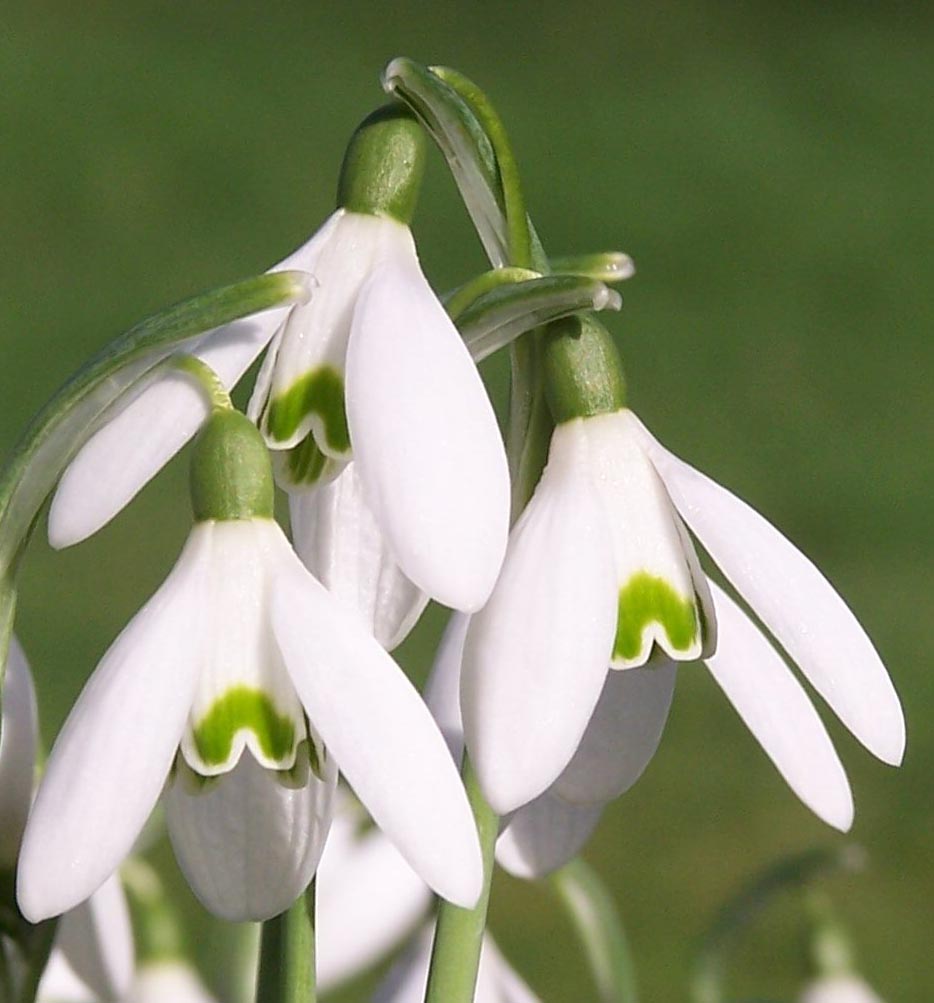
In this mild weather the first snowdrops are beginning to appear in the garden. I love the old legend about this flower. Adam and Eve were banished from the warmth and security of the Garden of Eden. They longed for the original sense of belonging and attunement which they once had. And then,  to make matters worse,  it became cold and started to snow. Eve began to cry, believing that she would never see  warmth and love again. Seeing this,  an angel felt sorry for her,   caught a snowflake in his hand, breathed on it, and when it hit the ground it turned into these delicate flowers. This beauty gave  her comfort and hope in the winter of her difficulties. Like Eve,  we all search for that original safety which we know deep down. We all need little signs to keep us going. We can look for them today.

Cheerfulness comes naturally with meditation. It is a quality of space created within the mind. When there’s space in the mind, the mind relaxes, and we feel a simple sense of delight. We experience the possibility of living a life in which we are not continuously aggravated by emotions, discursiveness, and concepts about the nature of things…. Despite all the ups and downs of our life, we are fundamentally awake individuals who have a natural ability to become compassionate and wise. Our nature is to be cheerful. This cheerfulness is deeper than temporary conditions. The day does not have to be sunny for us to be cheerful.

When we practice meditation, we are encouraging this natural state of cheerfulness. We don’t have to regard meditating as a somber activity; we can think of it as sitting there and being cheerful. We are using a technique to build clarity, strength, and flexibility of mind. In training our mind in pliability and power, we’re learning to relax, to loosen up, so that we can change our attitude on a dime. Strength of mind and pliancy are the causes and result of cheerfulness.

Sakyong Mipham Rinpoche

On how to turn the mind into a friend

Learning to be present for the moment is the beginning. By sitting still and training the mind to be with the breath, we begin to relax our discursiveness. We see how the mind creates our solid sense of self and begin to discover the mind’s natural state of being. With this experience we can being to cultivate our garden. The flowers of love compassion and wisdom gradually take over, and the weeds of anger,  jealousy and self-involvement have less and less room to grow. In peaceful abiding we become familiar with the ground of basic goodness. This is how we turn the mind into an ally.

Sakyong Mipham,  Turning the Mind into an Ally

A lot of ordinary things happen each day

We tend to overlook the ordinary. We are usually only aware of our breath when it’s abnormal, like if we have asthma or when we’ve been running hard. But [with mindfulness] we take our ordinary breath as the meditation object. We don’t try to make the breath long or short, or control it in any way, but to simply stay with the normal inhalation and exhalation. The breath is not something that we create or imagine; it is a natural process of our bodies that continues as long as life lasts, whether we concentrate on it or not. So it is an object that is always present; we can turn to it at any time. We don’t have to have any qualifications to watch our breath. We do not even need to be particularly intelligent — all we have to do is to be content with, and aware of, one inhalation and exhalation. Wisdom does not come from studying great theories and philosophies, but from observing the ordinary.

Ajahn Sumedho

Mindfulness meditation changes the brain

Participation in the 8 week MBSR programme affects the brain in areas which are responsible for memory, sense of self, empathy and stress, according to a new study due to be published next week in the Journal Psychiatry Research: Neuroimaging. The research was led by Sarah Lazar at the Massachusetts General Hospital and looked at MRI scans of participants before and after they took part in the MBSR Programme and compared them with a control group of non-meditators. They found, for example, that participant-reported reductions in stress  were correlated with decreased density in the amygdala, which is known to play an important role in anxiety and stress. This change was not found in the control group, meaning that it was not just due to passage of time.

As Britta Hölzel, PhD, first author of the paper states: It is fascinating to see the brain’s plasticity and that, by practicing meditation, we can play an active role in changing the brain and can increase our well-being and quality of life. What is interesting about this study is that it shows how the reported effects of the MBSR Course are now beginning to be tracked in the underlying structures of the brain.

You can check out a report of the study here:  http://www.sciencedaily.com/releases/2011/01/110121144007.htm