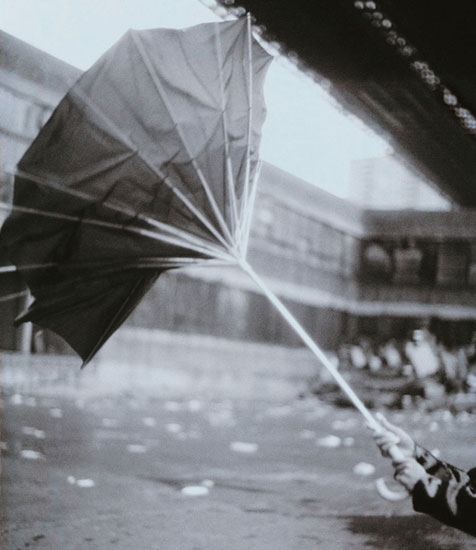
Sheltered from the wind

Experience follows intention. Wherever we are, whatever we do, all we need to do is recognize our thoughts, feelings, perceptions as something natural. Neither rejecting or accepting, we simply acknowledge the experience and let it pass. If we keep this up, we’ll eventually find ourselves becoming able to manage situations we once found painful, scary or sad. We’ll discover a sense of confidence that isn’t rooted in arrogance or pride. We’ll realize that we are always sheltered, always safe and always home.

Yongey Mingyur Rinpoche, The Joy of Living

When your day is blue, or grey, look for red

The snow returned briefly yesterday, and today there is a bitter north wind.  When times are grey or cold, or if our mood is blue (as this week is purported to be) we need to consciously notice the moments of colour and warmth in our lives, explicitly savouring them a little longer. We have to let positive facts become positive experiences. Just as   Mary Oliver does when she pays attention to the red bird in this poem. What were  or are the moments of colour in your day today that you can be grateful for? Who or what brought warmth? Allow yourself  to feel good if you achieve something  however small,  if someone smiles or if you notice a good quality in yourself. As studies have shown, the more you take in the good in little details, the more your brain tilts towards the positive in an overall sense.

Still, for whatever reason —
perhaps because the winter is so long
and the sky so black-blue,

or perhaps because the heart narrows
as often as it opens —
I am glad

that red bird comes all winter,
firing up the landscape
as nothing else can do.

Work with your day as it is

To practice we must see exactly where we are. Of course we can always imagine perfect conditions, how it should be ideally, how everyone else should behave. But it’s not our task to create an ideal. It’s our task to see how it is and to learn from the world as it is. For the awakening of the heart, conditions are always good enough.

Ajahn Sumedho

This week, reduce stress at work: 2: Starting and Ending

Mindfulness practice encourages us to drop into our awareness of breathing and our inner world as a way of working with stress. However,  keeping the sense of connectedness we feel in our formal practice is not always easy in the midst of a constantly changing everyday work life. So we need to build informal practices  – little strategies –  to help us  strengthen our awareness skills. This post suggests some practices for the start and the end of the day – the transition moments which are really important in maintaining or restoring balance.

  • Draw attention to the act of travelling to work – be it in a car or by public transport. Notice  any tension while driving – such as shoulders tensed with hands wrapped on the steering wheel – and consciously work at releasing that tension. See if you can stay in the awareness of just travelling without already being in work mode before you even arrive there.
  • When you arrive,  take a moment to ground yourself before you enter the building. If parking the car, become aware of your walking across the car park. Slow down and notice any tendency to rush. Use the walk as a conscious reminder before the workday starts. Listen to the sounds as you walk, notice the air and look around you.
  • At the end of the workday, consciously draw a line under the work you have done, making an intention to leave your work at work. Acknowledge quietly to yourself the end of the workday and be grateful for what you have accomplished. If possible, breathe mindfully for just one moment, letting go of the work.
  • Again, notice any tendency to rush on your journey home. Try and mark a break with the tempo of the office by slowing down on the way to the car or transport.  Make the journey itself as conscious as possible, restoring any balance lost during the stress of the day. When you come to a red light, use the moment to consciously become aware of your body, releasing any tension that has built up.
  • When you get home it is good sometimes to draw attention to the transition from work space to home space, by changing clothes or having a shower. Formally acknowledge to yourself that you are now home. If you can, take five minutes to quieten down and drop into stillness.

A Traveller’s tale: Starting out in mindfulness

Beth Parks Aronson has been in touch, letting me know that she is starting an MBSR Course shortly and is writing a blog documenting her thoughts and experiences.   It’s called, appropriately, Beginner’s Mind, and will follow her journey as she develops a mindfulness practice. In a real sense we all start anew every day. So why don’t you check it out, and give some encouragement.

http://betharonson.wordpress.com/

A steady awareness

Don’t think that only sitting with the eyes closed is practice. If you do think this way, then quickly change your thinking. Steady practice is keeping mindful in every posture, whether sitting, walking, standing or lying down. When coming out of sitting, don’t think you are coming out of meditation, but that you are only changing postures. If you reflect in this way, you will have peace. Wherever you are, you will have this attitude of practice with you constantly. You will have  a steady awareness within yourself.

Ajahn Chah

Don’t think that only sitting with the eyes closed is practice. If you do think this way, then quickly change your thinking. Steady practice is keeping mindful in every posture, whether sitting, walking, standing or lying down. When coming out of sitting, don’t think that you’re coming out of meditation, but that you are only changing postures. If you reflect in this way, you will have peace. Wherever you are, you will have this attitude of practice with you constantly. You will have a steady awareness within yourself.