Letting sorrow drop

As water falls from a lotus leaf

so sorrow drops from those

who are free of toxic craving

Dhammapada 336

The sorrows of life can convince us they are really important. They seem to demand a huge amount of attention. However…if mindfulness practice is mature, we will be able to observe suffering when it arises without becoming too fascinated by it. We will be able to reflect wisely on the reality of the moods we have, not just be sensitive to them. They are not ultimate – they come and go. 

Commentary by Ajahn Munindo

Breathe

Bring those spaces into your everyday life, as many as possible. When you get into your car, shut the door and be there for just half a minute. Breathe, feel the energy inside your body, look around at the sky, the trees. The mind might tell you, I don’t have time. But that’s the mind talking to you. Even the busiest person has time for 30 seconds of space.

Eckhart Tolle, in interview with Oprah Winfrey

Walking in nature

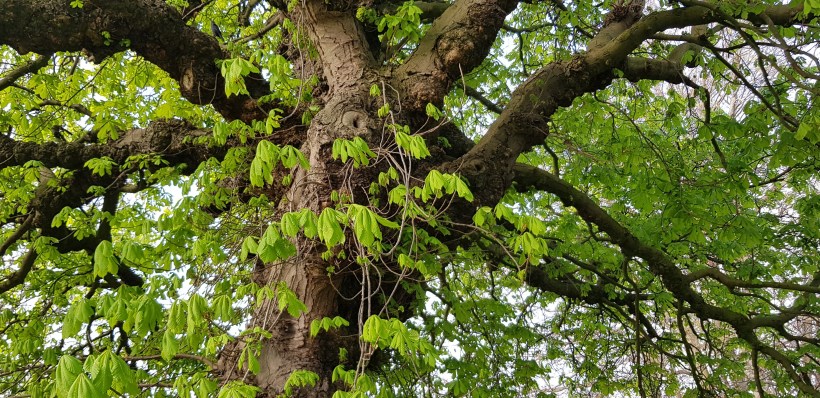
Rumi advised me to keep my spirit
up in the branches of a tree and not peek
out too far, so I keep mine in the very tall
willows along the irrigation ditch out back,
a safe place to remain unspoiled by the filthy
culture of greed and murder of the spirit.
People forget their spirits easily suffocate
so they must keep them far up in tree
branches where they can be summoned any moment.
It’s better if you’re outside as it’s hard for spirits
to get into houses or buildings or airplanes.

Jim Harrison, 1937 – 2016), American poet, novelist, and essayist, Dead Man’s Float

Serenity

He knows how to enjoy the fullness of each moment, as his own mind is serene and at peace. There is a sufficiency in the things around him

At Nantai I sit quietly with an incense burning,

One day of contentment, all things are forgotten,

Not that my mind is stopped and thoughts are put away,

But that there is really nothing to disturb my serenity.

Shou-an , quoted in Suzuki, Essays in Zen Buddhism – First Series 

Saturday : Unplug

Almost everything will work again if you unplug it for a few minutes, 

including you.

Anne Lamott

The witness

There is one technique which is known as adopting the role of the witness – and holding onto that role – ultimately, to the exclusion of all roles. The witness is not evaluative. It does not judge your actions. It merely notes them.  This point is important. Most of the time the inner voices of most people are continually evaluative. “I’m good for doing this” or “I’m bad for doing that.” You must make that evaluative role an object of contemplation as well. Keep in mind that the witness does not care whether you become enlightened or not. It merely notes how it all is.

Ram Daas, Be Here Now