
Your mindfulness will only be as robust as the capacity of your mind to be calm and stable. Without calmness, the mirror of mindfulness will have an agitated and choppy surface, and will not be able to reflect things with any accuracy
Jon Kabat Zinn
Your mindfulness will only be as robust as the capacity of your mind to be calm and stable. Without calmness, the mirror of mindfulness will have an agitated and choppy surface, and will not be able to reflect things with any accuracy
Jon Kabat Zinn
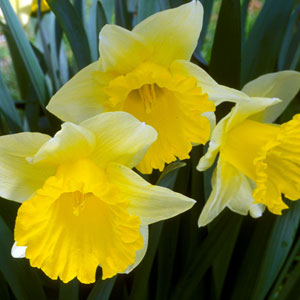
Oh, give us pleasure in the flowers today;
And give us not to think so far away
As the uncertain harvest; keep us here
All simply in the springing of the year.
Robert Frost
 When we emphasise our personality we create problems, because the personal qualities are different for each one of us. We have our common human problems: old age, sickness and death; but there are attitudes, cultural expectations and assumptions wherein we differ, and these are conditioned into the mind after we are born. Because of this, I often say to people, ‘Whatever you think you are, that’s not what you are.’ The personality, the self-consciousness, the fears and the desires of the mind are what they are. In practice, we are not trying to dismiss them or add to them, or make any problems or difficulties around them. We are willing to let them be what they are. They feel this way, they have this quality; they arise and cease. And in that cessation, there’s the realisation of the peace, the bliss and the serenity of just being — and there’s no self in it.
Ajahn Sumedho, True but not right, right but not true

A thought is an object to be known
just as the absence of thoughts is an object to be known.
What is the difference?
Sayadaw U Tejaniya
 What could be more relaxing than letting go of preferences and worries? What can liberate our hopes and fears other than letting them arise and disassemble themselves naturally in the space of an open mind? Meditation leaves plenty of room for everything: all of our hopes, fears, and anxieties as well as our joys and aspirations. There is no need to control our thoughts, because when we practice we have committed ourselves to letting them be—not judging them as good or bad, spiritual or not spiritual, helpful or harmful. The only thing we need to practice is a quiet place to sit: a room, a park bench, or our own bed. The sutras describe a peaceful mango grove as an ideal place to practice. The Buddha and his disciples practiced meditation in such a place. If you think about it, in the midst of our busy lives, any quiet place to sit can be our modern-day mango grove.
Dzigar Kongtrul Rinpoche, Take Charge of Your Practice
 From time to time we come to a stuck place … After a while, the doing, fixing mind gets to the end of what it can accomplish and becomes the problem rather than the solution. Then we get stuck. And that sense of stuckness spins out into blaming our apparent self, our system of practice… we assess our character, our heart, our history, our past, our flaws, and our virtues. We fidget, become distracted, and jump to conclusions that will cement the stuckness into a situation...We can note that the stuckness, having eluded our attempts to get rid of it or gloss over it, takes us to an ‘edge.’ We want to hold on to some identity, or to a conviction in our practice tradition, but we can’t quite do it. We are taken to a place of uncertainty, a place where there is a feeling of not being anything solid but where there is still a hankering to be something. This is the edge.
The stuck stuff captures and convinces by its power to stimulate the mind… [but] if we can see them for what they are… these energies won’t stick. We realize that the stuck state is just a pattern of energies that we weren’t fully aware of; and when that fullness of awareness is brought to bear, the self is taken out of it and it becomes unstuck. And it takes us to a [place that is] more intimate and comfortable than our personalities.
Ajahn Sucitto
 Mindfulbalance