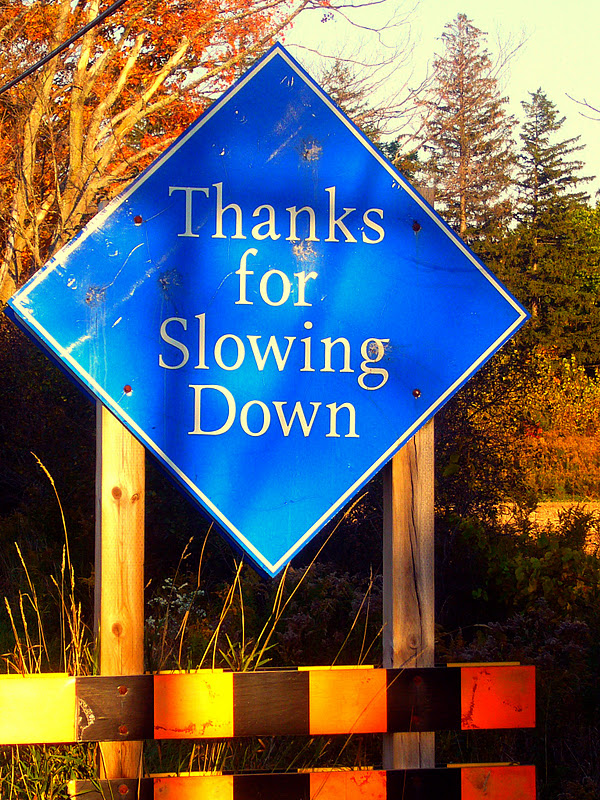
How to get the most from the holidays: Do all things deliberately and with attention

“Conquer haste”, the Zen masters say. The writer Joe Hyams, describes how he learned that lesson in a meeting with the master Bong Soo Han. The two were having tea when a letter arrived from the teacher’s family in Korea. Hyams says: ‘Knowing he had been eagerly anticipating the letter, I paused in our conversation, expecting him to tear open the envelope and hastily scan the contents. Instead, he put the letter aside, turned to me, and continued our conversation. The following day I remarked on his self-control, saying that I would have read the letter at once.’

“I did what I would have done had I been alone,” he said. “I put the letter aside until I had conquered haste. Then when I set my hand to it, I opened it as though it were something precious.”  I puzzled over this comment a moment, knowing he meant it as a lesson for me. Finally I said I didn’t understand what such patience led to. “It leads to this,” he said. “Those who are patient in the trivial things in life have the same mastery in great and important things.”

Philip Toshio Sudo.

Just being aware today

This is what we mean when we use such terms like: ‘It is as it is.’ If you ask someone who is swimming in water, ‘What is water like?’, then they simply bring attention to it and say, ‘Well, it feels like this. It’s this way.’ Then you ask, ‘How is it exactly? Is it wet or cold or warm or hot. ..?’ All of these words can describe it. Water can be cold, warm, hot, pleasant, unpleasant.  The realm we’re swimming in for a lifetime is this way! It feels like this! You feel it! Sometimes it’s pleasant. Sometimes it’s unpleasant. Most of the time it’s neither pleasant nor unpleasant. But always it’s just this way. Things come and go and change, and there’s nothing that you can depend on as being totally stable.

Now we’re not judging it; we’re not saying it’s good or it’s bad, or you should like it, or you shouldn’t; we’re just bringing attention to it – like the water. The sensory realm is a realm of feeling. We are born into it and we feel it. We feel hunger; we feel pleasure; we feel pain, heat, and cold. As we grow, we feel all kinds of things. We feel with the eyes, the ears, the nose, the tongue, the body; and with the mind itself. There is the ability to think and remember, to perceive and conceive. All this is feeling. It can be lots of fun and wonderful, but it can also be depressing, mean and miserable; or it can be neutral – neither pleasant nor painful. To be able to truly reflect on these things, you have to be alert and attentive. Some people think that it is up to me to tell them how it is: ‘Ajahn Sumedho, how should I be feeling right now?’ But we’re not telling anybody how it is; we’re being open and receptive to how it is. There’s no need to tell someone how it is when they can find out for themselves.

Ajahn Sumedho, The Way it is

Finding strength to face challenges

In the last week before Christmas Day, the Christian Liturgy uses a series of ancient invocations, called the O Antiphons, which date from the fifth Century. These beautiful statements reflect deep longings in the human psyche  –  looking for wisdom, or the key, or the source – and in the liturgy are focused on the immanent coming of Christ. They reflect deep longings, comforting, calming and focusing these universal human needs. Today’s antiphon is addressed by the person who feels weak and overwhelmed, who looks for strength, and recalls the theme of God intervening in history, appearing to Moses and leading him out of slavery in Egypt. He then shows a way towards happiness in his law. The ancient metaphor of “an arm outstretched” is a way of talking about strength and protection.

Texts such as these work on a number of levels and can be applied easily to the inner longings of the human spirit. Each day, we too need to draw on many sources of strength, both internal and external. Sometimes we are faced with unfamiliar territory or challenges which daunt us at first sight. Or we may need to leave behind those places in our lives where we have been held captive. We can see the word “Egypt” as not just the ancient land where the Hebrews were slaves:  the Hebrew word Mitzraim means “a narrow place.” So “going out from Egypt” can mean going from a narrow place, a place where we are stuck, to a wider place, a place where we are free. So often we get trapped in “narrow places”, stuck in situations or in our limited views of our own capabilities. We default easily to a sense of ourselves as weak or defective. At times of change we need to keep our focus on words and ideas that give us strength, that link us to our natural goodness and fearless nature. The themes at this time of the year remind us to keep our eyes fixed in hope on the light that appears in the darkness, to see where we are trapped and to let go of what is dead in our lives.

O Adonai, and Leader of the house of Israel,
You appeared to Moses in the burning bush,
and gave him the Law on Sinai:
come and save us with an outstretched arm.

Taking our thoughts very seriously

These trains of thought and states of mind are constantly changing, like the shapes of clouds in the wind, but we attach great importance to them. An old man watching children at play knows very well that their games are of little consequence. He feels neither elated nor upset at what happens in their game, while the children take it all very seriously. We are just exactly them.

Dilgo Khyentse Rinpoche

The colour of our inner movie

Thoughts can be our best friends and our worst enemies. When they make us feel that the entire world is against us, every perception, every encounter, and the world’s very existence become sources of torment. It is our thoughts themselves that rise up as enemies. They stampede through our mind in droves, each one creating its own little drama of ever-increasing confusion. Nothing is right outside because nothing is right inside. When we get a close look at the tenor of our everyday thoughts, we realize the extent to which they color the inner film that we project onto the world….. According to Andrew Solomon, “In depression, all that is happening in the present is the anticipation of pain in the future, and the present qua present no longer exists at all.” The inability to manage our thoughts proves to be the principal cause of suffering. Learning to tone down the ceaseless racket of disturbing thoughts is a decisive stage on the road to inner peace.

Matthieu Ricard, Happiness

Having what we need

There is a lot of emphasis placed around Christmas on getting things which are always linked to greater happiness or contentment. Gift-giving is nice, and can be a way of showing our love and appreciation for others. However, advertising is based on the presupposition that there is something out there, that I do not have now, that would make me happier if and when I get it. When repeated over and over again this message can distract us from working with the real source of happiness.

Right now, at this moment, we have a mind,

which is all the basic equipment we need

to achieve complete happiness.

The Dalai Lama