Simple daily practices: Pause

Our habits are strong, so a certain discipline is required to step outside our cocoon and receive the magic of our surroundings. The pause practice—the practice of taking three conscious breaths at any moment when we notice that we are stuck — is a simple but powerful practice that each of us can do at any given moment.
Pause practice can transform each day of your life. It creates an open doorway to the sacredness of the place in which you find yourself. The vastness, stillness, and magic of the place will dawn upon you, if you let your mind relax and drop for just a few breaths the storyline you are working so hard to maintain. If you pause just long enough, you can reconnect with exactly where you are, with the immediacy of your experience.

Pema Chodron, Waking up to your World

Walking exercises the brain as well

This post is related to the one a few days back which reported on the beneficial effect of meditation on the development and aging of the brain. As a person ages, the part of the brain knows as the hippocampus shrinks, especially in late adulthood.  Since the hippocampus has functions which are related to memory, this shrinkage can lead to impaired memory and increased risk for dementia. So it is interesting to read the results of a study which shows that the simple act of walking may improve memory in old age.

In this study, the research subjects exercised by taking three, 40-minute walks each week over the period of a year, and were compared with a control group  in a number of ways including memory, levels of ‘brain derived neurotropic factor’ (a substance that stimulates new brain cell development and brain cell communication), as well as the size of  the hippocampus. It was found that the “walking” groups – as compared to the ‘control’ group –  experienced an increase in volume of the hippocampus (the control group saw a small reduction in volume of this brain structure), as well as higher levels of brain derived neurotropic factor and improved memory.

This study provides good evidence that even a quite low-intensity exercise can lead to improved brain function, and reverse hippocampal volume loss in late adulthood, and backs up earlier research from the University of Pittsburgh which tracked the physical activity of 299 healthy men and women who had different walking habits. When brain scans were taken after nine years on the programme, it was revealed that those who had walked more had greater brain volume than those who walked less. Four years later, the same tests revealed that those who had walked the most — about 7 miles each week — were half as likely to have cognitive problems as those who walked the least.

Erickson KI, et al. “Exercise training increases size of hippocampus and improves memory”. PNAS 31 January 2011

Recommended Summer Reading 4

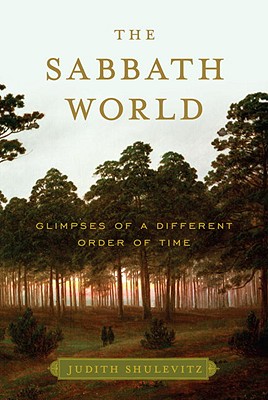
A book that is not directly about Meditation or Mindfulness, but which does impact upon stress reduction, The Sabbath World: Glimpses of A Different Order of Time, is a beautiful work which discusses our use of time by reflecting on the millenia-old practice of the Sabbath rest. The author, Julie Shulevitz,  a successful journalist at the New York Times, found herself increasingly uneasy with  the speeded-up and frantic pace of modern life. She decided to return to look at the meaning and value of  the practice which had been honoured in her Jewish childhood – and which she rebelled against –   the setting aside of a special time which was the Sabbath, and see if it made any sense in this modern age:

Americans, once the most Sabbatharian people on earth, are now the most ambivalent on the subject. On the one hand we miss the Sabbath. When we pine for escape from the rat race; when we check into spas, yoga centers, encounter weekends, spiritual retreats; when we fret about the disappearance of a more old-fashioned time, with its former, generally agreed-upon rhythms of labor and repose; when we deplore the increase in time devoted to consumerism; when we complain about the commercialization of leisure, which turns fun into work, and requires military-scale budgeting and logistics and interactions with service personnel – whenever we worry about these things we are remembering the Sabbath, its power to protect us from the clamor of our own desires.

The book that unfolds from this starting point is partly a personal memoir, partly a reflection on the role of the spiritual in life, part history and cultural analysis, and is written in a lovely, engaging prose. I picked it up two weeks ago and read it easily over a few days as it deals with its big topic – and the philosophical and life reflections prompted by it –   quite lightly, without being superficial. Although it takes as its starting point a religious practice, it is really a long reflection on the anthropological roots beneath all religious acts, the need for balance and the difficulty we have today in finding it. What makes it appealing is that one can sense the author’s desire to find what is meant by home and meaningful ritual,  and her search for the  inner space to find rest in them. Her reflections can help us all consider the need to set aside some silence to reflect upon why we work in the first place  and to see the wonder and depth in life:

So why remember the Sabbath? Because the Sabbath comes to us out of the past – out of the bodies of our mothers and fathers, out of the churches on our streets, out of our own dreams – to train us to pay attention to it. And why do we need to be trained? Consider the mystery surrounding God’s first Sabbath. Why did God stop anyway? In the eighteenth century, Rabbi Elijah of Vilna…ventured this explanation: God stopped to show us that what we are creating becomes meaningful only once we stop creating and start remembering why it was worth creating in the first place.

Simple daily practices: Bring awareness to your anxiety

To begin with, I’ve found it helps me to appreciate how scared that little lizard inside each one us is. Lizards – and early mammals, emerging about 200 million years ago – that were not continually uneasy and vigilant would fail the first test of life in the wild: eat lunch – don’t be lunch – today.  So be aware of the ongoing background trickle of anxiety in your mind, the subtle guarding and bracing with people and events as you move through your day. Then, again and again, try to relax some, remind yourself that you are actually alright right now, and send soothing and calming down into the most ancient layers of your mind.

 Also soothe your own body. Most of the signals coming into the brain originate inside the body, not from out there in the world. Therefore, as your body settles down, that sends feedback up into your brain that all is well – or at least not too bad. Take a deep breath and feel each part of it, noticing that you are basically OK, and letting go of tension and anxiety as you exhale; repeat as you like. Shift your posture – even right now as you read this – to a more comfortable position. As you do activities such as eating, walking, using the bathroom, or going to bed, keep bringing awareness to the fact that you are safe, that necessary things are getting done just fine, that you are alive and well. Register the experience in your body of a softening, calming, and opening; savor it; stay with it for 10-20-30 seconds in a row so that it can transfer to implicit memory.

Rick Hanson, Pet the Lizard

Making time for our better health 3: Arrive Early

For the next seven days, see if you can arrive early for scheduled appointments. Notice how this impacts upon your state of mind. Do meetings feel more spacious? Do you feel more relaxed and better prepared? Do you feel that more is actually accomplished? Sub-rule to this practice: If you are late, relax. Just be late. Don’t punish yourself

Marc Lesser, 3 practices to shift your relationship with time

Mindful eating and weight loss

A pilot study has looked at the effect of Mindful Eating on weight loss. The report of  the study was published in Complementary Therapies in Medicine in 2010  and involved ten people classified as “obese” (average age was 44) who followed a Mindful Eating program for six weeks, consisting of mindfulness meditation, group eating exercises, and group discussions.  Pairing daily meditation with eating was encouaged to enable people to identify and examine eating triggers, hunger and fullness  cues, the quality of craved foods, and emotions associated with eating. They were encouraged to engage in as much mindful eating as possible and to increase their physical activity by about 5 to 10% each week. The participants were assessed during the trial and again after three months for changes in eating behaviour, psychological functioning, and weight and inflammation markers.

It was found that all of the participants lost a significant amount of weight, almost nine pounds over 12 weeks, on average. A measure of inflammation in the body (C-reactive protein,), decreased significantly, as well. Measures of mindfulness—the ability to observe, be aware of, accept, and describe their eating patterns—saw moderate to large increases throughout the study and follow-up periods. The participants’ self control improved dramatically, and binge eating was significantly reduced. In addition, significant improvements were seen in depressive and physical symptoms (such as indigestion and headache), as well as negative affect (mood) and perceived stress. The cautious conclusions drawn by the researcher were that mindful eating programmes could result in significant changes in weight and eating behaviour.

In contrast to a focus on cutting calories, mindfulness helps people reduce weight and improve health by restoring the individual’s ability to detect and respond to natural cues,” stated Jeanne Dalen, lead author of the study who works at the Center for Family and Adolescent Research in Albuquerque, New Mexico.

Jeanne Dalen, Bruce W Smith, Brian M Shelley, Anita Lee Sloan, Lisa Leahigh, Debbie Begay, “Pilot study: Mindful Eating and Living : weight, eating behavior, and psychological outcomes associated with a mindfulness-based intervention for people with obesity”, Complementary Therapies In Medicine (2010), Volume: 18, Issue: 6.