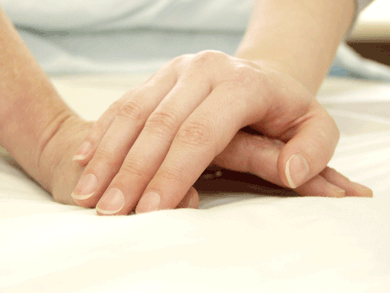
 The body always leads us home . . .
if we can simply learn to trust sensation
and stay with it long enough for it to reveal appropriate action, movement, insight, or feeling.
Pat Ogden
The body always leads us home . . .
if we can simply learn to trust sensation
and stay with it long enough for it to reveal appropriate action, movement, insight, or feeling.
Pat Ogden
 The difficulty most of us face is that we’re afraid of our humanity. We don’t know how to give our humanity space. We don’t know how to give it love. We don’t know how to offer our appreciation. We seize upon whenever difficult emotions or painful thoughts arise – in large part because we have been taught from a very early age that life is a serious business. We’re taught that we have to accomplish so many things and excel at so many things because we have to compete for a limited amount of resources. We develop such high expectations for ourselves and others, and we develop high expectations of life. Such a competitive, goal-orientated approach to life makes us very speedy inside. We become so tight physically, mentally and emotionally as we rush through each day, each moment, that many of us forget – often quite literally – to breathe.
Tsoknyi Rinpoche, Upgrading our Practice

I often suggest that my students ask themselves the simple question: Do I know how to live? Do I know how to eat? How much to sleep? How to take care of my body? How to relate to other people?….Life is the real teacher and the curriculum is all set up. The question is: Are there any students?
Larry Rosenberg, Breath by Breath

And so we are, daily, becoming more enslaved to and more compulsive in our use of mobile phones and the Internet. For many of us it is now existentially impossible to take off a day, let alone several weeks, and be on a genuine holiday. Rather, the pressure is on us to constantly check for texts, e-mails, phone messages and the like. The expectation from our families, friends, and colleagues is precisely that we are checking these regularly. The sin du jour is to be, at any time, unavailable, unreachable or non-communicative.
Ron Rolheiser
 “Wanting” is a universal phenomenon, and our mental list of what we want is seemingly endless. We wake up in the morning and ask “What do I want today? What do I want to eat, what do I want to buy, how much do I want” Wanting, when it goes beyond our basic, ordinary needs, is an expression of a longing for something either more than or different from what we already have,. There is a sense of being fundamentally unfulfilled. It is well worth looking more deeply into the nature of wanting, recognizing how you know wanting is there, and naming it. When you become familiar with recognizing and naming wanting, then it will become easier to notice when are captured, and therefore you will more likely be able to free yourself. The practice fo mindfulness is a fundamental way of becoming more familiar with your mind, and getting used to observing how mind states arise, are noted, and then dissolve. With practice you can become better at noticing the “I want” state of mind, letting it arise, and letting it go.
Sasha Loring, How to Tame the Wanting Mind
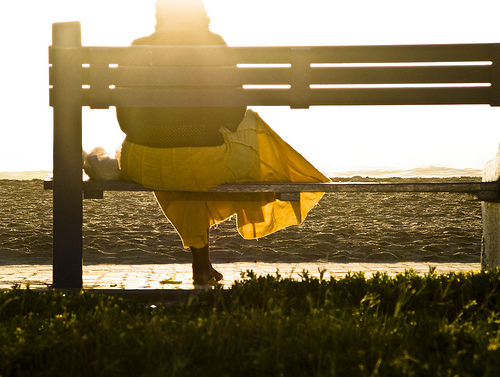 Can you be happy where you are, in your life, at this moment?
If this was a problem in Pascal’s time – more than 300 years ago – it is even more so today. IN a world increasingly driven by the need to achieve, and by advertising, media and social networking, we can physically be in one place but miles away from it in our mind and in the thoughts and aspirations which the images produce. I was reminded of this yesterday, standing in line in a boulangerie – in a beautiful place beside the sea and palm trees – when the man in front of me said “Yes, my body may be on holidays, but my mind is still in the office”. This difficulty to switch off – even in a place of great natural beauty – makes it hard for us to be where we are at this moment, physically, but also in the sense of being with what is the realiuty of our life at this actual time in our history. We find ourselves living in our thoughts, dreams and worries, and strangely sometimes seem to prefer to be there.
All man’s miseries derive from not being
able to sit quietly in a room alone.
Blaise Pascal, French Philosopher.

