The Best moment

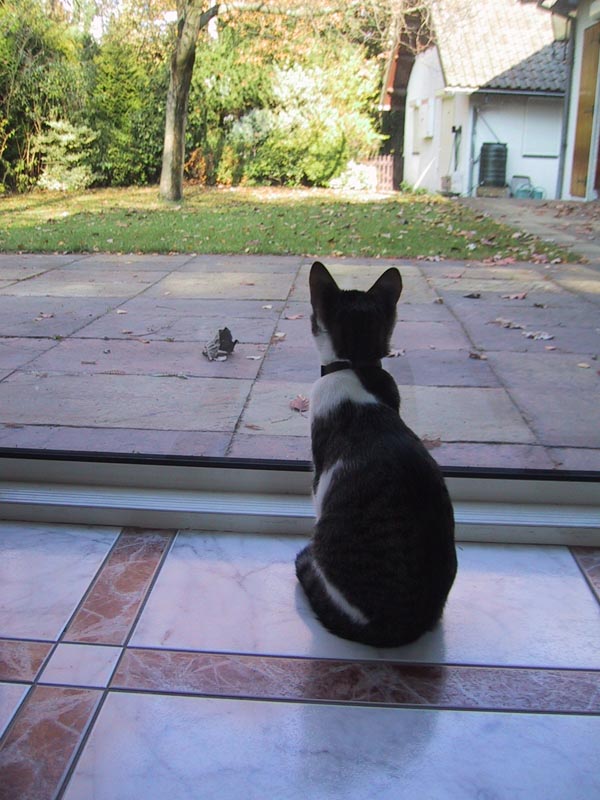
livenowIf someone were to ask us, “Has the best moment of your life arrived yet?” we may say that it will come very soon. But if we continue to live in the same way, it may never arrive. We have to transform this moment into the best moment, and we can do that by stopping – stopping running into the future, stopping worrying about the past, stopping accumulating so much…… Breathing in and out consciously helps you to become your best – calm, fresh, solid, clear and free, able to enjoy the present moment as the best moment of your life.

Thich Nhat Hanh, Your True Home

Always looking elsewhere

File:Lonely Woman Watching Sea Waves on Beach.jpg

There is no greater mystery than this,

that we keep seeking reality

though in fact we are reality

Ramana Maharsi

photo epsos.de

Not too big or too small

File:Glacier scratched pebble.JPG

Modern science is finding out that a lot can be learned from contemplative traditions, both in the East, as seen in Ajahn Sucitto’s quote this morning, and in the West, as can be seen in monastic orders like the Cistercians both here at Bolton Abbey in Ireland or all around the world. They both emphasize the health benefits of sitting still, which has effects on brain function, even in small doses.

The claim…that stillness of body leads to stillness of mind is not the exclusive preserve of Indian traditions: the desert fathers maintained that simply sitting still, preferably on or close to the ground, would greatly aid their attempts to keep the mind focused and thus resist the distracting chatter of demons. To sit still is to be present, and fully attentive to what is. How often do we really give our undivided attention to the things we do, or the people we are with? To be present is to accept what is,  as it is, without wishing things were otherwise, or imagining that if only they were, then everything would be so much better. It is to be able to pick up a pebble and see that it is perfect – just as it is – neither too big or too small. 

Nicholas Buxton, Tantalus and the Pelican

photo b navaz : basalt pebble scratched by glacier erosion
Travelling light

File:Berlin hauptbahnhof drei rollkoffer 15.04.2011 15-07-46.JPG

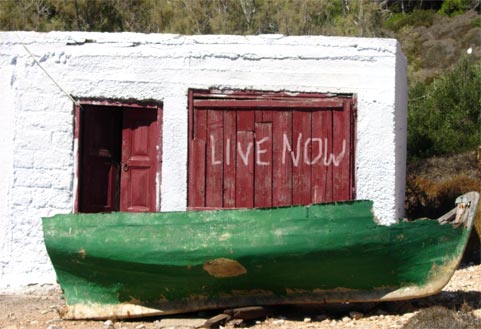
There is an old story of a famous rabbi living in Europe who was visited one day by a man who had traveled by ship from New York to see him. The man came to the great rabbi’s dwelling, a large house on a street in a European city, and was directed to the rabbi’s room, which was in the attic. He entered to find the master living in a room with a bed, a chair, and a few books. The man had expected much more.  After greetings, he asked, “Rabbi, where are your things?” The rabbi asked in return, “Well, where are yours?” His visitor replied, “But, Rabbi, I’m only passing through,” and the master answered, “So am I, So am I.”

This is not a lesson to be put off. One great teacher explained it this way: “The trouble with you is that you think you have time.” We don’t know how much time we have. What would it be like to live with the knowledge that this may be our last year, our last week, our last day? In light of this question, we can choose a path with heart.

Jack Kornfield,  A Path With Heart

photo dirk ingo franke

Using time well

File:Magnolia x soulangeana Rogów.JPG

In a week when the newspaper front pages in Ireland and England devote as much time to celebrity gossip and the gyrations of Miley Cyrus at VMA Awards as they do to atrocities and human suffering in Syria and Iraq, it is probably good to reflect on how we can live more consciously. One element of this is where we choose to place our attention and devote our time:

If they say we should get together. Say why?

It’s not that you don’t love them any more.
You’re trying to remember something too important to forget.
Trees. The monastery bell at twilight.
Tell them you have a new project. It will never be finished.

When someone recognizes you in a grocery store, nod briefly and become a cabbage.
When someone you haven’t seen in ten years appears at the door,
don’t start singing him all your new songs.
You will never catch up.

Walk around feeling like a leaf.
Know you could tumble any second.
Then decide what to do with your time.

Naomi Shihab Nye, The Art of Disappearing

photo crusier

Recognizing your experience

Looking Outside

Here’s a definition of mindfulness: it’s a strengthening of your concentration so that you can be more precise and clear in recognizing your experience. It’s also a strengthening of your equanimity — your ability to be relaxed and open in the face of your experience. The concentration part of mindfulness is a little like drinking a cup of coffee; it kind of wakes you up. It’s like the straight spine of arousal or awareness. The equanimity part is like the relaxed limbs of the body. The spine is straight, and the limbs are relaxed. This relaxation part is a receptivity and acceptance to things as they are. It’s a kind of “friendly audience” to your own experience; a sort of “Hello. Wow! OK.” attitude — a gentle, matter-of-fact awareness of your experience, rather than a reactive pulling back.  All mindfulness practices cultivate both of those, the concentration and the equanimity, so that you can be clearer, more precise and more relaxed in the face of whatever is happening to you —whether it’s loud noises coming in from a jackhammer running in the next building, or a pain in your knee, or your emotions about your spouse.

Polly Young-Eisendrath