The magnitude of our personal journeys,
require that we learn to tolerate ambiguity,
in service to a larger life.
James Hollis, What Matters Most
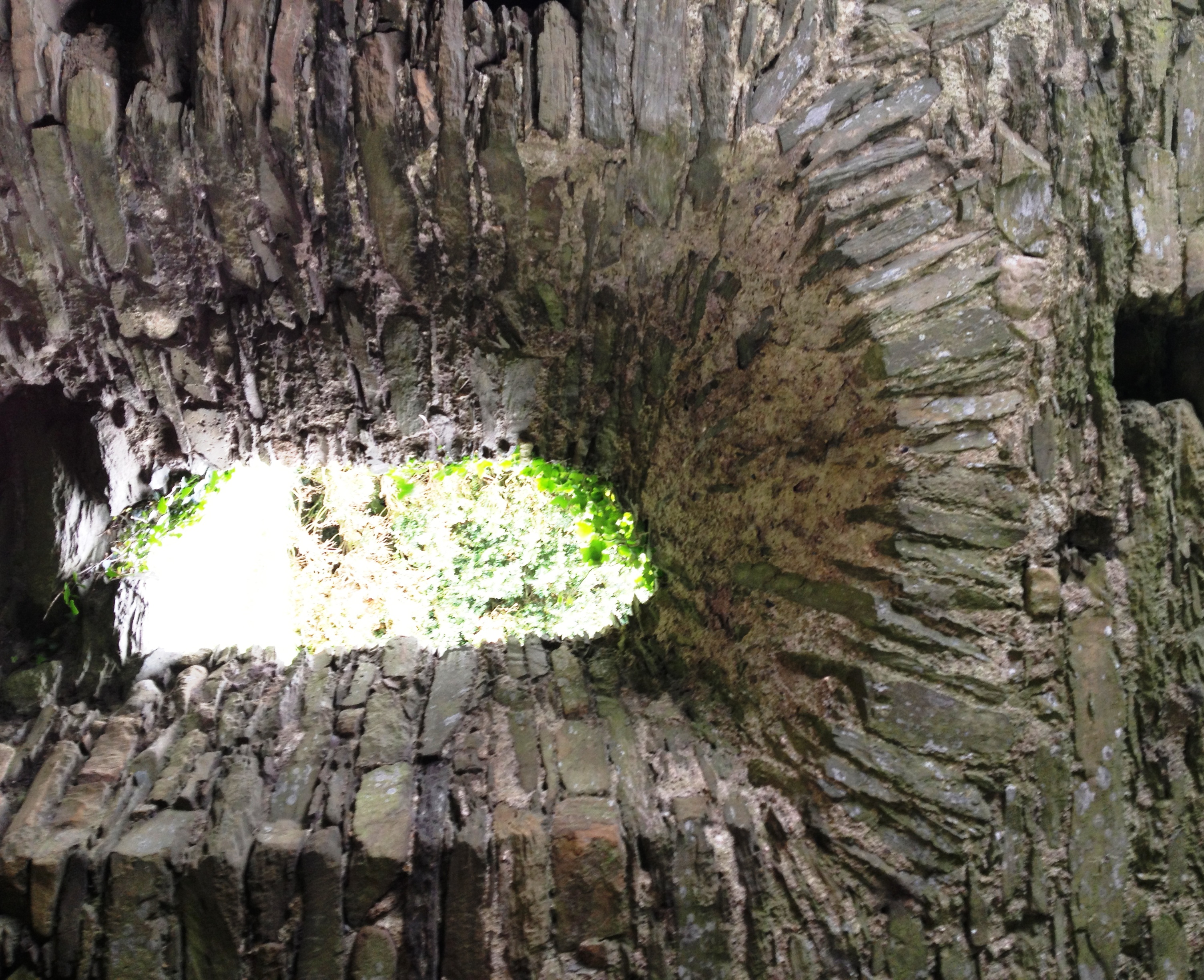
photo of 13th century Killelan Abbey (Knights of St John of Jerusalem), Moone, Co. Kildare
The magnitude of our personal journeys,
require that we learn to tolerate ambiguity,
in service to a larger life.
James Hollis, What Matters Most

So they took Jeremiah and … lowered him by ropes into the well; it had no water in it, only mud, and Jeremiah sank down into the mud. Jeremiah 38: 6-7
At the liturgy in Bolton Abbey in Moone on Sunday I listened to the story about the Prophet Jeremiah who was thrown down a well and who was sinking in the mud at the bottom of the well. A lot of these phrases from the classic texts become symbolic, and are applied to our emotional lives. At times we feel it. Sinking in mud. Nothing firm under our feet. Nothing solid in our lives. No points of reference.
There are a number of things we can do – at different levels – when the going gets rough in this way.
In the first instance the image of mud can be useful. The natural tendency of the mind in times of difficulty is to go into fixing mode, looking for ways out of the problem. Unfortunately this can switch on the thinking mind, which can lead to worry and obsessing. And like squiriming in mud, often that only makes us sink deeper, as thinking about our state of mind sometimes starts a spiral which creates a lot of mental distress. We go through this at times in the middle of the night, as the mind goes over the problem again and again, withut coming to any resolution. All this succeeds in doing at times is to narrow the focus of the mind, close it down, and prevents us from thinking creatively, while leading round and round in ever-decreasing – and exhausting – circles. We only succeed in making the shakiness of the mud – how we feel – into who we are.
A first solution is to stand still – metaphorically – and get some firm ground for this shaky mind to stand on. One way to do this is to switch from our thinking intelligence and use the resources of our body intelligence, by centering and grounding ourselves, using our breathing. So we switch our focus to something that is always with us: the movement of the breath in the body. The breath arises and passes away, most times without us even noticing it. So tuning into this movement reminds us that some important things concerning our health happen without us forcing, or even depending very little on what we want to achieve. This helps us to be less ‘in our heads’ and more present to what is happening around us, to reconnect with a broader sense of life. So firstly we seek to put ground under our feet, by centering in the body. We can then define ourselves as not identified with the stickiness of the mud, and we get onto some firmer ground. And this corresponds to a first aspect of meditation – samatha – or centering/concentration.
However, there is a second – deeper and more ongoing – sense in which we are getting used to the fact that fully lasting, solid, ground is never there for very long in this life. This can be true even in the little things in life, as our good mood can change even on the receipt of an email. So, we come to understand that only get firm ground for a period, and then things change or shift, in ways we cannot anticipate. In this sense, we are accepting that – at a deep level – our constant quest to have a permanent feeling of solidity is not in harmony with the nature of things. This is related to the second aspect of meditation – vipassana – or the wisdom/insight into the causes of problems. A deeper form of calm comes from our learning to relax with this.
To think that we can finally get it all together is unrealistic. To seek for some lasting security is futile. To undo our very ancient and very stuck habitual patterns of mind requires that we begin to turn around some of our most basic assumptions…. We long to have some reliable, comfortable ground under our feet, but we’ve tried a thousand ways to hide and a thousand ways to tie up all the loose ends, and ground just keeps moving under us. Trying to get lasting security teaches us a lot, because if we never try to do it, we never notice that it can’t be done. At every turn we realize once again that it’s completely hopeless – we can’t get any ground under our feet. Without giving up hope that there is somewhere better to be, that there is someone better to be, we will never relax with where are or who we are.
Pema Chodron
The other day I had a small problem with the heating and water system so I called a plumber. Like many people he was interested to hear of my impressions of Ireland since I returned. I told him that they were mostly positive and of the changes I had noticed. He said that he felt the time of the economic boom in Ireland had shifted many people’s focus onto more materialistic aspects of life, and that many people had “lost their heads” during that time. A lot of people tend to associate greater wealth with a less caring attitude, which may or may not be the case. It is true that an economic model focused just on growth will not automatically lead to compassionate or sustainable, inclusive, development. However, what struck me more is the need for a framework of values which Ireland traditionally had and which it has moved away from, sometimes with good reason. However, replacing them with an alternative consumer framework may not be the best solution. As this quote says, our work needs to refer to some overall direction or else it risks losing it capacity to nourish all aspects of the person and society:
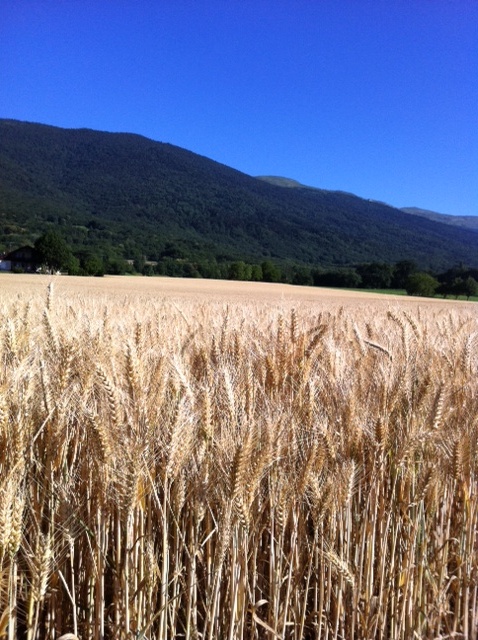
The outward harmony that we desire between our economy and the world depends finally upon an inward harmony between our own hearts and the originating spirit that is in the life of all creatures…We can grow good wheat and make good bread only if we understand that we do not live by bread alone.
Wendell Berry

Use those few seconds when you find yourself willing or even desiring just to take a break from the daily grind to observe your mind rather than drifting off into daydreams. Practicing like this, “one drip at a time,” you’ll find yourself gradually becoming free of the mental and emotional limitations that are the source of fatigue, disappointment, anger, and despair, and discover within yourself an unlimited source of clarity, wisdom, diligence, peace, and compassion.
Yongey Mingpur RInpoche, The Joy of Living
 The principle of nowness is very important to any effort to establish an enlightened society. You may wonder what the best approach is to helping society and how you can know that what you are doing is authentic and good. The only answer is nowness. The way to relax, or rest the mind in nowness, is through the practice of meditation. In meditation you take an unbiased approach. You let things be as they are, without judgment, and in that way you yourself learn to be.
Chogyam Trungpa

By taking a moment to pay attention to something as simple as turning on the water tap, we give ourselves the opportunity to be aware of how things in our lives come, go, and transform, which makes us less likely to take them for granted. Instead, we can, for even a moment, be awake to the transitory blessing they are. And, certainly, we can carry this habit out into the larger world, applying it to whatever we find ourselves doing or encountering.
Turning on the Water: Water flows from high mountain sources.
Water runs deep in the Earth.
Miraculously, water comes to us and sustains all life.
Thich Nhat Hanh
photo thegreenj
 Mindfulbalance