The two aspects of meditation

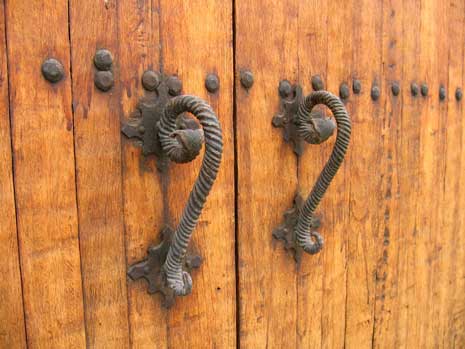
two handles

There are two types of meditation, namely, samatha and vipassana. Samatha is the development of concentration. Vipassana is the development of wisdom. Of these two, samatha is the important foundation of vipassana. Therefore, the Buddha said: ‘ you should cultivate concentration….. if you have enough concentration, you can understand phenomena as they really are.’  So beginners are encouraged to first practise samatha to develop deep and powerful concentration. Then they can practise vipassana and see phenomena in their real essence.

Pa-Auk Sayadaw

Balancing different aspects

File:Round hay bale at dawn.jpg

When I was young I went on holidays to my uncle’s farm in the West of Ireland and this day, which was a holiday, was seen as  marking the change from the Summer season to Autumn. My aunt would say that the days started getting shorter once this day was over.  Maybe so,  here in this part of Western Europe.  However, there is a different awareness in mainland Europe  –  in countries such as Italy – where this day ,  Fer Agosto , is the central day of the Summer Holidays, characterized by warm weather and family meals.  This is an ancient day of celebration, stretching back to the Roman feriae Augusti  (August break) when horse races were organized, as they are still in the famous Paleo in Siena.  It marked the high point of the Summer heat, realizing a human need for a break before the important work of the harvest began,

The religious calendar often piggy-backed on these human rhythms and celebrations and August 15th is no exception, celebrated by Catholics as the Assumption of Mary,  the mother of Jesus, believing that Mary was taken directly, bodily,  into heaven.   I am not too interested in understanding the theological mystery of this day or looking at things from the viewpoint of what may or may not happen at the end of time. I am more interested in the fact that Carl Jung stated that establishing this feastday was the most important religious event since the Reformation in the 16th Century. He felt it finally gave due recognition to the feminine aspect of the person, emphasizing the role of the anima alongside the animus.

Jung said that this was “the profoundest problem afflicting the human psyche: an imbalance which favored masculine principles and archetypes over the feminine ones”It is an imbalance which seems to have been recognized in all religions and wisdom traditions, as we find representations of female figures from the Virgin Mary in Catholicism and Orthodoxy  to Quan Yin in BuddhismHowever, what  Jung is drawing our attention to, is the need to acknowledge these aspects not just outside us, in our religious figures, but also within ourselves and within society, a task which clearly has a long way to go. 

It is clear that Western Society is built on an over-emphasis of traits and activities that are considered masculine –  logical thinking, analysis, action, and has neglected its feminine,  more contemplative side (while ironically at the same time, having an objectified,  sexualized version of romantic love). So Jung prompts us to reflect on the need to balance aspects within ourself and within society, embrace the energies and understandings that come from both male and female principles.  In simplistic terms this may alert us to the need to hold both logic and creativity, decisiveness and compassion, inner work and outer ambition. He goes on to say that this can fulfil “that yearning for peace which stirs deep down in the soul, and for a resolution of the threatening tension between opposites. Everyone shares this tension and everyone experiences it in his individual form of unrest”. 

Jung seems to suggest that the unrest we experience comes when we do not get a balance between the different elements within us. It seems that becoming whole is a matter of balancing the different intelligences with us, the head, body and heart, and this can be help by a meditation practice which consciously holds the  inner and outer, the self and others.  However,  we frequently overemphasize one aspect over another. working too much at times, such as spending too much energy on the outer while neglecting relationships or leisure. Furthermore, when we do not find the balance inside we tend to project it outside.  This can often be noticed when we are moved to see in another person or in an object or career all the qualities which we think will definitely fulfil and complete us, alerting us to the fact that what we are actually glimpsing are missing aspects of ourselves, or unlived parts of our life. .

The quality of all of our relationships is a direct function of our relationship to ourselves. Since much of our relationship to ourselves  operates at an unconscious level, most of the drama and dynamics of our relationships to others and the transcendent is expressive or our own personal psychology. The best thing we can do for our relationships with others, and with the transcendent, then, is to render our relationship with ourselves more conscious.

James Hollis, The Eden Project

photo Fir0002/Flagstaffotos


Reducing it down to basics

Cat-observing

People can think that mindfulness meditation is complicated, but it’s actually very simple to describe.  The great thing is that anyone can start by practicing for just 5 minutes a day.  Even such a short break from the normal activity of the mind can make a big  difference. Paying attention, observing, on purpose, without judgment, to the gentle rhythm of our breathing, is a good place to start to develop this natural skill.

Observation,

giving bare attention to whatever you happen to be experiencing at a particular moment,

is meditation.

Yongey Mingyur Rinpoche

Self-help, anxiety and the pressure to get better

I was in Dublin yesterday and took advantage by visiting the Hodges Figgis bookshop on Dawson Street, which I had not seen for a good number of months. I looked around the psychology  section and then sought out books on meditation, which I found spread across religion, and the ever-growing sections of “popular psychology”,  “Mind, Spirit and Body” and  “Self-Help”. One or two things struck me as I browsed. There is a real risk of making terms like “mindfulness” completely meaningless  as the state of mindfulness (which seems to increasingly simply mean an easy to develop calm  state or present-moment attention) is applied to all types of areas without a similar focus on the daily practice of mindfulness needed to slowly discover its benefits, or on the underlying vision of society and ethics which give it life.  A second problem is that it becomes part of an overall dissatisfaction with ourselves which is very prevalent today and leads us to find books which will help us create a  better version of ourself.  There are even more reasons now to be unhappy with myself – I am not only not rich enough, or not successful enough but I am also not mindful enough to get either.  The danger with this is that it sometimes only increases our dissatisfaction with who we actually are, and the sometimes, less exciting place, our lives are. Sometimes these versions of ourselves and the ideal how-we-would like-to-be can come from the way Western society places an emphasis on achievement and can take us away from the person we actually are.  We set up a juxtaposition between the “I” am now and the “I” I should be and believe that this is a good thing.  However, in many cases this type of  self-help and even spiritual practice can eventually increase our self of inadequacy. We have just shifted the method but we remain within the dynamic of winning and losing unless we begin to tackle the underlying cause and effect.  Instead of always moving on,  our practice can ask us at times to stay with what we have. It is there that we work out the unique person we are meant to be. It reminded me of Rabbi Zusya’s words,  a short while before his death : “In the world to come I shall not be asked, ‘Why where you not Moses?’ I shall be asked, ‘Why were you not Zusya?’

A special calling…to be ourselves

File:GalwayCorrib gobeirne.jpg

In the Ireland of my youth the word “vocation” was quite frequently heard, something which is not so common today. It could refer to jobs which required self-sacrifice and dedication, such as nursing or relief work abroad. However, it most frequently meant that you felt called to serve God in ministry in the Church.  As such it had a special, mysterious quality, almost as if taking you by surprise, from without. While the understanding of life in the context of a deeper purpose and meaning is quite beneficial psychologically, there was a danger of seeing vocation as something reserved for special people. In this quote, Parker Palmer, reminds us that becoming fully who we are, wherever we are at this moment, and not running away from it through regret or living in our thoughts, is the real way of finding purpose in life. It is not by looking elsewhere, but by accepting and inhabiting who and where we are.

What a long time it can take to become the person one has always been. How often in the process we mask ourselves in faces that are not our own. How much dissolving and shaking of ego we must endure before we discover our deep identity — the true self within every human being that is the seed of authentic vocation.

I first learned about vocation growing up in the church. But the idea of vocation I picked up in those circles created distortion until I grew strong enough to discard it. I mean the idea that vocation, or calling, comes from a voice external to ourselves, a voice of moral demand that asks us to become someone we are not yet — someone different, someone better, someone just beyond our reach.

Today I understand vocation quite differently — not as a goal to be achieved but as a gift to be received. Discovering vocation does not mean scrambling toward some prize just beyond my reach but accepting the treasure of true self I already possess. Vocation does not come from a voice ‘out there’ calling me to become something I am not. It comes from a voice ‘in here’ calling me to be the person I was born to be, to fulfill the original selfhood given me at birth by God.

Parker Palmer, “Now I Become Myself,”

photo Old man, Ballyknow Quay,  Galway, Ireland, by Greg O’Beirne

Moving toward wholeness, not perfection

This part of Ireland has quite a lot of interesting early Christian remains,   so last weekend I visited the ruins of the monastic settlement in Castledermot.  It is a site which is left somewhat untended, so that the crosses and tombs have a certain craggy beauty in a natural setting.  Rough stones, some seeming unfinished.  And yet, unfinished or ongoing does not mean “not right”, much as we tend to prefer tidyness and a clear direction or order.  We often think we have to be the finished product, or have everything resolved and clear, so that other people will give us the feedback that we are doing OK.  Seeing this “lack of completion” reminded me of these words from  Jung  – which echo the idea from Pema Chodren posted last Friday. We never really arrive at “perfection” (even though the mind thinks in terms of it) but rather at a wholeness which is more like a continual “coming together and falling apart”.  When we give up that notion of  the idealized life we wish we had, we allow ourself to work with the life we actually have.  Each moment may not be perfect, but it is, in some way, complete.

The realization of the self….leads to a fundamental conflict, to a real suspension between opposites …and to an approximate state of wholeness that lacks perfection. . . . The individual may strive after perfection . . . but must suffer from the opposite of his intentions for the sake of his completeness.

Jung, Christ, A Symbol of the Self,

photo of ancient Celtic cross Castledermot, Ireland, taken from dialogue ireland website.