Totally still

File:Still Water At Dusk.jpg
Ajahn Chah would ask “Have you ever seen still water?” They would nod, “Yes, of course, we’ve seen still water before.” Then he would ask, “Well then, have you ever seen flowing water?”  They’d respond, “Yes, we’ve seen flowing water.”“So, did you ever see still, flowing water?” “No. That we have never seen.”   He loved to get that bewilderment effect.

Ajahn Chah would then explain that the mind’s nature is still, yet it’s flowing. It’s flowing, yet it is still. He would use the word “citta” for the knowing mind, the mind of awareness. The citta itself is totally still. It has no movement; it is not related to all that arises and ceases. It is silent and spacious. Mind objects — sights, sounds, smell, taste, touch, thoughts, and emotions — flow through it. Problems arise because the clarity of the mind gets entangled with sense impressions. By contemplating our own experience, we can make a clear distinction between the mind that knows (citta) and the sense impressions that flow through it. By refusing to get entangled with any sense impressions, we find refuge in that quality of stillness, silence, and spaciousness.  This policy of  non-interference allows everything and is disturbed by nothing.

Ajahn Amaro,  Small Boat

photo Miguel Virkkunen Carvalho

Like a therapist

File:US Navy 060822-N-2832L-128 Navy Lt. Rachel Oden, of Casa Grande, Ariz., a physical therapist plays with a young girl during her first day of physical therapy for her neuromuscular control deficits.jpg

We are trying to develop a different relationship with the mind.  Awareness contributes to the subduing of harmful emotions and this awareness extends to everything, including ourselves. We need to treat ourselves with the same objective distance that a therapist uses for her clients. By subduing the harmful emotions and afflictive states of mind, our aim is to increase our helpful emotions or mental states, like empathy, gentleness, compassion, wisdom, generosity, warmth and so on. The more we become aware of our inner workings, the more adept we become at applying the mental balancing techniques that will offer us true mental health

Karuna Cayton, The Misleading Mind

U.S. Navy photo of physical therapist Rachel Oden

On being gentle

push and pull

The most difficult times for many of us

are the ones we give ourselves

Pema Chodron, When Things Fall Apart

In the ordinary

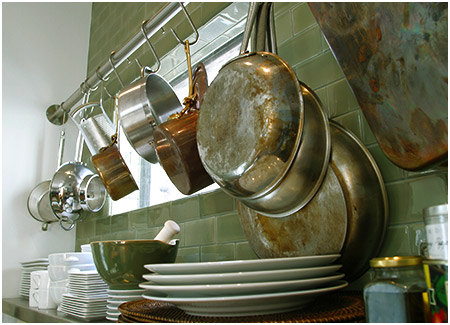
pots_pans
One of the monks asked a renowned Forest Ajahn: ‘What’s it like to see things as they really are?’ There was an understandable air of expectation in the room: to ‘see things as they really are’  is the vision of the Awakened Mind. What mystical insight was about to be revealed?

‘It’s ordinary’, said the Ajahn in his customary succinct and matter-of-fact way.

Ajahn Sucitto, Awakening: Nameless and Stopped

A work of art

File:Monet - Seerosen 1906.jpg

I would say to young people a number of things. Let them remember that there is a meaning beyond absurdity. Let them be sure that every little deed counts, that every word has power, and that we can do — every one — our share to redeem the world despite of all absurdities and all the frustration and all disappointments. And above all, remember that the meaning of life is to live life as it if were a work of art. You’re not a machine. When you are young, start working on this great work of art called your own existence.

Rabbi Abraham Joshua Heschel

Step by step

feet_walking1

We are what we repeatedly do.
Excellence, then, is not an act, but a habit.

Aristotle