 or·di·nar·y/ˈôrdnˌerē/ Adjective: With no special or distinctive features; Normal
The Catholic liturgical tradition has long divided time in two: There are two kinds of days in life and two periods of the year. The days were either feast days or ferial days. The year was divided into “ordinary” time and …well, “extra-ordinary” time, I guess. This second segment of the year, come to think about it, I never heard anyone name at all. It was a number of times: Advent, Lent, the Christmas, Easter and Pentecost seasons. This kind of information may be boring stuff but it’s important stuff, too. Ordinary time, you see, was the longest period of all. It was the time when life went its long, dull way, predictable to the ultimate. Monday, we did the laundry; Tuesday, we did chapel, altar breads, and house-cleaning; Wednesday, Thursday, Friday and Saturday we did it all again. More of the same. Same old, same old. Week after week, month after month, year after year.
Every once in a while, of course, life was punctuated by a feast day with its special meals and polyphonic liturgies but, in the end, the normal, the daily predominated. As it does for all of us yet. The commute, the paperwork, the housework, the school run, eat up day after day with mind-numbing regularity. And yet, it is in “ordinary” time that the really important things happen: our children grow up, our marriages and relationships grow older, our sense of life changes, our vision expands, our soul ripens. No doubt about it, [my father’s] prayer card was right: To lose the glory of ordinary time is to suffer the loss of the greater part of life.
Joan Chittister, Ordinary Time
Photo taken from the Evening Standard

 The key element of practicing with this tendency is gentleness, and the method is mindfulness. Many of us practice in a speedy environment. In a sense, speed is the disease of our times. It’s always there and it’s very hard to extract ourselves from it. But we must realize that speed is in fact just a hallucination, a self-imposed reality. Being mindful cuts speed. Being present cuts speed. If we trust in basic goodness when we look at what’s going on in our life right now, kindness and patience naturally come about.
 When we’re feeling aggressive — and in some sense this would apply to any strong feeling — there’s an enormous pregnant quality that pulls us in the direction of wanting to get some resolution. It hurts so much to feel the aggression that we want it to be resolved. So what do we usually do? We do exactly what is going to escalate the aggression and the suffering. We strike out; we hit back. [However] Developing patience and fearlessness means learning to sit still with the edginess of the energy. We discover that joy and happiness, peace, harmony and being at home with yourself and your world come from sitting still with the moodiness of energy until it rises, dwells and passes away. The energy never resolves itself into something solid. So all the while, we stay in the middle of the energy. The path of touching in on the inherent softness of the genuine heart is to sit still and be patient with that kind of energy.
 Our unconscious organizing principles most clearly reveal themselves when we find ourselves stuck, imagining that our happiness is conditional on having a certain kind of experience, on being or becoming a certain kind of person, or on being treated in some special manner. …Practice allows us discover that our happiness is not dependent on any of the things which we once thought so crucial. The old organizing principles that forever were warning us, “Do it this way or else!” are suddenly found irrelevant. Life offers us the unexpected pleasure in our own aliveness, vitality and responsiveness. Being just this moment, we learn that we don’t have to become anything new, or somehow jettison all those shameful parts of ourselves in order to partake of this newfound bounty.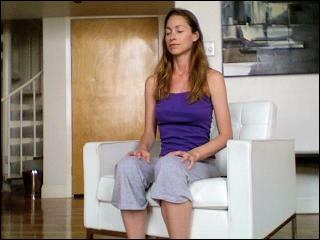
 Mindfulbalance