Walking exercises the brain as well

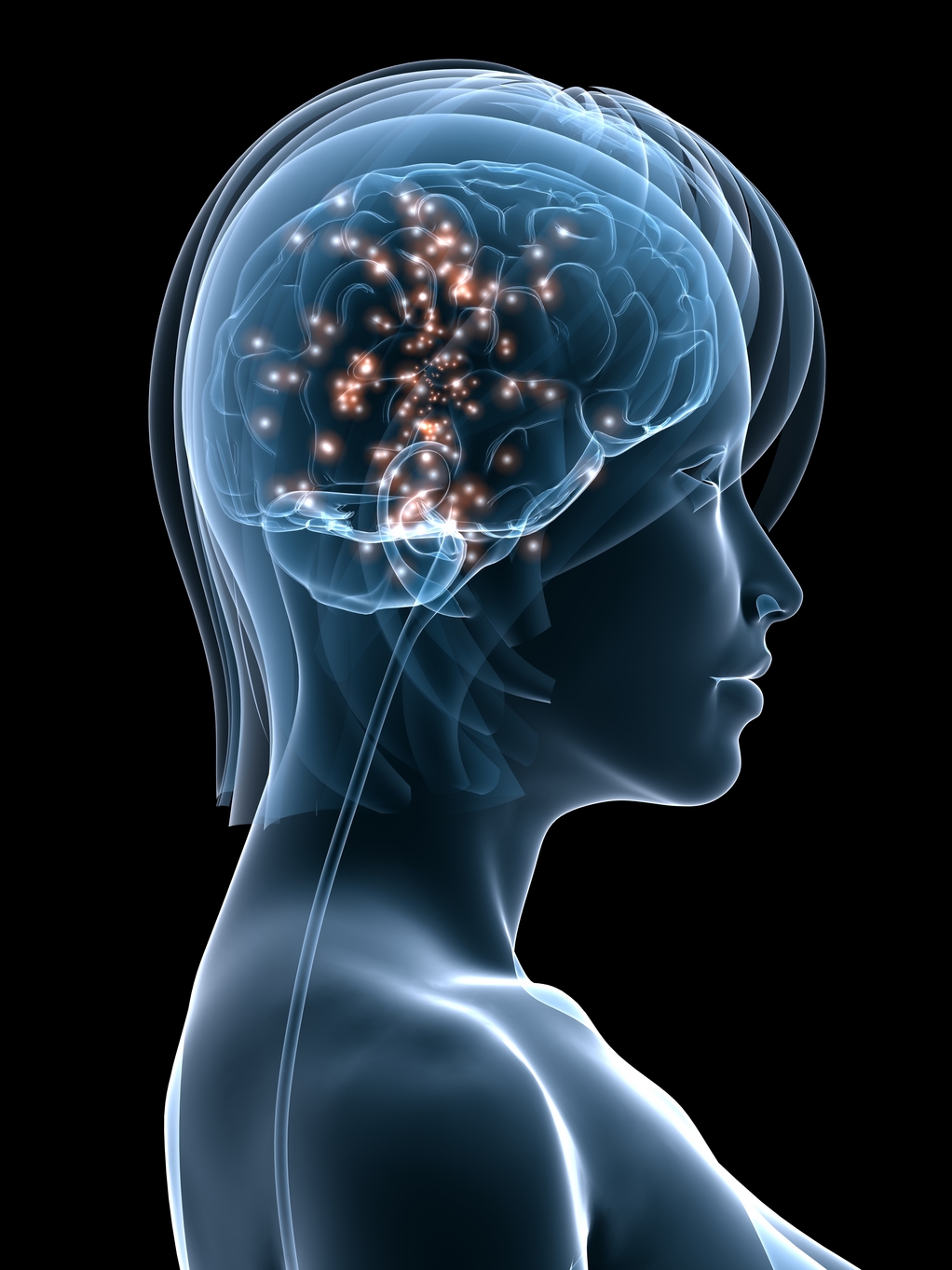
This post is related to the one a few days back which reported on the beneficial effect of meditation on the development and aging of the brain. As a person ages, the part of the brain knows as the hippocampus shrinks, especially in late adulthood.  Since the hippocampus has functions which are related to memory, this shrinkage can lead to impaired memory and increased risk for dementia. So it is interesting to read the results of a study which shows that the simple act of walking may improve memory in old age.

In this study, the research subjects exercised by taking three, 40-minute walks each week over the period of a year, and were compared with a control group  in a number of ways including memory, levels of ‘brain derived neurotropic factor’ (a substance that stimulates new brain cell development and brain cell communication), as well as the size of  the hippocampus. It was found that the “walking” groups – as compared to the ‘control’ group –  experienced an increase in volume of the hippocampus (the control group saw a small reduction in volume of this brain structure), as well as higher levels of brain derived neurotropic factor and improved memory.

This study provides good evidence that even a quite low-intensity exercise can lead to improved brain function, and reverse hippocampal volume loss in late adulthood, and backs up earlier research from the University of Pittsburgh which tracked the physical activity of 299 healthy men and women who had different walking habits. When brain scans were taken after nine years on the programme, it was revealed that those who had walked more had greater brain volume than those who walked less. Four years later, the same tests revealed that those who had walked the most — about 7 miles each week — were half as likely to have cognitive problems as those who walked the least.

Erickson KI, et al. “Exercise training increases size of hippocampus and improves memory”. PNAS 31 January 2011

How to get peace of mind

A lot of the time much of our sense of inner worth is based on feelings related to others’ perceptions of us  or their achievements.  However, it is a basic tenet of mindfulness that happiness and peace of mind do not comes from things outside of us – when certain conditions are right – such as from a relationship, or what we possess or from our status in society –  but rather comes from working with our mind and heart. It is ironically from not seeking some things that they are found:

Looking for peace is like looking for a turtle with a mustache:

You won’t be able to find it.

But when your heart is ready,

peace will come looking for you.

Ajahn Chah

The search within us

There are different ways in which writers describe the inherent restlessness deep within us, with which we are often uneasy and consequently work to cover over by activity or the things we do to seek recognition and success. As I have written before, mindfulness practice encourages us to come to a working understanding that there will always be a deep restlessness at the heart of life, and that is just the way things are. It does not mean there is anything wrong with our life, or with us, despite what we may feel from time to time. Another way of looking at this restlessness is seen in this quotation from the influential Canadian philosopher Bernard Lonergan. He sees it as a positive drive to know, an impulse to keep going beyond immediate experience, the root of all searching, which may never be completely satisfied:

Deep within us all, emergent when the noise of other appetites is stilled, there is a drive to know, to understand, to see why, to discover the reason, to find the cause, to explain. Just what is wanted has many names. In what precisely it consists is a matter of dispute. But the fact of inquiry is beyond all doubt. It can absorb a man. It can keep him for hours, day after day, year after year, in the narrow prison of his study or his laboratory. It can send him on dangerous voyages of exploration. It can withdraw him from other interests, other pursuits, other pleasures, other achievements. It can fill his waking thoughts, hide from him the world of ordinary affairs, invade the very fabric of his dreams. It can demand endless sacrifices that are made without regret though there is only the hope, never a certain promise, of success.

Bernard Lonergan, sj, Insight

The in-between state is good to know

Life is a good teacher and a good friend. Things are always in transition, if we could only realize it. Nothing ever sums itself up in the way that we like to dream about. The off-center, in-between state is an ideal situation, a situation in which we don’t get caught and we can open our hearts and minds beyond limit. It’s a very tender, nonaggressive, open-ended state of affairs.

Pema Chodron

Time that nurtures

It’s important to be heroic, ambitious, productive, efficient, creative, and progressive, but these qualities don’t necessarily nurture the soul. The soul has different concerns, of equal value: downtime for reflection, conversation, and reverie; beauty that is captivating and pleasuring; relatedness to the environs and to people; and any animal’s rhythm of rest and activity.

Thomas Moore

Meditation exercises the brain and strengthens development

Meditation appears to be a powerful mental exercise with the potential to change the physical structure of the brain at large. Eileen Luders, UCLA

There is a lot of anecdotal evidence where  people say that meditation helps them feel more relaxed, peaceful, and focused. However, it is good to find clinical research which backs up some of this evidence with studies on physical changes to the brain. I posted recently on the ongoing work of Sara Lazar and her lab at Harvard who have documented changes in the brain’s gray matter after just the 8 weeks of mindfulness meditation in the MBSR Course. Now a new study has been published in UCLA which suggests that people who meditate  have stronger connections between brain regions and show less age-related brain atrophy.

Two years ago, the research team, led by Eileen Luders,  visiting assistant professor at the UCLA Laboratory of Neuro Imaging,  found that specific regions in the brains of long-term meditators were larger and had more gray matter than the brains of individuals in a control group. This suggested that meditation may indeed be good for all of us since brains shrink naturally with age.  Now,  in a follow-up study, published in the current edition of the journal NeuroImage, they have found that meditation strengthen brain connections , which influences the ability to rapidly relay electrical signals in the brain.  And significantly, these effects are evident throughout the entire brain, not just in specific areas.

Luders used a new type of brain imaging known as diffusion tensor imaging, ( DTI),  that allows insights into the structural connectivity of the brain. They found that the differences between meditators and controls are not confined to a particular core region of the brain but involve large-scale networks that include the frontal, temporal, parietal and occipital lobes and the anterior corpus callosum, as well as limbic structures and the brain stem. They looked at 27 active meditation practitioners, men and women,  (average age 52), who were matched by age and sex with 27 non-meditators.   The meditators had been practicing  for a number of years, anywhere between 5 to 46.

The results led Luders to state: Our results suggest that long-term meditators have white-matter fibers that are either more numerous, more dense or more insulated throughout the brain.  We also found that the normal age-related decline of white-matter tissue is considerably reduced in active meditation practitioners. [Therefore]…. It is possible that actively meditating, especially over a long period of time, can induce changes on a micro-anatomical level.

It is, of course possible, that the brains of meditators were already different to begin with, even before they started practice. However, the fact that 100% of the trial group showed the same characteristics suggests that it is statistically unlikely that this condition was an antecedent fact. Indeed,  Luders work suggests that meditation acts as a type of mental fitness, causing alterations to the structure as well as the functioning of the brain, and slowing down the aging decay that occurs there.