Not needing to journey

We shall not cease from exploration and the end of all our exploring will be to arrive where we started… and know the place for the first time. 

T.S. Eliot, The Waste Land

Salvation, if we can talk about it at all, is the end of ambition, which is when you become completely one with your experience. Knowledge becomes one with wisdom…. You realize that you never needed to make the journey at all, because the journey and the goal are there already. It’s not so much that you are achieving liberation, but it is more that you realize that liberation is right there and that you needn’t have sought for it.

Chögyam Trungpa, Transcending Madness: The Experience of the Six Bardos

Our capacity for happiness

Whether success or failure: the truth of a life really has little to do with its quality. The quality of life is in proportion, always, to the capacity for delight.

The capacity for delight is the gift of paying attention.

May Sarton.

Noticing, naming …gratefulness and happiness

It may sound corny, but the research clearly demonstrates that you would be happier if you cultivated an “attitude of gratitude.” Gratitude helps us thwart hedonic adaptation. Hedonic adaptation is illustrated by our remarkable capacity rapidly to adjust to any new circumstance or event. This is extremely adaptive when the new event is unpleasant, but not when a new event is positive. So, when you gain something good in your life – a romantic partner, a genial officemate, recovery from illness, a brand-new car – there is an immediate boost in happiness and contentment. Unfortunately, because of hedonic adaptation, that boost is usually short-lived. As I’ve argued, adaptation to all things positive is essentially the enemy of happiness, and one of the keys to becoming happier lies in combating its effects, which gratitude does quite nicely. By preventing people from taking the good things in their lives for granted – from adapting to their positive life circumstances – the practice of gratitude can directly counteract the effects of hedonic adaptation.

Sonja Lyubomirsky, The How of Happiness

Seeing clearly and seeing through

Meditation is a special kind of dance in which we commit our-selves wholeheartedly to the practice of deconstructing the materialistic view of reality. The challenge is simultaneously to hold on and to let go; it is to see clearly what we are doing and at the same time see through it.

Ajahn Amaro

An underlying calm

Stillness, a sense of the unchanging, is all around, and at different levels. Look for it, explore its effects on you, and let it sink in. For example…. there is the moment at the very top of a tossed ball’s trajectory when it’s neither rising nor falling, the pause before the first stroke of the brush, that space between exhalation and inhalation, the silence in which sounds occur, or the discernible gap between thoughts when your mind is quiet.
In your mind there is always an underlying calm and well-being that contains emotional reactions, like a riverbed that is still even as the flood rushes over it (if you’re not aware of this, truly, with practice you can find and stabilize a sense of it). There is also the unchanging field of awareness, itself never altered by the thoughts passing through it…Give yourself the space, the permission, to be still – at least in your mind – amidst those who are busy. To use a traditional saying:  “May that which is still, be that in which your mind delights”.

Rick Hanson.

On seeing some beautiful flowers


We are dust and to dust return.
In the end we’re
neither air, nor fire, nor water,
just
dirt,
neither more nor less, just dirt,
and maybe
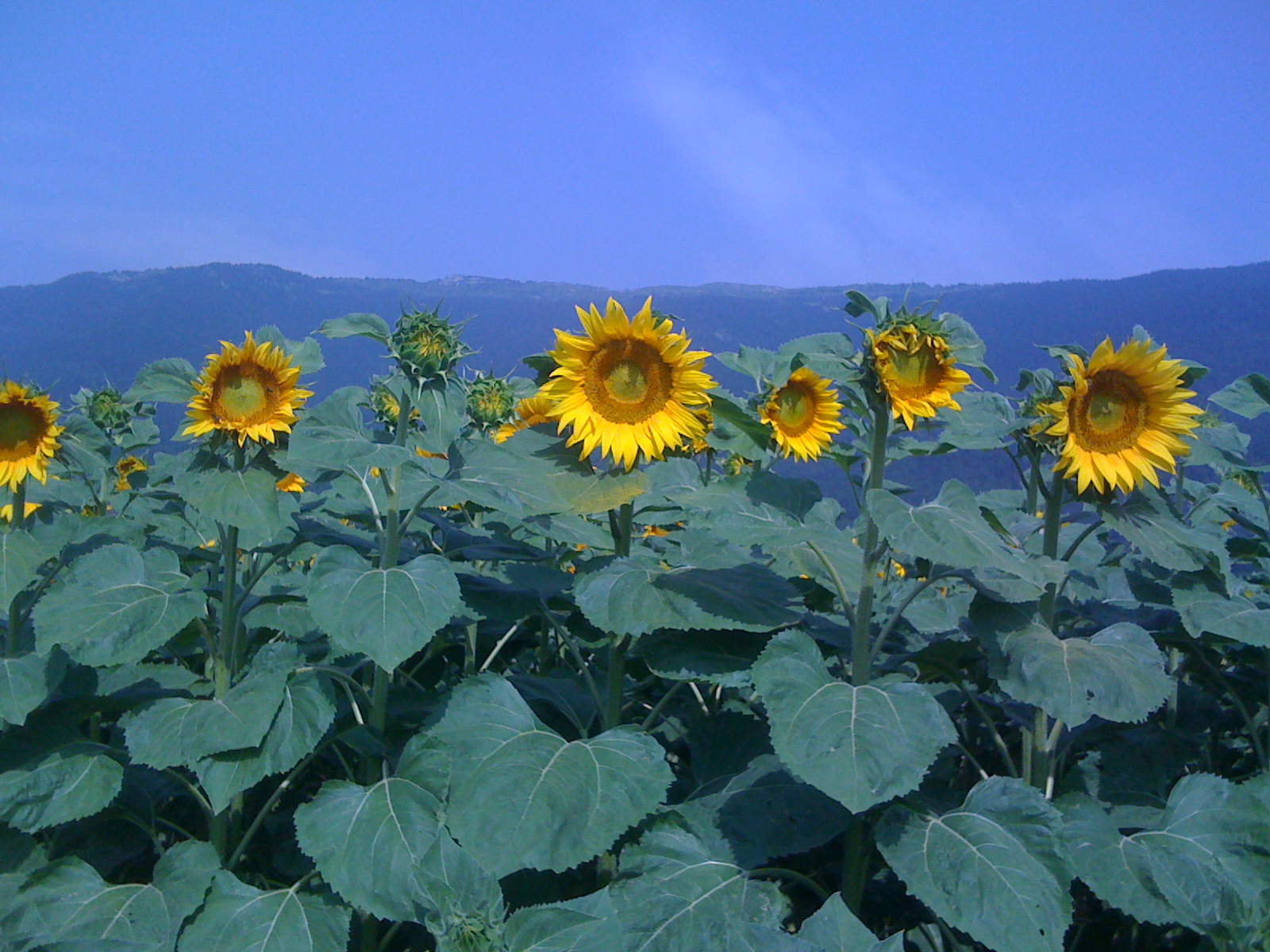
some yellow flowers.

Pablo Neruda, Ode to Some Yellow Flowers