Seeing how the mind adds on..

Someone calls you an idiot….Then you start thinking “How can they call me an idiot? They’ve got no right to call me an idiot! How rude to call me an idiot!  I’ll get them back for calling me an idiot”  And you suddenly realise that you have let them call you an idiot another four  times. Every time you remember what they said, you allow them to call you an idiot once again. Therein lies the problem.

If someone calls you an idiot,  and you immediately let go, therein lies the solution.

Why allow other people control your inner happiness?

Ajahn Brahm, Who Ordered this Truckload of Dung?

A basic sense of groundlessness

Some reflections on the basic human condition – similar to the idea of groundlessness in Pema Chodron this morning –  this time in a commentary on a phrase from Karl Rahner, one of the greatest Catholic theologians of the last century. Learning to sit with this is the basic work of meditation. Running away from it, or taking it to mean that something is wrong with us is at the root of most of our problems.

In the torment of the insufficiency of everything attainable,we eventually learn that here, in this life, all symphonies remain unfinished.  Karl Rahner

What does it mean to be tormented by “insufficiency of everything attainable?” How are we tortured by what we cannot have? We all experience this daily. In fact, for all but a few privileged, peaceful times, this torment is like an undertow to everything we experience; beauty makes us restless when it should bring us peace, the love we experience with our spouse does not fulfill our longings, the relationships we have within our families seem too petty and too domestic to be fulfilling, our job is hopelessly inadequate to the dreams we have for ourselves, the place we live in seems boring and lifeless in comparison to other places, and we are too restless to sit peacefully at our own tables, sleep peacefully in our own beds, and be at ease within our own skins. We are tormented by the insufficiency of everything attainable when our lives are too small for us and we live in them in such a way that we are always waiting, waiting for something or somebody to come along and change things so that our lives , as we imagine them, might begin. ….. To be tormented with restlessness is to be human.

Ron Rolheiser

Our roots are deep, despite the wind

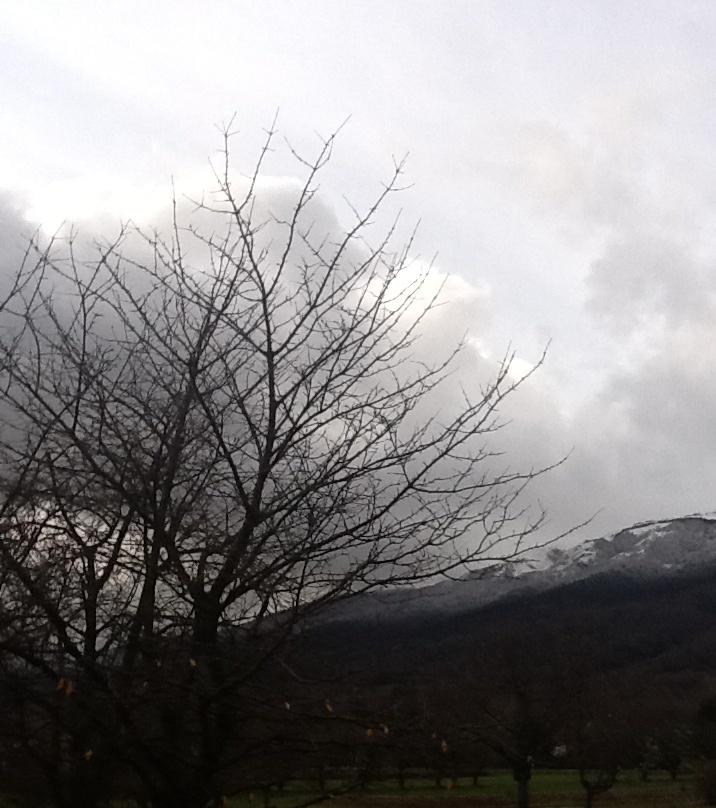
The strong winds on Sunday night blew the last leaves from the trees and they stand bare in the garden, clearly seen against the grey sky. Snow fell on the tops of the nearby Jura mountains. I was involved in a retreat over the weekend where we reflected on Kabir’s beautiful words “Throw away all thoughts of imaginary things and stand firm in that which you are“. However, as we all experience from time to time,  that firmness does not always seem so near, and we can be blown by winds of doubt and self-criticism. It feels cold and we think we are alone.  In moments like these we have to be patient. We cannot see the whole picture or understand why things are happening. When moments seem dark we can identify with what is going on in our emotions and get fixed there. We settle quickly into the negative feelings about ourself or our life,  turn in on ourselves and close down. However, the theme of the weekend,  and the weather outside,  remind us to keep our roots deep in the goodness underneath, and not in what passes through the mind.  We do not need to hold on to what is happening. Some kinds of unknowing are right. We trust even if we cannot see.  In waiting,  even in difficult moments,  what is coming to pass is gradually revealed.

I prefer winter …… when you feel the bone structure of the landscape  –  the loneliness of it, the dead feeling of winter.

Something waits beneath it, the whole story doesn’t show.

Andrew Wyatt,  American Painter

Working with hot and cold today

Winter has finally arrived here, with snow on the nearby mountains. So a little reflection on working with the things that we cannot change or with things that inconvenience us:

A disciple asked the Zen master Tung-shan: “When the heat of summer and the cold of winter arrive, how can we escape them?” Tung-shan answered, “Why don’t you go where there is no heat or cold?” “Where is this place,” asked the disciple, “where there is no heat or cold?” At this the master replied, “When it is hot, be completely hot; when it is cold, be completely cold.”

The disciple’s question had a symbolic meaning, and the answer was given on the same level. Heat and cold stand for circumstances that affect our daily existence but are out of our hands to regulate or rectify. Impersonal facts with far-reaching effects on us include: general economic conditions; situations of war, violence or peace; accidents; laws, policies and prejudices; possibilities and opportunities available in a particular community; mechanical and technological breakdowns  and so on.  The disciple wished to know how to escape such restraints. He wished to live in an ideal country where it is never too hot or too cold.

The Zen master’s reply was also symbolic. Instead of offering an escape route, he invited the disciple to plunge directly into the current situation and become completely hot in summer, completely cold in winter. According to an interpretation by Francis Dojun Cook, the Zen master was suggesting a radical affirmation of one’s very conditionedness in order to transcend it. By plunging directly into the current, one flows with it and on it. When resistance is futile, yielding to the flow of the current of events offers the promise of life. In order to understand the reply of Tung-shan, we have to realize that he was speaking of a change in attitude. Rather than attempting to change the facts of the situation, or escape them by flight, we may change our attitude, accept things as they are, and thereby move beyond them to a point where we find peace of mind. That point or region of peace is the country where “there is no heat or cold.” These conditions no longer exist as problems for us, although they continue to exist as facts. What has changed is our attitude toward them.

Charles Cummings, The Best Place to Live
Sunday Quote: Waiting

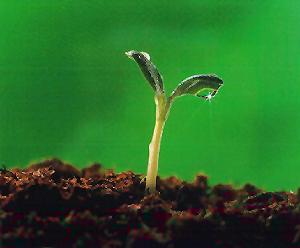
The word patience comes from the Latin verb patior, which means “to suffer.” Waiting patiently is suffering through the present moment, tasting it to the full, and letting the seeds that are sown in the ground on which we stand grow into strong plants.

Henri Nouwen, Bread for the Journey

Dealing with each thing directly

When things come up, deal with them according to the occasion. Be like the stillness of water, like the clarity of a mirror. Whether good or bad, beautiful or ugly approach, you don’t make the slightest move to avoid them. Then you will truly know that the mindless world of spontaneity is inconceivable.

Ta Hui (1088-1163)