Yesterday, I went to my local drug store to purchase a thermometer for a loved one who was spiking a fever at home. Walking down the aisles, bare shelves yawned: small tags whispered of toilet paper, hand sanitizer, gloves, thermometers. Asking the pharmacist, he repeated perhaps for the hundredth time that day, “All gone… I’m sorry”. On the street as I drove home, I noticed these signs: a young man stopped to stuff a dollar bill into the can of a street person. A truck flashed its lights at me, yielding for me to turn. Traffic halted for two geese to waddle slowly across four lanes of parkway. This strange moment in time is eliciting unexpected acts of kindness, even while we feel as if we’re in a dream.
We are sitting with the unknown. The unknown is exactly what pulls back the veil. Illness and death are life’s great equalizers. A fever is a fever. A virus seeks a host. We are all potentially at risk. We are all trying to quell the spread. Together.
The Buddha emphasized that if there is something that can absolutely be counted on, it is that nothing can be counted on. Life has always been so. But I forget, most every moment of every day. Lulled by the predictability of my days, I believe that tomorrow will be just like today. Today just like yesterday. The toilet paper will be there.
Fear is an invitation. It is not an invitation to weigh risks or to adjust the externals. It is an invitation to look deeply within and befriend the animal in oneself.
We are sitting with the unknown. The unknown is exactly what pulls back the veil. It offers a glimpse the truth that nothing has ever been certain. This world with all its beauty and all its vibrancy is just so because it is not fixed, because everything is contingent. Life’s natural cousin is uncertainty. The final gift, the one that I keep returning to in these shadowy days, is kindness. A pandemic is a common (pan) experience. We are in this together. We can face it together and we can help one another get through it. Ironically the “social distancing” we are asked to practice is a call to care. It is not a request made for oneself; it is an act of public good.
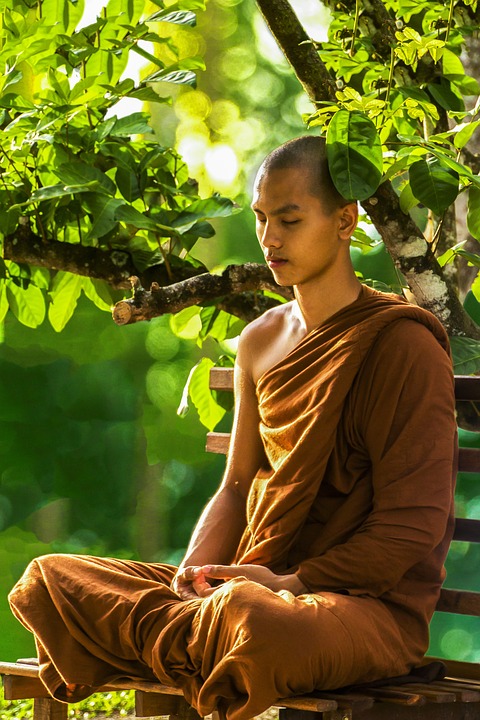
In a pandemic, self-isolation is called quarantine. In Buddhism, it is called retreat.
From the cave of our home, like the meditators of ancient times, we can consciously kindle the lamp of compassion and connection.
Lama Willa B Miller, Living in this Strange Moment Together