A mind that looks and does not think

One must have a mind of winter
To regard the frost and the boughs
Of the pine-trees crusted with snow;

And have been cold a long time
To behold the junipers shagged with ice,
The spruces rough in the distant glitter

Of the January sun; and not to think
Of any misery in the sound of the wind,
In the sound of a few leaves,

Which is the sound of the land
Full of the same wind
That is blowing in the same bare place

For the listener, who listens in the snow,
And, nothing himself, beholds
Nothing that is not there and the nothing that is.

Wallace Stevens, The Snow Man

A Path with Heart

A path is only a path, and there is no affront, to oneself or to others, in dropping it if that is what your heart tells you . . . Look at every path closely and deliberately. Try it as many times as you think necessary. Then ask yourself alone, one question . . . Does this path have a heart? If it does, the path is good; if it doesn’t it is of no use.

Carlos Casteneda.

We set out on the road to freedom when we no longer let our compulsions or passions govern us. We are freed when we begin to put justice, heartfelt relationships, and the service of others and the truth over and above our own needs for love and success or our fears of failure and of relationships. To be free is to know who we are with all that is beautiful, all the brokenness in us; it is to love our values, to embrace them, and to develop them; it is to be anchored in a vision and a truth but also to be open to others and so, to change. Freedom lies in discovering that the truth is not a set of fixed certitudes, but a mystery we enter into, one step at a time. It is a process of going deeper and deeper into an unfathomable reality.

In this journey of integrating our experiences and our values, and of what we might learn as we listen to others, there may be a period of anguish. We need to find links between the old and the new, links that will permit the integration of new, consciousness-expanding truths into what we already know and are living –  our existing certitudes. As human sciences develop and the world evolves, we are called to grow into a new and deeper understanding of the Source o the universe and of life. As we participate in this, our sense of the true expands. Freedom is to be in awe of this Source, of the beauty and diversity of people, and of the universe. It is to contemplate the height and breadth of all that is true.

Jean Vanier, Becoming Human

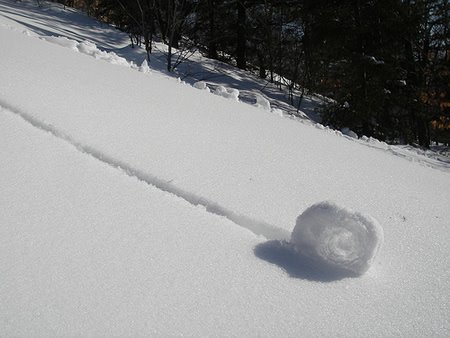
Like a snowball gathering speed

To start the new year, back to basics….A lovely text on how the mind proliferates on the basis of a simple feeling and makes a whole story out of it. We will probably get a lot of opportunity to practice with this  as we return to work this week and the holiday excitement fades. So this Monday, like every day, we start over again….. becoming more and more aware of this process, and creating a gap.

The outflowing of the mind is what one is witnessing in meditation when the mind surges off into sights and sounds, opinions, thoughts or feelings. It is most important to get acquainted with what that is like for the mind: the attention pouring out into different things. One can see how, first of all, there is just a vague thought of a memory, or a shape that you notice, and it is quite ephemeral; there is nothing very much there, you just remember some event. Then it catches our attention and, as the mind goes into it, suddenly what was just a vague and insubstantial thing comes to life – and our attention has brought it to life. We have breathed life into that thought with the act of attention.

As we give attention to it and it comes to life, then the whole flow of feeling along with that increases and develops – whether the feeling is pleasant or painful or whatever. If there is no mindfulness, then that feeling conditions self-centered desire; if it is a pleasant feeling, a desire for more of it; if it is a painful feeling, a desire to get away from it. Then that desire turns into attachment and the attachment turns into what is called ‘becoming’   – like a wave gathering strength.  Then, as the attachment and the becoming increase, we find ourselves thoroughly caught up with some melodrama and carried away on the whole cycle of birth and death. We are born into a memory, a hope or a worry, born into a piece of music or a feeling; and if we are born into it then we die with it when it comes to an end. Suddenly we find ourselves stranded and lost in another world.

If there is wisdom then we realise – “This is a feeling” –  and we follow it as it goes through its cycle of life. Then, as the feeling fades, there is nothing there creating more momentum around it. The feeling fades like a sound and then there is silence.

Ajahn Amaro, Silent Rain.

Distracting ourselves

Thomas Merton once said that the biggest spiritual problem of our time is efficiency, work, pragmatism; by the time we keep the plant running there is little time and energy for anything else.  Neil Postman suggests that, as a culture, we are amusing ourselves to death, that is, distracting ourselves into a bland, witless superficiality.  Henri Nouwen has written eloquently on how our greed for experience and the restlessness, hostility, and fantasy it generates, block solitude, hospitality, and prayer in our lives.  They are right.

What each of these authors, and countless others, are saying is that we, for every kind of reason, good and bad, are distracting ourselves into spiritual oblivion.  It is not that we have anything against God, depth, and spirit, we would like these, it is just that we are habitually too preoccupied to have any of these show up on our radar screens.  We are more busy than bad, more distracted than nonspiritual, and more interested in the movie theater, the sports stadium, and the shopping mall and the fantasy life they produce in us than we are in church.  Pathological busyness, distraction, and restlessness are major blocks today within our spiritual lives.

Ron Rolheiser, The Holy Longing.

Living the moments in front of us

I am thinking, or trying to think, about all the imponderables for which we have
no answers, yet endless interest all the range of our lives,

and it’s good for the head no doubt
to undertake such meditation; Mystery, after all, is God’s other name, and deserves our  considerations surely.

But, but – excuse me now, please;
it’s morning, heavenly bright,
and my irrepressible heart begs me to hurry on into the next exquisite moment.

Mary Oliver, Trying to Be Thoughtful in the First Brights of Dawn

Not panicking when we cannot see clearly the road ahead.

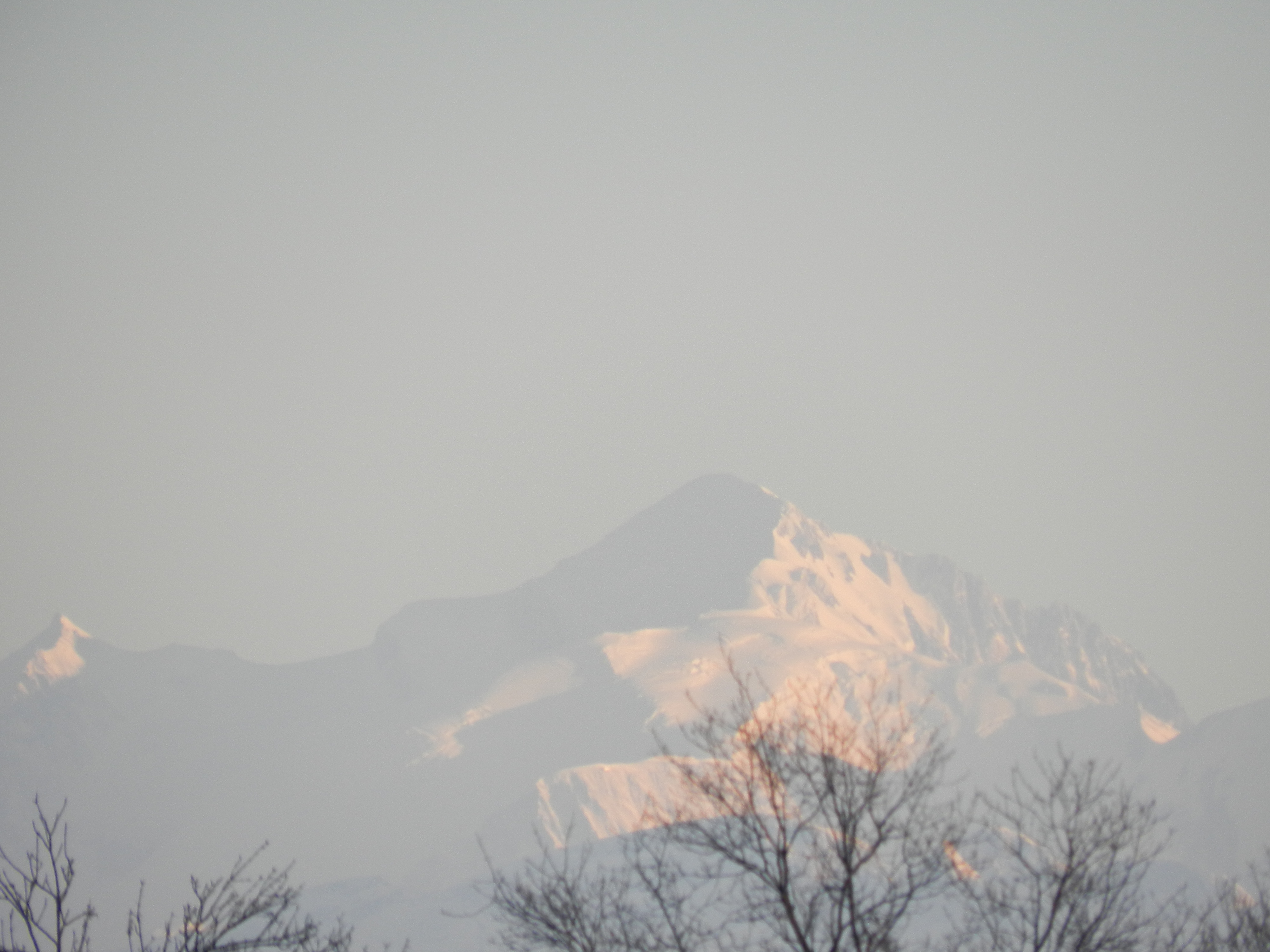
Yesterday we saw a dense fog descend in these parts, reducing visibility and making driving last night a bit precarious, because of the difficulty in seeing signs and markings.  Today dawned bright and clear, even though snow is expected later. Easy to apply this contrast to how we work with emotions in our lives, especially around Christmas and New Year. What I have noticed in conversations over the past few days is that this period has a capacity to make people question where they are,  or to feel insecure in the direction of their lives. For some reason these dates become a time for measuring how we are doing, comparing our progress with either internal ideas or memories of a good Christmas or external images of what a successful or dynamic New Year should be like. We frequently have a concept of what success should be like and measure ourselves against that. And since we always like our mind to be clear and spacious, we get disturbed when some of the thoughts which pass through our mind turn our mood  judgmental or melancholic. And then a commentary can take hold, telling us we have not “achieved” as much as we wanted this past year, or that we are not doing as well as we think we should be.  And this tends to emerge in conversations as justifying – we hear why a person has done such and such or is going to change and do something else – reflecting an inner discussion about the “right” road towards progress.

However, such justifications are not really needed because passing moods are quite normal, and not worth taking too much interest in. Furthermore, realising that we have an underlying sense of dissatisfaction – more pronounced at this time of year – is a necessary stepping stone to wisdom. It is a mistake to think that we will always feel secure inside ourselves.  Even though we are adults,   a sense of feeling lost may lie close beneath the surface of our lives, and is quite normal. It is not an indication that we are doing anything wrong.  As the current weather shows, periods of fog and cold are normal parts of a cycle. Not seeing the road ahead clearly does not mean it is not there.

So what, practically can we do, when these moments of fog and confusion descend? Firstly it is good to notice the underlying tone. If there is a hint of fear in them, we are most likely in the unhelpful presence of forcing and fixing. The second step is to try to see them, like all thoughts, and subsequent emotions,  as things that arise and pass away, and not feed them by paying them too much attention. As always, our thoughts about our life are not the most reliable place to anchor our sense of self.  We cannot really see the road towards the future and we have a proven inability to predict clearly. Therefore we return to the only place we can be sure of, our  awareness of the present, and a curiosity about whatever is going on there, even if it is troublesome emotions. This refuge of awareness is normally much kinder than our fear-driven judgments about the future.

To look for progress is a setup — a guarantee that we won’t measure up to some arbitrary goal we’ve established. Traditional teachings tell us that one sign of progress in meditation practice is that our “kleshas”  – our strong conflicting emotions – diminish. Though the teachings point us in the direction of diminishing our klesha activity, calling ourselves “bad” because we have strong conflicting emotions is not helpful. That just causes negativity and suffering to escalate. What helps is to train again and again in not acting out our kleshas with speech and actions, and also in not repressing them or getting caught in guilt. Progress isn’t what we think it is. We are talking about a gradual learning process. By looking deeply and compassionately at how we are affecting ourselves and others with our speech and actions, very slowly we can acknowledge what is happening to us — which is one sign of progress. We then discover that patterns can change, which is another sign of progress. Basically this is instruction on disowning: letting go and relaxing our grasping and fixation. At a fundamental level we can acknowledge hardening; at that point we can train in learning to soften.

Pema Chodron, Signs of Spiritual Progress