Rest

Your heart muscle goes on working for as long as you live. It does not get tired, because there is a phase of rest built into every single heartbeat. Our physical heart works leisurely. And when we speak of the heart in a wider sense, the idea that life-giving leisure lies at the very center is implied. Seen in this light, leisure is not a privilege but a virtue.

Leisure is not the privilege of a few who can afford to take time, but the virtue of all who are willing to give time to what takes time – to give as much time as a task rightly takes.


David Steindl-Rast, Gratefulness, the Heart of Prayer

Every moment

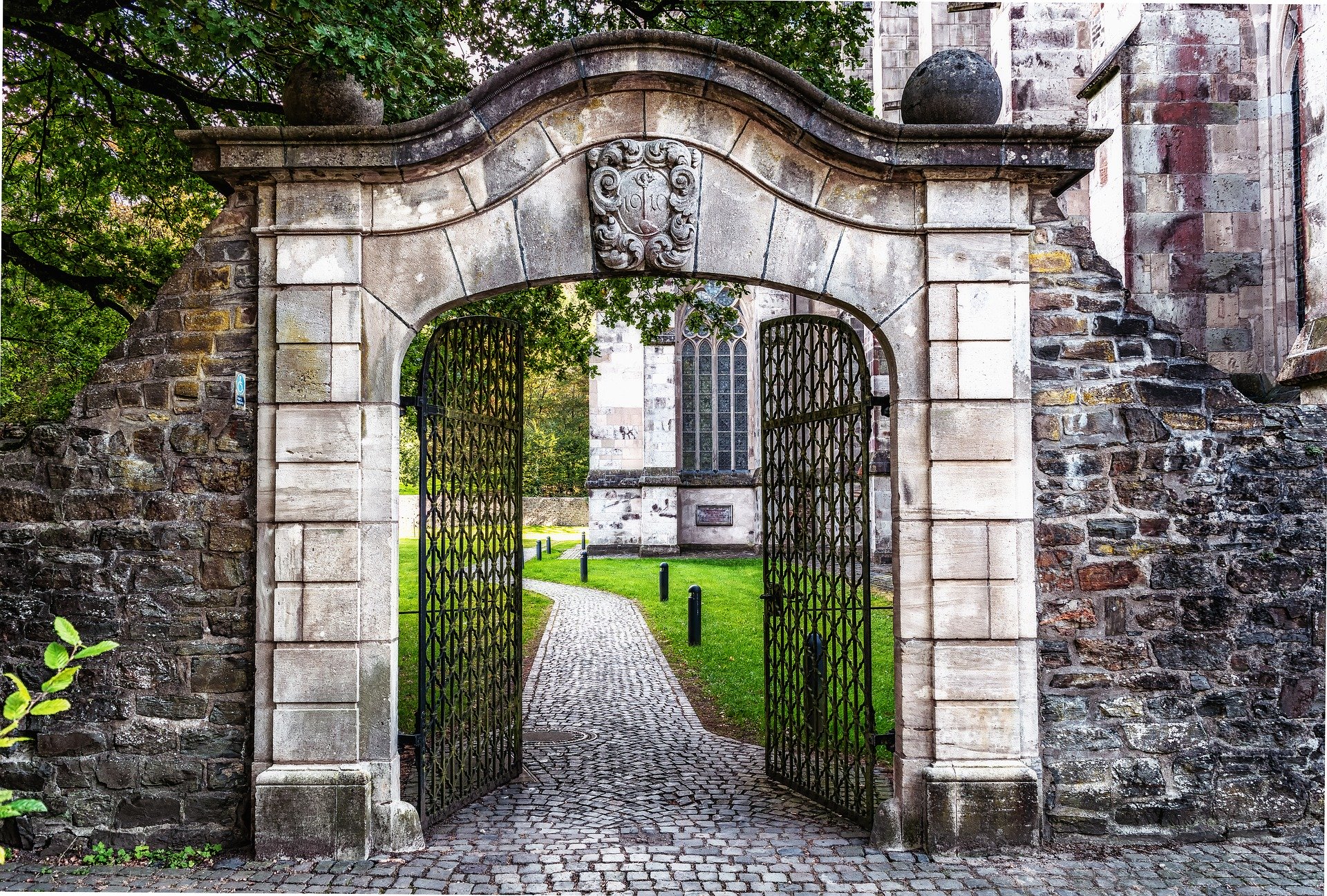
The Great Way has no gate,
A thousand roads enter it.
When one passes through this gateless gate,
They walk in freedom between heaven and earth.

Wu Men Hui-k’ai, 1183 – 1260, Chinese Chan Master

Not getting burnt

A fire reflected in a lake cannot burn the water. Neither can emotions disturb the mind when you don’t get involved in them. Don’t identify an emotion as your self. The fear or anger is not you, only an impersonal phenomenon.

Mentally pull back from the emotion and turn your awareness around to observe it. When in the grip of negative emotion we tend to believe it will never end. But emotions are no more permanent than thoughts.

Cynthia Thatcher, Just Seeing: Insight Mediation and Sense-Perception

The windblown clouds

No matter how long you live,
the result is not altered.
Who will not end up as a skeleton?
Cast off the notion that “I exist.”

Entrust yourself to the windblown clouds,
and do not wish to live forever.

Ikkyu, Japanese Zen Buddhist monk and poet.1394 – 1481

The paths we choose

As a single footstep will not make a path on the earth, so a single thought will not make a pathway in the mind. To make a deep physical path, we walk again and again. To make a deep mental path, we must think over and over the kind of thoughts we wish to dominate our lives.

Thoreau

Our astonished emotions

It seems to me that almost all our sadnesses are moments of tension, which we feel as paralysis because we no longer hear our astonished emotions living.

Because we are alone with the unfamiliar presence that has entered us; because everything we trust and are used to is for a moment taken away from us; because we stand in the midst of a transition where we cannot remain standing.

That is why the sadness passes: the new presence inside us, the presence that has been added, has entered our heart, has gone into its inner most chamber and is no longer even there, is already in our bloodstream.

Rilke, Letters to a Yong Poet