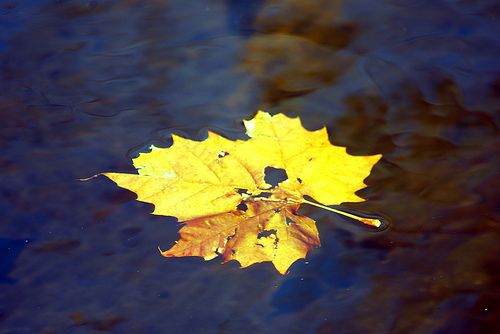
A lovely image of joy in the midst of the changing currents of life
On a branch
floating downriver
a cricket, singing.
Issa, Japanese Buddhist poet, 1763-1827
A lovely image of joy in the midst of the changing currents of life
On a branch
floating downriver
a cricket, singing.
Issa, Japanese Buddhist poet, 1763-1827

Although the wind
blows terribly here,
the moonlight also leaks
between the roof planks
of this ruined house.
Izumi Shikibu c., 974 – 1034
The moon in Japanese poetry is always the moon; often it is also the image of awakening. This poem reminds that if a house is walled so tightly that it lets in no wind or rain, if a life is walled so tightly that it lets in no pain, grief, anger, or longing, it will also be closed to the entrance of what is most wanted.
Translation and commentary by Jane Hirshfield

The end of suffering that we can achieve through our practice turns out to be an end of separation from suffering. Suffering ceases to exist when it is no longer something that we experience as impinging on our life, as an unnecessary, avoidable intrusion that we finally learn to exclude from our lives once and for all… Suffering doesn’t disappear from our life but into our life.
Barry Magid, Ending the Pursuit of Happiness: A Zen Guide

What is here now if there is no problem to solve?
A glimpse Practice to be used for reflection. Maybe try it for the day. We tend to identify with our actions and our problems.
Loch Kelly, Shift into Freedom: The Science and Practice of Open-Hearted Awareness

It is not a matter of looking for happiness
or trying to avoid suffering
but of going to the place beyond happiness or suffering.
Ajahn Chah

I have dreamed of the morning
coming in like a bird through the window
not burdened by a thought.
Wendell Berry, The Design of The House: Ideal and Hard Time

