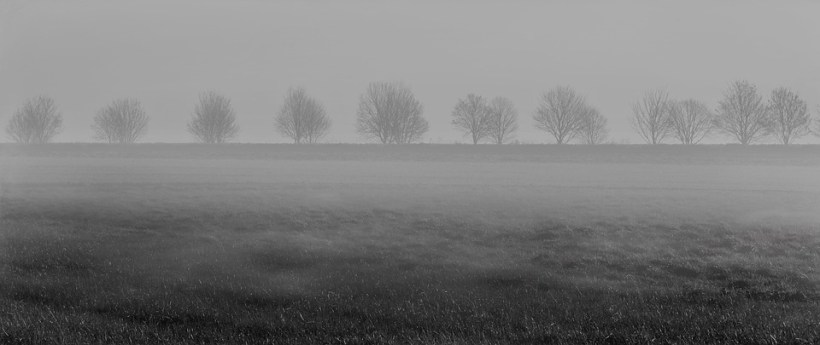
 Very foggy all day yesterday
and the Irish weather service have issued a Yellow Warning for fog this morning:
In any given moment we have two options:
to step forward into growth or to step back into safety.
Abraham H. Maslow
Very foggy all day yesterday
and the Irish weather service have issued a Yellow Warning for fog this morning:
In any given moment we have two options:
to step forward into growth or to step back into safety.
Abraham H. Maslow

Cold nights followed by wind and rain. Grey winter weather causing colds and flu, as the holiday season is well and truly over.
Each one of us has lived through some devastation, some loneliness, some weather superstorm or spiritual superstorm, when we look at each other we must say, I understand. I understand how you feel because I have been there myself. We must support each other and empathize with each other because each of us is more alike than we are unalike.
Maya Angelou

The question is not, never, ever, whether or not we will be given challenges and limitations. We will. The question is, how will we hold them, how will we be changed, how will they shape us, what will we bring to the healing of them, what, if anything will be born in its place.
Wayne Muller, A Life of Being, Having and Doing Enough

Quick fixes and abrupt changes are encouraged around this time of year. I prefer the slower perspective chosen by the Japanese painter Hokusai Katsushika:
From around the age of six, I had the habit of sketching from life. I became an artist, and from fifty on began producing works that won some reputation, but nothing I did before the age of seventy was worthy of attention. At seventy-three, I began to grasp the structures of birds and beasts, insects and fish, and of the way plants grow. If I go on trying, I will surely understand them still better by the time I am eighty-six, so that by ninety I will have penetrated to their essential nature. At one hundred, I may well have a positively divine understanding of them, while at one hundred and thirty, forty, or more I will have reached the stage where every dot and every stroke I paint will be alive. May Heaven, that grants long life, give me the chance to prove that this is no lie.
All endings are also beginnings.
We just don’t know it at the time.
Mitch Albom
We are coming up to that time of year when resolutions are encouraged and this can sometimes lead to a desire to fix ourselves and becoming dissatisfied with our life:
We are born with only one obligation – to be completely who we are. Yet how much of our time is spent comparing ourselves to others, dead and alive? This is encouraged as necessary in the pursuit of excellence. Yet a flower in its excellence does not yearn to be a fish, and a fish in its unmanaged elegance does not long to be a tiger. But we humans find ourselves always falling into the dream of another life. Or we secretly aspire to the fortune or fame of people we don’t really know. When feeling badly about ourselves, we often try on other skins rather than understand and care for our own. Yet when we compare ourselves to others, we see neither ourselves nor those we look up to. We only experience the tension of comparing, as if there is only one ounce of being to feed all our hungers.
Mark Nepo, The Book Of Awakening

