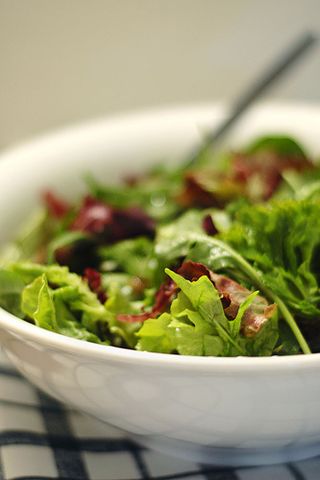
Mindful eating and weight loss

A pilot study has looked at the effect of Mindful Eating on weight loss. The report of  the study was published in Complementary Therapies in Medicine in 2010  and involved ten people classified as “obese” (average age was 44) who followed a Mindful Eating program for six weeks, consisting of mindfulness meditation, group eating exercises, and group discussions.  Pairing daily meditation with eating was encouaged to enable people to identify and examine eating triggers, hunger and fullness  cues, the quality of craved foods, and emotions associated with eating. They were encouraged to engage in as much mindful eating as possible and to increase their physical activity by about 5 to 10% each week. The participants were assessed during the trial and again after three months for changes in eating behaviour, psychological functioning, and weight and inflammation markers.

It was found that all of the participants lost a significant amount of weight, almost nine pounds over 12 weeks, on average. A measure of inflammation in the body (C-reactive protein,), decreased significantly, as well. Measures of mindfulness—the ability to observe, be aware of, accept, and describe their eating patterns—saw moderate to large increases throughout the study and follow-up periods. The participants’ self control improved dramatically, and binge eating was significantly reduced. In addition, significant improvements were seen in depressive and physical symptoms (such as indigestion and headache), as well as negative affect (mood) and perceived stress. The cautious conclusions drawn by the researcher were that mindful eating programmes could result in significant changes in weight and eating behaviour.

“In contrast to a focus on cutting calories, mindfulness helps people reduce weight and improve health by restoring the individual’s ability to detect and respond to natural cues,” stated Jeanne Dalen, lead author of the study who works at the Center for Family and Adolescent Research in Albuquerque, New Mexico.

Jeanne Dalen, Bruce W Smith, Brian M Shelley, Anita Lee Sloan, Lisa Leahigh, Debbie Begay, “Pilot study: Mindful Eating and Living : weight, eating behavior, and psychological outcomes associated with a mindfulness-based intervention for people with obesity”, Complementary Therapies In Medicine (2010), Volume: 18, Issue: 6.


Making time for our better health 2: Noticing internal busyness

[The Princeton] Study (see yesterday’s post) offers an important clue about internal busyness. It’s rooted in an attitude about time. When the pace of work is intensified, as it is in modern industrial and post industrial societies, time is seen as a finite, ever-dwindling commodity. Because time sees scarce, people try to squeeze the maximum amount of productivity out of every minute. They tend to spend less time on things like meditation, contemplation and singing – activities that can’t be made increase the “yield” on the time invested in them. Even we…who supposedly have our eyes on the inner depths of life, often find ourselves living by the basic capitalist assumption that what we do needs to yield a quantifiable result. How many of us got interested in meditation when we read about University of Wisconsin studies that  showed that people who meditate can increase activity in the “happiness” section of the brain?  This assumption – that if we are going to spend time on something, it needs to produce a measurable yield – is one root of internal busyness.

Sally Kemption, Busyness plan

Making time for our better health: Sorry, I’m too busy

I’m Late, I’m Late for a very important date,
No time to say hello, goodbye.
I’m late, I’m late, I’m late, and when I wave,
I lose the time I save.

White Rabbit, Alice in Wonderland

In a famous study, conducted in 1973  by J. M . Darley  and C. D. Batson, researchers at Princeton University,  it was shown that our perception of busyness influences the way we  behave in certain situations.  It was conducted with theology students  who, after completing some initial questionnaires,  were told to go to another building on campus to give a speech. The irony in this study was that the speech was on the New Testament parable of the Good Samaritan, where the main character helps a person in distress whom he meets unexpectedly on the road. Some of the students were told that they were late for the speech; others were told that they had a few minutes to spare. On the way, they came across a man slumped in an alleyway who appeared to need help. Out of those students who were told they were late and thus felt that they were in a hurry,  10% stopped to help. Of the group who knew they had a few minutes to spare, 63% stopped.

The crucial variable in the study was not the values of the person or their basic kindness, it was whether or not they believed themselves to be in a hurry. When questioned afterwards, those who had failed to stop said they would have done so, if they had “had more time“. It seems that when we speed up and feel that we are in a hurry, we experience something similar to what Tolman called in 1948 the “narrowing of the cognitive map”. We miss details. We do not make the best or wisest choices. We are not present in the moment to notice what is really important.  Too much focus on the future – one of the driving features of today’s age – means that we ignore what is in front of us in the present. The words “Hurry, you’re late”  had the effect of turning someone who would normally notice,  into someone who was indifferent to suffering — of making someone, in that moment, into a different person.

Caring requires that we reach out

That it hurts to care is borne out in its etymology,  for “care” derives from the Indo-European word meaning “to cry out” as in a lament. Caring is not passive but an assertion that no matter how strained and messy our relationships can be, it is worth something to be present, with others, doing our small part.

Katherine Norris, Acedia

No coming, no going

No Coming. No Going.

Everything is pretending to be born and to die.

That is a lie

An interesting quote from Thich Nhat Hahn. I am not sure that I completely get it but I think it means  that  –  at one level –  nothing really comes or goes, nothing is born or dies, but rather everything simply transforms into something else.  How can I apply that to my life? Well, when I get fixed on something as it currently is and desperately want to hold on to that, I suffer. But if I am able to see that everything is in a process of transforming, and thus not ending, then I do not need to hold on and suffering does not arise. If I realize how limiting it is when I hold fixed stories about myself or my life, and instead move toward a full openness and acceptance of what may emerge, then I can  more easily deal with the inevitable changes which each moment brings.

Have no agenda

My own experience is that the less you have in the way of expectations, the more effectively your efforts will bring fruits and beneficial results. Here in the West we are very idealistic, we create a fixed image – usually unconsciously – of how we want to be or what we want to change. Then through having that fixed idea, we miss the actual changes that we need to make. While our attention is riveted to the horizon, we miss where we are putting our feet. The more we can put aside any particular expectations or agendas, and the more we can engage wholeheartedly in the particular work or practices we are doing, then the better off we are in the long run.

Ajahn Amaro