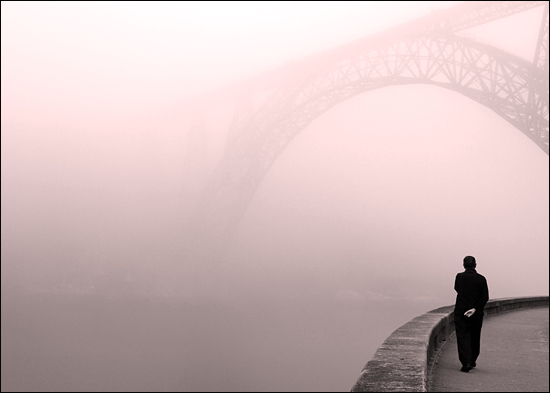
The wounds in our hearts

At some level we will always be afraid. And the world we live in is very competitive one, which means that we do not always feel secure enough to reveal our true selves. So there is a lot of loneliness in the world, despite modern advances in communication and networking. A great value is placed on  achievement and appearance, and  strength and competency are appreciated. We can get the same message in a different way in our families as we are growing up. Maybe a parent does not have the emotional space at that time in their life to provide a consistent response to our moments of neediness. So we can come to believe that our acceptance by others is based on us being competent or strong in some way, or by us doing something for them. Then as we grow we can get many experiences that confirm and reinforce this; we are disappointed and we pull back. We armour the heart.

And yet, deep within us, we long for someplace where we can feel completely accepted. We want to be in front of someone, not to have to do something to be welcomed. We want to let out the parts that we have hidden away. We look for someone who is attuned to us and who can see us in our brokenness without turning away. We especially wish for that person to be able to contain us when we come up against moments which we take as more proof that there is something wrong with us. And we approach situations or relationships with the deep-down hope that this time our needs will be held and met, rather than finding the same disappointment as before. At moments like that the other person becomes the place where our history and our unconscious needs are played out. We look for someone who will not disappoint us now.

What I am slowly learning in mindfulness practice, is that the way to work with my fears is not to try to fix them but to open a space around them first and allow them to be. As Pema Chodron says:  This is the primary method for working with painful situations….. We can stop struggling with what occurs and see its true face without calling it the enemy. It helps to remember that our practice is not about accomplishing anything—not about winning or losing—but about ceasing to struggle and relaxing as it is. That is what we are doing when we sit down to meditate. That attitude spreads into the rest of our lives. It’s like inviting what scares us to introduce itself and hang around for a while.

And what I have noticed is that people often find hardest at the start of mindfulness practice the idea of a non-judgmental attitude towards themselves, to stop beating themselves up when they find it hard to meditate. And frequently people say to me that the most difficult element in the loving-kindness practice is extending kindness towards themselves.

And it seems to me that is what is needed in relationships also. What we are seeking is someone who can accept us, hold us in our weakness and fears, allow us to be as we are.  Most people, myself included, have tried the alternate strategy, returning again and again to the wounds and fears deep inside them,  trying to “fix” them.  But what I find is that some wounds are slow to change and we have to accept that we will always have some trace of our deepest fears, of old patterns that can be triggered in new guises.  We will always be wounded in some way. What we seek in relationships is not someone who appreciates us in our strengths and achievements , but  someone who can hold the fears which we feel, without panicking or taking it personally. It is not necessary to heal the wounds, but simply to be able to look at them without turning away.
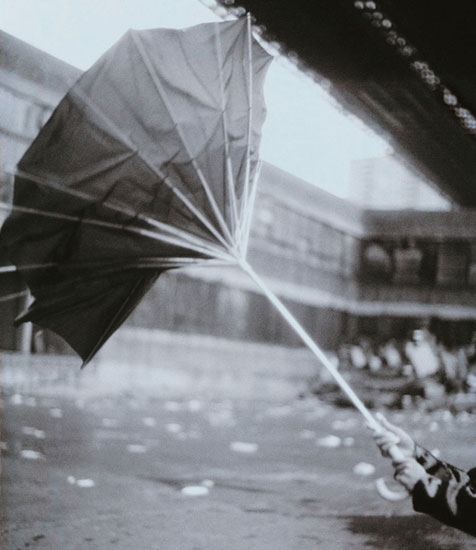
Sheltered from the wind

Experience follows intention. Wherever we are, whatever we do, all we need to do is recognize our thoughts, feelings, perceptions as something natural. Neither rejecting or accepting, we simply acknowledge the experience and let it pass. If we keep this up, we’ll eventually find ourselves becoming able to manage situations we once found painful, scary or sad. We’ll discover a sense of confidence that isn’t rooted in arrogance or pride. We’ll realize that we are always sheltered, always safe and always home.

Yongey Mingyur Rinpoche, The Joy of Living

The solution is within

When we’re disappointed or frustrated, when we’re in pain or when our day’s not going well, our tendency is to search for an object of blame. Our mantra becomes, “If only something were different, I wouldn’t be having this problem.” Blame is tricky. By trying to find someone else who’s at fault, we’re failing to deal with our own mind. Instead of looking inward, or taking a big view and seeing the transparency of the whole situation, we vent. “If only the driver in front of me had been going faster, I wouldn’t be late for work.” “If only someone else had cleaned the kitchen, I would be watching my favorite TV show instead of mopping this floor.” Even if we find someone we can logically blame for our pain, conducting our life in this way does not provide genuine relief. Blaming just lays the ground for further suffering and discontent.

From a meditator’s point of view, as long as we’re looking for someone to blame, our mind is unable to settle. Blame is a form of aggression.  The meditation path encourages us to be bigger, more openminded, more mature. It’s suggesting that we take responsibility for our behavior. This means that one day we will simply have to stop blaming the world. By blaming others when the world doesn’t move the way we want, we’re creating narrow parameters into which everything must fit. We become dead-set on what will solve our problem; nothing else will do. Blame ties us to the past and reduces who we are. Our possibilities become confined to one small situation. What is that path of blame going to accomplish?

Sakyong Mipham Rinpoche, End Blame

The child’s energy

We need to rediscover the energy that was in us as a child, before we got caught up in our roles and masks. This freedom,  that comes from deep within, is needed to cross the obstacles that face us and overcome the limitations which our fears impose upon us.  We sometimes have to dare to reach out. If not, we stay trapped where we are, divided,  unable to reach beyond the hurt or the problem we find ourselves in.

As once the winged energy of delight
carried you over childhood’s dark abysses,
now beyond your own life build the great
arch of unimagined bridges.

Rilke

Celebrate life: Jump in rain puddles – Christina Taylor Green

The little girl Christina Taylor Green who was killed in the Arizona Shootings last weekend was born on  September 11th, 2001. Along with other babies born on that day, she was featured in a book called “Faces of Hope.”  In it we see a photo of her, with, on either side, simple wishes for a child’s life. She expresses the wish,  “I hope you jump in rain puddles.It is a lovely thought, made all the more poignant by the tragic nature of her passing.

This probably would not be my normal response when coming across a puddle on the path. “Jump in, splash around“? My sensible mind would protest: “It would ruin my shoes. People will be watching. I would look daft”. We have a sense of  wonder and adventure in us as children before we cover it over as we “mature” and divide ourselves into what is seen and what we keep to ourselves. Somewhere along the way to adulthood we learn to hide ourselves, to appear reasonable, not spontaneous, to prefer order and routine to surprise. We become preoccupied the day-to-day problems of our lives and set out in the morning with a set of implicit or explicit goals. When the unexpected happens, like snow or rain puddles, it is seen as an inconvenience or a detour.  We get so goal-orientated, as if everything has to be won, that we do not see the fun that can be had in simply playing the game. Things can become difficulties or obstacles and not opportunities for play and spontaneity. We even can treat our recreation or sport as something to be “done”, serving some other aim.  It is as if being surprised or spontaneous is dangerous or makes us weak. We mask our sense of play out of fear of being judged as immature or too emotional.

Keeping the heart open with the eyes of a child is the key:  Enlarging our vision of all the  things that happen in the day- for surprise and for wonder –  even  the things we see a thousand times. And then giving voice to that sense of astonishment. To jump into the things that life brings, without holding back.  To be open to all, even that which we would prefer to avoid. The gospel tells us that the kingdom of heaven – the fulness of life –  belongs to those who welcome it like children. The shortness of little Christina’s life reminds me not to let life pass me by, to let go of those things which block my heart, to see things and people as if for the first time, to stop dwelling in the hurts of the past or the schemes of the future and to see wonder now.

We inhabit ourselves without valuing ourselves, unable to see that here, now, this very moment is sacred; but once it’s gone – its value is incontestable.

Joyce Carol Oates

Keeping the heart soft

It is not easy to keep ones heart open in every circumstance. Each day we can have experiences with people who cause us to become anxious or afraid; at other times we protect ourselves by becoming angry, or blaming others. We throw up walls and barriers because of our deep fear of being hurt. And if we want to, we can allow these walls remain for weeks, months or even years, as something inside us closes down and we withdraw. It is natural to contract from frightening events, and at times we cannot see all the reasons why something or someone bothers us. The first response therefore can be sometimes instinctive and unconscious, or based on schemas which are below our awareness.

However, as the previous post reminds us, underneath the fears there is something deep and warm in all living things. We all dream about love and belonging, and, in reality, they are never far away. It is our fears which make us doubt. Living a full life means trying to act in accord with our deep capacity for loving and tenderness even  at those moments when our instinct is to shut down  and we can get stuck.  Sure,  we may wonder about this,  when we struggle  or search for some meaning to this life. However, beneath the surface of our fears, goodness and tenderness is always slowly coming into being. We all need to remind ourselves every day to  trust in this deeper reality.

We have a choice. Often our first thought is to withdraw. But if we can recognize that movement, acknowledge it and not necessarily identify with it, our heart can soften.  Often getting unstuck means that we can stay with the anxiety which arises, fuelled by  energies and memories beneath our conscious awareness. If we can do this, what we see is that there is a link between being kind and our ongoing happiness. Our practice helps us keep the heart open and stop the process of fear from becoming too fixed. Sometimes this is easier said than done. But even when my first reaction is fear, and I forget the soft place within the heart, what I find  is that I recover quicker and remember sooner, and am better able to leave the sadness of such occasions simply be sadness. I do not need to blame or withdraw more. I can trust in the deep goodness in myself and others. Sadness might remain, but without giving in to judgment or recriminations, the mind  is free to allow space for new possibilities to come to birth.

We can let the circumstances of our lives harden us so that we become increasingly resentful and afraid, or we can let them soften us and make us kinder and more open to what scares us. We always have this choice.

Pema Chodron