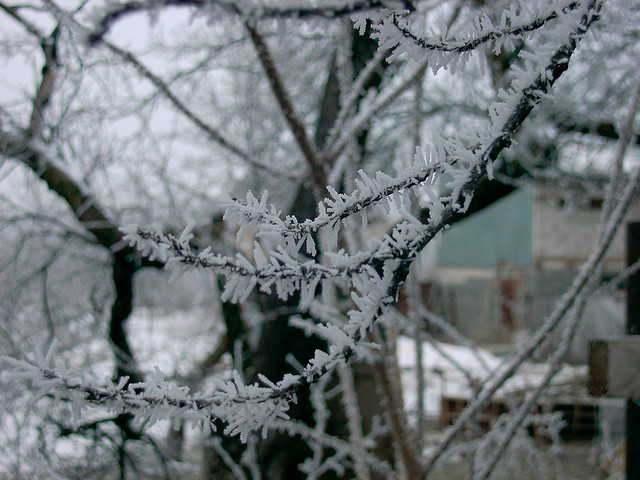
 Pema Chodron also reflects here on snow and ice. She reminds us to touch in with the springs of warmth which still exist inside us, no matter how cold a place we find ourselves in. When we are in an emotional or psychological midwinter, it is hard to believe that warmth and growth will return. We are tempted to disconnect or detach, to bury ourselves even deeper. However, we are encouraged here to keep the heart open, by allowing our deepest self stay in connection with the deepest self of another person or thing. In this way we allow ourselves receive warmth from the presence or thought of another person when it is hard to generate warmth in oneself.
Our habits and patterns can feel just as frozen as ice. But when spring comes, the ice melts. The quality of water has never really disappeared, even in the deepest depths of winter. It just changed form. The ice melts, and the essential fluid, living quality of water is there. Our essential good heart and open mind is like that. It is here even if we’re experiencing it as so solid we could land an airplane on it.
When I’m emotionally in midwinter and nothing I do seems to melt my frozen heart and mind, it helps me to remember that no matter how hard the ice, the water hasn’t really gone anywhere. It’s always right here.
So I work on melting that hardness by generating more warmth, more open heart. A good way for any of us to do this is to think of a person toward whom we feel appreciation or love or gratitude. In other words, we connect with the warmth that we already have. If we can’t think of a person, we can think of a pet, or even a plant. Sometimes we have to search a bit. But as Trungpa Rinpoche used to say, “Everybody loves something. Even if it’s just tortillas.” The point is to touch in to the good heart that we already have and nurture it.
Pema Chodron, Shambala Sun, 1998
 not fully understand why things have turned out as they have. At times like this we understand that we cannot make life problem-free, but our focus is to try and give to our everyday life a depth and value. To do this we may have to sit with the difficult moments without understanding why they are there. Rilke suggests that we love the difficult. It is not easy, but his words encourage us to believe that there is meaning underneath what is happening.



 Mindfulbalance