A short practice to increase our strength

O Adonai, and Leader of the house of Israel, You appeared to Moses in the burning bush,
and gave him the Law on Sinai: come and save us with an outstretched arm.

As Christmas draws closer,  the Christian liturgy chants the ancient “O Antiphons”  originating in the 5th Century. They testify to the desires of people down through the ages, and our ongoing human needs based on the different situations we find ourselves in. This one asks for  strength and protection, –  a strong arm to support us when we ourselves do not feel strong. It’s imagery comes from the story of the escape from slavery in Egypt and the journey across the desert.

There are so many times that we need to take in strength, to remind ourselves of our resources. One of the things which the mind does when we are stressed or depressed is to underestimate our resources and overestimate the threats which we feel. We divert our energies into the defense against threats, fearful that others may disappoint or take advantage of us.  These ancient words are a metaphor for what happens in those moments. The Hebrew word for Egypt – Mitzraim –  means “a narrow place.”  The escape from captivity in Egypt means the escape from the narrow places where we are stuck, to a wider place, a place where we can breathe freely. We can feel trapped in our lives,  in different forms of captivity. We can frequently feel as if we are travelling in unfamiliar territory, unchartered waters, and this can overwhelm us. We feel fortunate if we get through a day, or through the night when our fears come to worry us,  let alone know where we are going in our lives.

At times like this, we need to keep our focus on words and ideas that give us strength, that link us into to our fearless nature. We can try this simple exercise to increase awareness of the resources we have:

Find a quiet place and sit, gently closing your eyes. Become aware of your normal breathing and the wider sense of your body sitting here. See if you can sense the energy  in the core of your body. Notice your breathing, how it is constant and has a strength of its own. Feel the solidity in your posture, the strength in your upright back and shoulders, the dignity in the way you are sitting, the support in the contact with the chair or the floor. Become aware of the way your body functions in getting you around day after day. Consciously focus on your own strength, savouring this awareness, taking it in and drawing it out.

Now, picture in your mind something in nature that feels strong, like a mountain, noticing how massive and unmoving it is. In your mind’s eye, bring the mountain into your own body so that you become the mountain – your head the top,  your body the solid base,  rooted on the cushion or on the chair. See if you can imagine a sense of uplift, the strong quality of the mountain deep in your own spine. Invite yourself to become like a breathing mountain, unshakeable and still.

Now let that sense of strength sink into you and rest in you. Imagine it and prolong it. Breathe it into your emotions. Feel it in your spine, your head,  your chest, the muscles of your face. Let it become part of you, breathing it in deeper and deeper. Gently, let it touch the places in your life where you feel challenged or weak. Keeping the sense of the mountain in your awareness, seeing if you can place the difficulties in relation to that, almost like the clouds that pass over a mountain without affecting the mountain itself. See if you can make the awarenss of strength the present reality, even if just for a moment. If this is too difficult just do it briefly and return to the awareness of the mountain.

Rest in this awareness for five or ten minutes, if it feels right. Make conscious,  as best as possible,  the strength which is in your body and in your mind. Register it in your bones and in your muscles, your thoughts and your emotions. Continue to breathe gently as you finish the exercise and resume your daily activities.

Seeing the beautiful in the difficult

Sometimes we do not fully understand why things have turned out as they have. At times like this we understand that we cannot make life problem-free, but our focus is to try and give to our everyday life a depth and value. To do this we may have to sit with the difficult moments without understanding why they are there. Rilke suggests that we love the difficult. It is not easy, but his words encourage us to believe that there is meaning underneath what is happening.

What is required of us is that we love the difficult and learn to deal with it. In the difficult are the friendly forces, the hands that work on us.  Right in the difficult we must have our joys, our happiness, our dreams: there against the depth of this background, they stand out, there for the  first time we see how beautiful they are.

Rilke

Even welcoming our fears?

In our practice we work at turning toward every aspect of our experience and holding it in awareness. At times this is hard and we can only do it for a brief moment. Some of the things that happen in a day can be unwanted, and we cannot truly say that we “welcome” it.  But try this: See if you can be more aware of what your mind quickly labels as “unpleasant” or not what you “wanted” at this moment. Then see if you can name what is happening in your body and in your mind in that instant. Maybe creating this momentary space could help you see the thoughts, feelings and sensations as passing events in the field of awareness, and to not over-identify with them or be overwhelmed by them. Practicing in this way,  we try to be present with all the experiences of our day rather than avoiding, contracting or pushing them away.

Can you accept the moments of anger and fear as guests,
be willing to receive them with kindness without feeling obliged to serve them a five-course meal?

Christina Feldman

Searching to be something

We practice in order to become more awake. This includes becoming more aware of the various strategies we use to avoid being with a basic fear. We have numerous ways to deflect any sense of insecurity,  of not being in control, of not always being sure of where we are going. So we have a tendency to look to ourside sources or achievements for support, to define ourselves by what we do or by some labels or badges. We are often afraid of just being ourselves, because we have learnt to believe that it is not enough. And one of the preferred ways to deal with this today is that we try harder, we do more.

However, what we find when we practice is that there is nothing to do, and even less to hold on to. There is simply this moment, this breath. Nothing needs to be added to make it compete.  We rest in it, and in some way we are complete in it too.  We do not have to place more demands on it.  We slow down the chatter in the mind. We do not have to search in order to be. And that is the greatest liberation.

The arrogant mind never stops looking for identity, and this identity always defines itself through atributes: “the beautiful one”, “the smart one”, “the creative one”,  “the successful one”………. We are always searching for something to be.

Dzigar Kongtrul,  Light Comes Through

I have spoken at times of a light inside, a light that is uncreated and uncreatable to the extent that we can deny ourselves and turn away from things, we shall find our unity in that little spark inside, which neither space nor time touches.

Meister Eckhart

Fears

Fears are educated into us,

and can, if we wish, be educated out.

Karl Menninger

The opportunity to experience yourself differently is always available.

Yongey Mingyur Rinpoche

With empty hands

A similar theme to the Mary Oliver poem posted this week. Sometimes we feel lost and do not know where we are going. We feel powerless, having nothing to offer, with empty hands. We have to leave behind all we have relied on up to now. We utter a heartfelt wish that things could become clearer. It is in the stillness  that wisdom speaks to the heart and reveals what we have been looking for.

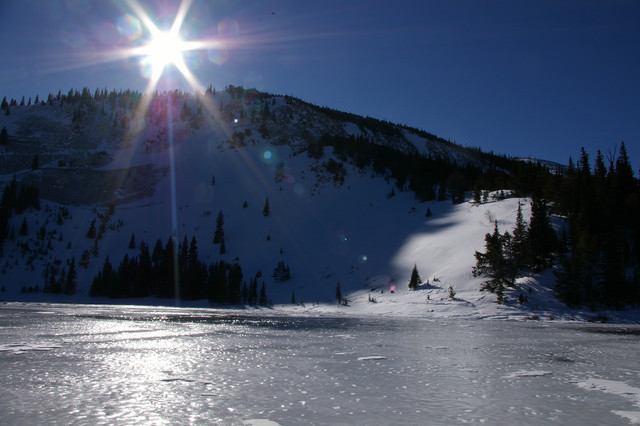
In this high place
it is as simple as this:
leave everything you know behind.

Step toward the cold surface,
say the old prayer of rough love
and open both arms.

Those who come with empty hands
will stare into the lake astonished.
There, in the cold light
reflecting pure snow,

is the true shape of your own face.

David Whyte