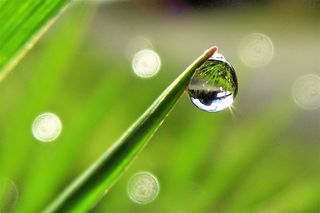
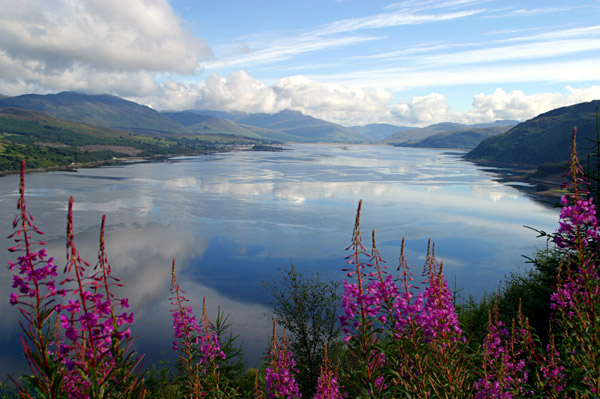
 Because of the Day that is today, two works from different periods in Irish history, a far cry from some of the twee sentimental blessings you will see attributed to Ireland on this day. The first, a simple but beautiful morning prayer for strength and protection, is attributed to Saint Patrick himself. It draws into the person the strength and stability which nature has – the calm depths of the sea, the firm constancy of the mountains. The second, by John O’ Donohue, has a similar theme, praying that the strength seen in nature be “an invisible cloak” in times of difficulty. Both give us an inspiration for a simple practice. While sitting we bring to our minds eye the solidity of a mountain or the calmness of the ocean. We stay with these for the period of our sitting, becoming, in one sense, the mountain of the ocean, seeing their unchanging nature despite changing weather or surface turbulence. Meditating like this works particularly well when we feel pulled in many different directions or momentarily out of control as it allows us to attach our inner sense with the unchanging aspects of the natural world.
We see in both pieces the inspiration which Irish spirituality found in the natural world. In the Celtic mind the space between nature and the other world was always very close, and our inner self could be nourished every day not in church but right there on the land, in every field and on every hilltop. Their sense of self was connected to the landscape, which gave to every person an inner geography. As some writers have said, nature for them was a “thin place”, where the space between the holy and the ordinary is very thin and it is easier to connect with our true self. It helps, in mindfulness terms, to come home to the present, and see that ordinary experience is whole and complete, and that the holy becomes ordinary – this step, this flower, this conversation, this life.
The Breastplate of Saint Patrick
I arise today, through the strength of heaven:
Light of sun
Brilliance of moon
Splendour of fire
Speed of lightning
Swiftness of wind
Depth of sea
Stability of earth
Firmness of rock.
John O Donohue, Beannacht (“Blessing”)
On the day when the weight deadens
on your shoulders and you stumble,
may the clay dance to balance you.
And when your eyes freeze behind
the grey window and the ghost of loss
gets in to you,
may a flock of colours, indigo, red, green, and azure blue
come to awaken in you a meadow of delight.
When the canvas frays in the currach of thought
and a stain of ocean blackens beneath you,
may there come across the waters
a path of yellow moonlight to bring you safely home.
May the nourishment of the earth be yours,
may the clarity of light be yours,
may the fluency of the ocean be yours,
may the protection of the ancestors be yours.
And so may a slow wind work these words
of love around you, an invisible cloak to mind your life.
La Fhéile Padraig sona dibh! A Happy Saint Patrick’s Day to you.