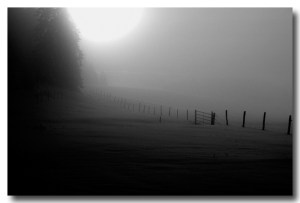
Life is full of transitions; we are always moving on….

What story are you telling yourself about your life?

As humans we seem to have a deep desire to settle down – in a sense to make a home – where we feel safe, and where we can, in some way, define ourselves. We like to have a narrative of stability, which unfolds sometimes without conscious reflection –  an implicit psychological imperative to hold onto a continuity across time and space. Therefore, we unconsciously stretch out a subjective thread across our experiences, telling our story in terms of coherence and unity – seeing certain periods as deviations or moments we got lost – and this continuity gives us an “identity”.  Indeed, in Western societies, one of the first questions a person tends to get asked is “What do you do?” – meaning, “What is your job?”  – as that allows everyone present to define themselves in terms of something ongoing, and thus gives a kind of identity or something to hold a story together. Continuity is important to us, we do not like any sense of dislocation. We like stories that flow; they seem to give us some sort of comfort.

However, even though we like continuity, I increasingly wonder whether it would not be better to tell our stories as ones of ongoing movement, of continual transitions, and practice being comfortable with that. Last week I was involved in a workshop on Mindfulness as part of a Counselling Conference held in Geneva on the theme of transitions. And as I listened to the talks I was struck by how much of our life is actually changing,  all the time,  in big and little ways.  Life brings innumerable goodbyes, as even on a daily level we can be reminded of little ways that we or others have changed. We are always making little adjustments, little departures. We have to say goodbye to life phases, to certain life patterns, to some memories we have let define us. And because we prefer a narrative of settling down, of attachment to a place or to ideas about ourselves, it is inevitable that departures cause anxiety. But if we come to see that life consists of change, and each change contains a promise of something new, then we can work with our anxieties from a new perspective. Defining ourselves as people who change, and seeing this fluidity as part of our story, allows us rest more easily with the inevitable changes which happen and not see them as a threat to who we are.

The real art of conducting consists in transitions – Gustav Mahler. In our normal narrative we prefer to talk about continuity. This quote  prompts us to go even further. Not only can we become comfortable with change, but maybe even find a richness in the in-between moments, the gaps between sounds, those moments in our lives when we feel a little bit on shaky ground  or the spaces in our lives when we can feel nothing is happening. Sometimes, we understand things better through their absence or we only appreciate something when we are forced to examine it more closely. Maybe the moments of change which produce anxiety,  are the moments which help us to live our lives more consciously, as we reflect on what we have allowed define us. They may be hard, but if we trust that something rich is happening, we may find more strength to go those periods when everything familiar seems far away.

Life is a process of becoming, a combination of states we have to go through.  Where people fail is that they wish to elect a state and remain in it. This is a kind of death.

Anais Nin

Early morning thoughts…for the day that begins…

Mindfulness is the aware, balanced acceptance of the present experience.  It isn’t more complicated than that. 


It is opening to or receiving the present moment, pleasant or unpleasant, just as it is, without either clinging to it or rejecting it.

Sylvia Boorstein

Not reducing ourselves to our worries

Like most of the great spiritual masters of our universe, Jesus taught from the conviction that we human beings are victims of a tragic case of mistaken identity. The person I normally take myself to be –  that busy, anxious little ‘I’ so preoccupied with its goals, fears, desires, and issues — is never even remotely the whole of who I am, and to seek the fulfillment of my life at this level means to miss out on the bigger life. This is why, according to his teaching, the one who tries to keep his ‘life’ (i.e., the small one) will lose it, and the one who is willing to lose it will find the real thing.

Cynthia Bourgeault, Centering Prayer and Inner Awakening

What happens today is not a deviation from life

The Buddhist teachings are fabulous at simply working with what’s happening as your path of awakening, rather than treating your life experiences as some kind of deviation from what is supposed to be happening. The more difficulties you have, in fact, the greater opportunity there is to let them transform you. The difficult things provoke all your irritations and bring your habitual patterns to the surface. And that becomes the moment of truth. You have the choice to launch into the lousy habitual patterns you already have, or to stay with the rawness and discomfort of the situation and let it transform you, on the spot.

Pema Chodron

Noticing the effects of a franctic age 1

Will put up one or two posts on the effects of our speeded-up world and social media on the human psyche, partly prompted by reading this address of Pope Benedict XVI to a group of contemplative monks. His remarks, although from a philosophical perspective, reflect the most recent scientific research on the fact that increased internet and social media usage seems to effect and change the very nature of the brain itself.

Technical progress, markedly in the area of transport and communications, has made human life more comfortable but also more keyed up, at times even frantic. Cities are almost always noisy, silence is rarely to be found in them because there is always a lingering background noise, in some areas even at night. In the recent decades, moreover, the development of the media has spread and extended a phenomenon that had already been outlined in the 1960s: virtuality that risks getting the upper hand over reality. Unbeknown to them, people are increasingly becoming immersed in a virtual dimension because of the audiovisual messages that accompany their life from morning to night.

The youngest, who were already born into this condition, seem to want to fill every empty moment with music and images, as for fear of feeling this very emptiness. This is a trend that has always existed, especially among the young and in the more developed urban contexts but today it has reached a level such as to give rise to talk about anthropological mutation. Some people are no longer capable of remaining for long periods in silence and solitude.

Pope Benedict XVI, Address to Carthusian Monks, Carthusian monastery of St. Bruno, Lamezia Terme, Italy, Oct. 11, 2011

Letting there be room

Things falling apart is a kind of testing and also a kind of healing. We think that the point is to pass the test or to overcome the problem, but the truth is that things don’t really get solved. They come together and they fall apart. Then they come together again and fall apart again. It’s just like that. The healing comes from letting there be room for all of this to happen: room for grief, for relief, for misery, for joy.

Pema Chodron, When Things Fall Apart