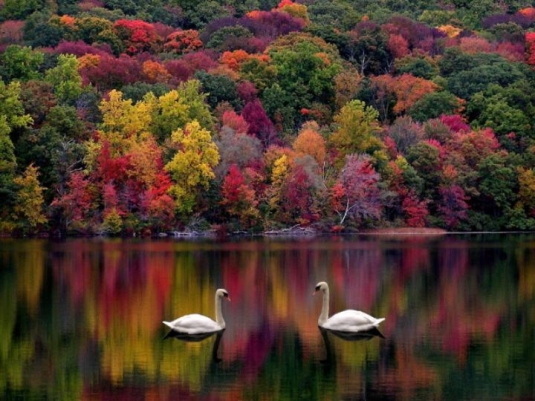
You who want knowledge,
Seek Oneness within
There you will find
the clear mirror already waiting
Hadewijch II
You who want knowledge,
Seek Oneness within
There you will find
the clear mirror already waiting
Hadewijch II
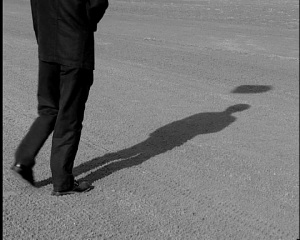 I remember, when I was a very small child, often trying to jump into the middle of my shadow, but however hard I jumped I just landed on the shadow’s feet. And I would run after my shadow and then jump – but where would I land? Just in the same place all over again. And this is what we do with our lives – the things that we desire, it’s like running after shadows. You try to catch hold, reaching for the desire so close, and then you grasp it and then . . .and you haven’t really got it. Somehow it’s not what you expected, it’s different, not what you really wanted. And then to run from your shadow – to be afraid, you keep turning around: ‘It’s still behind me, run faster, got to get away.’ When we stop and look though, we realize: ‘Well, it’s just my shadow.’ You can’t get away from it, but there’s nothing in it to be afraid of, it’s just a shadow. So when we stop and rest in the stillness of knowing, we know in our hearts that all we desire, all we fear, are just shadows. There is no substance there – nothing which can make us more complete and nothing which can threaten us. This is the real freedom of mind.
Ajahn Amaro, Real Freedom
 As I have said, nothing that arises in our body and in our life happens outside of our journey, of our path, to full realization. Everything that occurs needs to be welcomed with an attitude of acceptance and openness. No matter what happens, it is imperative that we do not judge it. Especially when we are going through very difficult and trying circumstances, one cannot repeat to oneself too often, “Do not judge it; do not judge it.” Only when we resist the temptation to judge what we are going through can the journey we need to make at this moment continue to unfold, and can we receive the needed development and transformation it may bring.
Reginald Ray, Enlightenment: Finding Realization in the Body.
In matters of soul,
it is advisable never to compensate or to try to escape,
but instead to tend better
the very thing that is causing trouble.
Thomas Moore, Soul Mates

What we need is to be interested and to watch, but not interfere or be caught up in what we are thinking. Don’t think of the past, don’t anticipate the future, don’t get fascinated by the present.
See it as it is. Just be there with it. A thought is just a thought. An emotion is just an emotion.
It is like a bubble. It will burst and another one will come up.
Ani Tenzin Palmo, Reflections on a Mountain Lake
 One or two posts these days on how to work with difficult and frightening emotions: Awareness is the key to living fully in each moment, even if the moment contains difficult emotions. It is the same practice – insofar as it is possible – to spend time with and hold emotions in a non-judgmental awareness without making them into a statement about ourselves or the direction of our lives. Gentleness, kindness and self-compassion are the key to this work, leading to a genuine friendliness toward ourselves and towards whatever passes through the body-mind.
With radical accountability, all emotions are observed as experiences only, pointing nowhere, implicating no one and signifying nothing. Though it is no one’s fault that we have an emotion, it is still essential to hold the emotion fully within awareness without wavering. Emotions need observation and allowance, not our analysis or fixation. The story that accompanies the emotion dies with accountability. The story was never true to begin with; we needed it to provide relief from the pain of being “me”. Though we did not know it at the time, sustaining the story’s untruth through inattention was causing even greater suffering than if we had allowed the pain to express itself in awareness. Radical accountability allows all experience to be itself.
Rodney Smith, Stepping out of Self-Deception

