
We become just by performing just actions,
temperate by performing temperate actions,
brave by performing brave actions.
Aristotle
We become just by performing just actions,
temperate by performing temperate actions,
brave by performing brave actions.
Aristotle
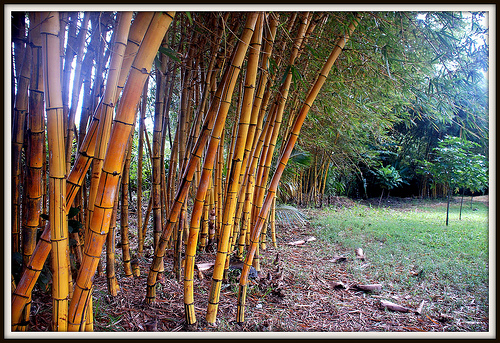
The wind whistles in the bamboo and the bamboo dances.
When the wind stops, the bamboo grows still.
A silver bird flies over the autumn lake.
When it has passed,
the lake’s surface does not try to hold on to the image of the bird.
Huong Hai
 True fearlessness is wise action, not false bravado or blind reactivity. It requires that we take time and exercise discernment. Zen teacher Joan Halifax speaks about the “practice of non-denial.” When we feel afraid, we don’t deny the fear. Instead, we acknowledge that we’re scared. But we don’t flee. We stay where we are and bravely encounter our fear. We turn toward it, we become curious about it, its causes, its dimensions. We keep moving closer, until we’re in relationship with it. And then, fear changes. Most often, it disappears. [There are] many quotes from different traditions that speak to this wonder of fear dissolving. “If you can’t get out of it, get into it.” “The only way out is through.” “Put your head in the mouth of the demon, and the demon disappears.”
Margaret Wheatley, Can I be Fearless?
 It does not really get explained any more simply than this:
One day when our master Jamyang Khyentse was watching a lama dance in front of the Palace Temple in Gangtok…he was chuckling at the antics of the … clown who provides light entertainment between dances. [A Student] Ana Pant kept pestering him, asking him again and again how to meditate, so this time when my master replied, it was in such a way as to let him know that he was telling him once and for all: “Look, it’s like this: When the past thought has ceased, and the future thought has not yet risen, isn’t there a gap?” “Yes” said Ana Pant. “Well, prolong it. That is meditation”.
Sogyal Rinpoche, Glimpse after Glimpse.
 Do you notice a tendency to measure or compare yourself with others or with the easy happiness which is portrayed in the media?
We hear, imagine and watch so many stories! Our life is becoming more and more inundated with TV shows, movies, magazines, and newspaper articles that seem to show us what life is like. And then the inevitable comparisons arise: “My life isn?t like that” or “I wish it were” or “It is exactly like that”. The moment we notice painful or sad feelings arising from thoughts like “I’m unloved. I feel separate and isolated” can we immediately stop, look and listen, instead of going on weaving fancy narratives about ourselves? Can we stop and ask “Where is this feeling coming from?” Right now. Asking right this moment. Becoming more transparent to thoughts and images that evoke these feelings and then deepen, embellish, and propagate them.
Toni Parker, The Silent Question
 There are different ways in which writers describe the inherent restlessness deep within us, with which we are often uneasy and consequently work to cover over by activity or the things we do to seek recognition and success. As I have written before, mindfulness practice encourages us to come to a working understanding that there will always be a deep restlessness at the heart of life, and that is just the way things are. It does not mean there is anything wrong with our life, or with us, despite what we may feel from time to time. Another way of looking at this restlessness is seen in this quotation from the influential Canadian philosopher Bernard Lonergan. He sees it as a positive drive to know, an impulse to keep going beyond immediate experience, the root of all searching, which may never be completely satisfied:
Deep within us all, emergent when the noise of other appetites is stilled, there is a drive to know, to understand, to see why, to discover the reason, to find the cause, to explain. Just what is wanted has many names. In what precisely it consists is a matter of dispute. But the fact of inquiry is beyond all doubt. It can absorb a man. It can keep him for hours, day after day, year after year, in the narrow prison of his study or his laboratory. It can send him on dangerous voyages of exploration. It can withdraw him from other interests, other pursuits, other pleasures, other achievements. It can fill his waking thoughts, hide from him the world of ordinary affairs, invade the very fabric of his dreams. It can demand endless sacrifices that are made without regret though there is only the hope, never a certain promise, of success.
Bernard Lonergan, sj, Insight

