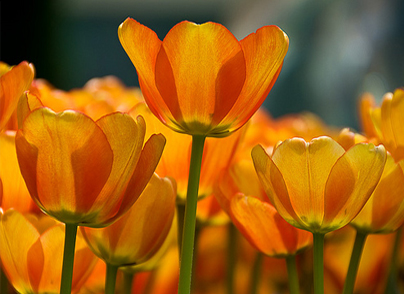
The Lily is a symbol of Easter, being associated with new life and a pure offering to God. In this poem, Mary Oliver sees the flower silently following night and day, darkness and light, the up’s and down’s of life, trusting, knowing that the dawn will follow the night. It is a thought which suits this Easter Saturday,- starting , as it has, in more muted colours than the glorious sunshine of yesterday – a day which places the emphasis on waiting. The flower waits for the silver moon and the golden sun, which are often used to refer to the unconscious, unknown part of our lives and the conscious, known parts. It trusts that what is now unconscious will become conscious in time. This trust is a quiet, contented attitude – the trust of a child who knows that ultimately all is good – an attitude that we cultivate when we sit in meditation.
Night after night, darkness enters the face
of the lily which, lightly, closes its five walls around itself,
and its purse of honey, and its fragrance,
and is content to stand there
in the garden, not quite sleeping,
and, maybe, saying in lily language
some small words we can’t hear
even when there is no wind anywhere,
its lips are so secret, its tongue is so hidden –
or, maybe, it says nothing at all
but just stands there
with the patience
of vegetables and saints
until the whole earth has turned around
and the silver moon
becomes the golden sun –
as the lily absolutely knew it would,
which is itself, isn’t it, the perfect prayer?
Mary Oliver, The Lily
 A central truth of practice is that in order to come to the present, we must go through the past. This does not mean we have to relive or analyse our childhood, but it does mean that when our attention steadies itself in the here and now, we will be met with the residue of our past conditioning. Awakening means exposing and investigating areas of this past conditioning where the sense-of-self remains identified within a pattern, thought or emotion.