Be struck by life today

Another lovely poem by Mary Oliver on how we can look at the world – and everything we see today – as a doorway to deeper mysteries and as a place where our heart can grow. Her words reconnect us with all that is around us and with a deep sense of acceptance of our journey here.

As for life, I’m humbled,
I’m without words sufficient to say

how it has been hard as flint,
and soft as a spring pond,
both of these and over and over,

and long pale afternoons besides,
and so many mysteries, beautiful as eggs in a nest,
still unhatched

though warm and watched over
by something I have never seen—
a tree angel, perhaps, or a ghost of holiness.

Every day I walk out into the world
to be dazzled, then to be reflective.
It suffices, it is all comfort—
along with human love,

dog love, water love, little-serpent love,
sunburst love, or love for that smallest of birds
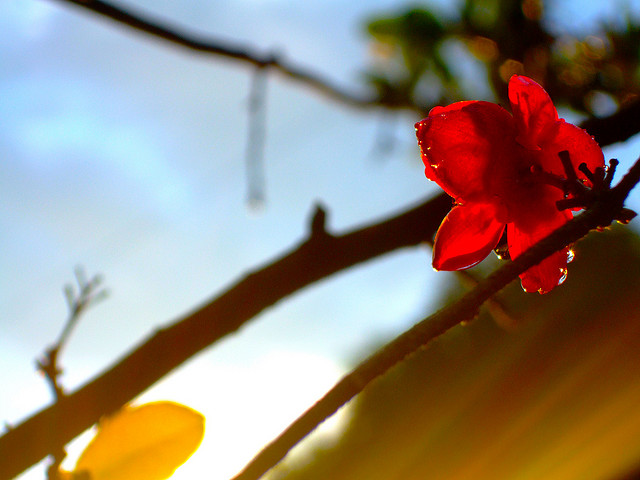
flying among the scarlet flowers.
There is hardly time to think about

stopping, and lying down at last
to the long afterlife, to the tenderness
yet to come, when
time will brim over the singular pond, and become forever,

and we will pretend to melt away into the leaves.

Mary Oliver, Long Afternoon at the Edge of Little Sister Pond

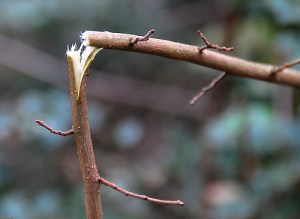
(Photograph courtesy of Jasmine Trotter  http://killdollphotographies.tumblr.com/)

Positive living: Don’t wait for the other person

Sometimes we pass through periods in our life when it seems safer to close in on ourselves. We may get blocked in some relationships, or harden around what we perceive to be a hurt caused by others, or simply drift apart. And so we pull down the shutters and withdraw.  The mind loves categories, and when we get threatened these get more polarized, making it harder to see the world from any other viewpoint than our own. A lot of our energies go into convincing ourselves that we are right, ensuring that  any cognitive dissonance between our values and our actions is eliminated.  Self-justification then kicks in, that useful  strategy  which blinds us to the possibility that we were wrong, allowing us sleep at night by reducing regret and reinforcing our actions.

However, closing ourselves off from others may not always be right, even if  our safety mechanism tells us it is. It can keep up trapped in the past, which we cannot change , rather than seeing new possibilities in the present. So, when you notice that you are running a story about what others have done to you, see if you can remind yourself that you are the one who has the power to determine how you feel about what’s going on. Everything is workable, and thus you can work with the words and actions of other people in contact with you. Your response is entirely up to you. To live a fuller life, we often we need a generosity that operates on a different kind of logic, one which does not count or measure but rather dares to take the first step.

Initiate giving. Don’t wait for someone to ask. See what happens — especially to you. You may find that you gain a greater clarity about yourself and about your relationships, as well as more energy rather than less. You may find that, rather than exhausting yourself or your resources, you will replenish them. Such is the power of mindful, selfless generosity. At the deepest level, there is no giver, no gift, and no recipient . . . only the universe rearranging itself.

Jon Kabat Zinn,  Wherever You Go There You Are: Mindfulness Meditation in Everyday Life

Hiding our true selves

Many poets are not poets for the same reason that many religious men are not saints: they never succeed in being themselves. They never get around to being the particular poet or the particular monk they are intended to be by God. They never become the man or the artist who is called for by all the circumstances of their individual lives. They waste their years in vain efforts to be some other poet, some other saint…They wear out their minds and bodies in a hopeless endeavor to have somebody else’s experiences or write somebody else’s poems.

Thomas Merton

Are we the sum of our thoughts?

We usually take ourselves to be the sum of these thoughts, ideas, emotions and body sensations, but there is nothing solid to them. How can we claim to be our thoughts or opinions or emotions or body when they never stay the same?

Jack Kornfield

Teachers often suggest considering your thoughts to be like clouds in the sky. Some are dark and stormy, some are beautiful and fat, while others are wispy and ethereal. Sometimes there are no clouds at all. No matter. Just like clouds in the sky, thoughts pass through your mind. And just like the sky, your mind can contain it all.

Susan Piver

Why do we let things get so complicated?

I was looking at some old family photographs last week. These black-and-white images from when I was a child on holidays capture little moments, frozen for all time. In them I can see myself when I was  young and carefree, smiling easily, not observing myself, not wondering how I am doing. Looking at them I easily get back in touch with a time when love was given without  complications, a love that  was genuine and asked for little in return. Times were simple, and we were simple too. We embraced life – and each other – freely.

Life has changed everyone in this photograph, as it does all people. The naturalness of childhood, with its trust and more open spirit, makes way for  the passing of time, for  older, supposedly wiser years, for the onset of worries, and for a focus on ourselves and doubts about what once seemed so sure. We grow up, and as we do we become less open, more complicated. We begin to guard and armour the heart, hardening in our attitude towards others and toward life.  The sad thing is, we convince ourselves that this is right.

I am sure that everyone reading this has memories like the ones I have when I look at  a picture such as this. We all wonder where did all that optimism and openness go?  What happened to the love  that we gave to others over the years, that we invested with the best of our intentions? All those dreams, that looking forward to something  good, to something that would endure for ever, and would be there in good times and bad?

It seems to me that all of us are doing our best in a life story where we are never really sure of the conclusion.  A story where we try to live good lives, and be fair to others, and yet still learn that there is a lot of things that are outside our control and where we have to learn through pain and sorrow.  And in some cases, the simple openness does not work; we realize that we have to let go and trust in a process that we cannot understand.  Why do some things not work out, some good people get ill and die, friends move away and no longer stay in touch?  And yet, even if  we have been visited by sadness or have been hurt, we keep touching back into that young heart, which believes in the goodness of life and in the power of love and of friendship. We have to move on, holding on to our hopes despite the unresolved aspects of our life and our story. We are asked just  to try, and try again, and then again some more.  The greatest tragedy would be to let the experiences of life convince us that the optimism and smiles we had as children were completely misplaced.

Practice letting things go

It is over 20 years since I read this saying from Gurdjieff. It struck me then and still resonates now. We often pin our happiness onto what we have  – certain things, relationships, achievements, successes- and hold onto them for dear life. What this quotation reminds us is that happiness is rooted in a contented mind. It is often related to letting go, to holding things lightly, to being peaceful within ourselves  – with where we are and what we can do without. It is linked to knowing we are complete in ourselves, not holding on to some things and not needing to be  completed by others or by what we have.   

A man is satisfied not by the quantity of food, but by the absence of greed.