It is uncertain, isn’t it

After a weekend of alerts about storms and viruses, living with uncertainty is a skill we all need to cultivate:

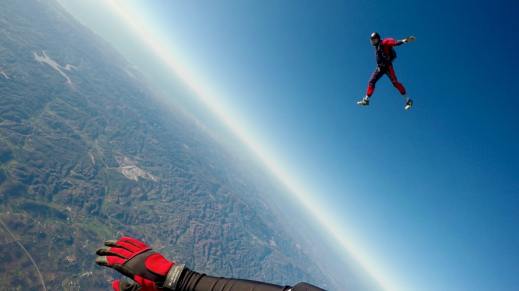
My teacher Ajahn Chah would often respond to people’s questions, plans, and ideas with a smile and say, ‘Mai neh.’ The phrase means, ‘It is uncertain, isn’t it?’ He understood the wisdom of uncertainty, the truth of change, and was comfortable in their midst. As with the Cloud of Unknowing or the ‘unlearning’ of the Tao, wisdom grows by opening to the truth of not knowing. The Third Zen Patriarch puts it this way, ‘If you wish to know the truth, only cease to cherish opinions.’ … At the root of suffering is a small heart, frightened to be here, afraid to trust the river of change, to let go in this changing world. With wisdom we allow this not knowing to become a form of trust. St. John of the Cross described it this way, ‘If a man wishes to be sure of the road he treads on, he must close his eyes and walk in the dark.’

Jack Kornfield
Sunday Quote: New month

Courage. Don’t be too timid or squeamish about your actions.

All life is an experiment. The more experiments you make the better.

Ralph Waldo Emerson

A Universe behind

If you pass through a period of darkness or depression, just ask, ‘Who is aware of the darkness?’ That’s how you pass through the different stages of your inner growth. You just keep letting go, and remain aware that you are still there. When you’ve let go of the dark psyche, and you’ve let go of the light psyche, and you’re no longer clinging to anything, you will reach a point where it will all open up behind you. You are now becoming aware of a universe behind your seat of consciousness. If you’re willing to let go, you’ll fall back and it will open into an ocean of energy. You will become filled with light. You will become filled with a light that has no darkness, with a peace that passeth all understanding

Michael Singer

Inhabiting Vulnerability

The only choice we have as we mature is how we inhabit our vulnerability, how we become larger and more courageous and more compassionate through our intimacy with disappearance, our choice is to inhabit vulnerability as generous citizens of loss, robustly and fully, or conversely, as misers and complainers, reluctant, and fearful, always at the gates of existence, but never bravely and completely attempting to enter, never wanting to risk ourselves, never walking fully through the door.

David Whyte

This moment is enough

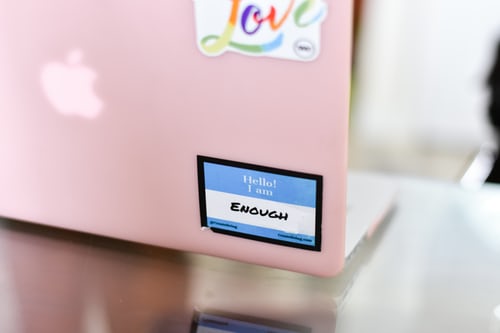
Contentment doesn’t mean we are always happy about life events or deny the reality of pain. We cultivate contentment by cultivating the inner witness who is able to respond to life from a place of calmness, peace, and tranquility. It means we honor that what is given to us in any moment is enough. So it is the ‘still heart’ — the heart of equanimity — that can welcome everything in. Instead of always living with a sense of dissatisfaction about our lives, or anticipation over what comes next, we live in the knowledge that this moment contains everything we need to be at peace, to experience freedom, to develop compassion for ourselves and others. 

Christine Valters Paintner, Lectio Divina: The Sacred Art

The one assumption

 Life doesn’t match our image of how it should be, and we conclude that life itself is wrong. We relate to everything from the narrow, fearful perspective of ‘I want’ — and what we want is to feel good. When our emotional distress does not feel good, we recoil from it. The resulting discomfort generates fear, then fear creates even more distress, and distress becomes our enemy, something to be rid of. Let us instead examine our basic requirement that life should be comfortable. This one assumption causes all of our endless difficulties.

Ezra Bayda, Saying Yes to Life ( Even the Hard Parts)