What is this?

A classic practice in the Korean Zen tradition – may help with staying open to our experience today

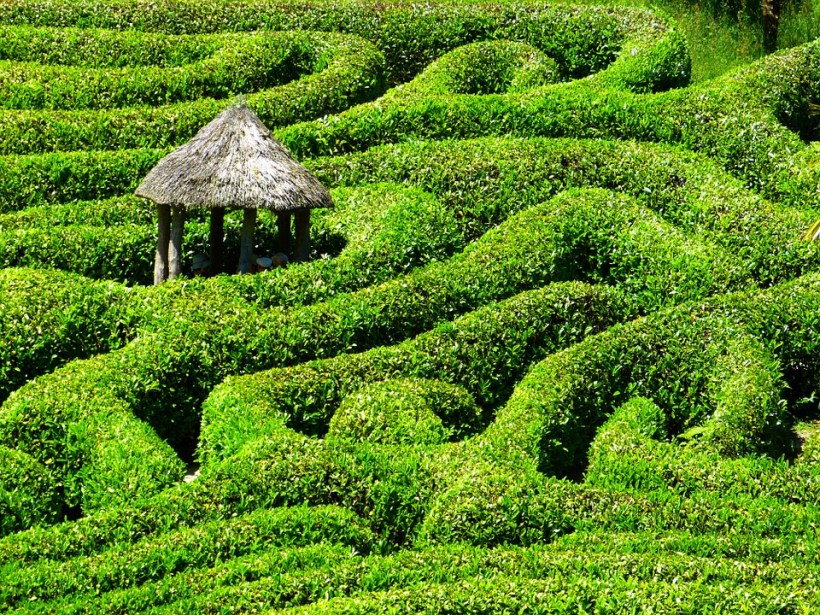
In the Korean Zen tradition, one generally meditates on the koan, What is this? This question derives from an encounter between the Sixth Patriarch, Huineng (638–713 C.E.), and a young monk, Huaijang. The most important part of the practice is for the question to remain alive and for your whole body and mind to become a question. In Zen they say that you have to ask with the pores of your skin and the marrow of your bones. A Zen saying points out: Great questioning, great awakening; little questioning, little awakening; no questioning, no awakening. 

Martine Batchelor, What is this?
In a daze

Day and night gifts keep pelting down on us. If we were aware of this, gratefulness would overwhelm us. But we go through life in a daze. A power failure makes us aware of what a gift electricity is; a sprained ankle lets us appreciate walking as a gift, a sleepless night, sleep. How much we are missing in life by noticing gifts only when we are suddenly deprived of them.

 David Steindl-Rast

Empty your boat

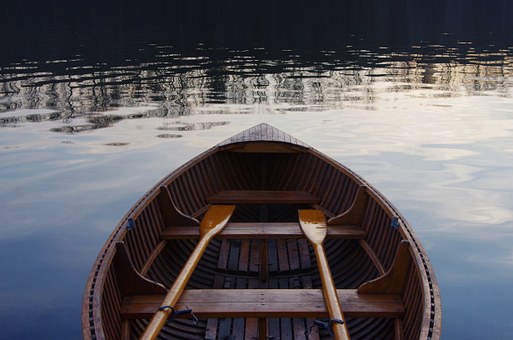
Chuang Tzu tells about a man crossing a river when an empty skiff slams into his. The man does not become angry, as he would if there was a boatman in the other skiff.

So, says Chuang Tzu, “Empty your own boat as you cross the river of the world.”

In solitude, I can empty my boat. Can I do it when I’m in the company of other people? Maybe: Solitude does not necessarily mean living apart from others; rather, it means never living apart from one’s self. It is not about the absence of other people – it is about being fully present to ourselves, whether or not we are with others.

Parker J. Palmer, On the Brink of Everything: Grace, Gravity, and Getting Old

Leave it alone

When you have an unpleasant feeling, don’t grab hold of it and turn it over and over.
Instead, leave it alone so it can flow.
The wave of emotion will naturally recede on its own
as long as you don’t feed it by dwelling on it.
To get food unstuck from a frying pan, just pour water in the pan and wait.
After a while the food loosens on its own.
Don’t struggle to heal your wounds.
Just pour time into your heart and wait.
When your wounds are ready, they will heal on their own.

Haemin Sunim, The Things You can see Only when You Slow Down

Breathe out gratitude

No, no, there is no going back.
Less and less you are
that possibility you were.
More and more you have become
those lives and deaths
that have belonged to you.

Wendell Berry,  Sabbaths – 1993, I


This poem is not first and foremost about aging and dying. It’s about generosity, one of the most life-giving of all virtues. Generosity does not require material abundance. When I think back on the many people who have been so generous toward me, I never think of money or “things.” Instead, I think of the way they gave me their presence, their confidence, their affirmation, support, and blessing — all gifts of “self” that any of us can give.

And where does generosity come from? Perhaps from another life-giving virtue, the one called gratitude. When I take the time to breathe in my life and breathe out my gratitude for the gifts I’ve been given, only one question arises: “How can I keep these gifts alive?”

I know only one answer: “Become a giver yourself, pass your gifts along, and do it extravagantly!” As Wendell Berry says, “Every day you have less reason/not to give yourself away.”

Parker Palmer, Breathe In My Life, Breathe Out My Gratitude

Let go of burdens

During meditation, we should not develop a mind which accumulates and holds on to things, but instead we develop a mind which is willing to let go of things, to let go of burdens. Outside of meditation we have to carry the burden of our many duties, like so many heavy suitcases, but within the period of meditation so much baggage is unnecessary. So, in meditation see how much baggage you can unload. Think of these things as burdens, heavy weights pressing upon youI like to begin at the very simple stage of giving up the baggage of past and future.

Abandoning the past means not even thinking about your work, your family, your commitments, your responsibilities, your history, the good or bad times you had as a child…, you abandon all past experiences by showing no interest in them at all. As for the future, the anticipations, fears, plans, and expectations let all of that go too. This future is known to the wise as uncertain, unknown and so unpredictable. It is often complete stupidity to anticipate the future, and always a great waste of your time to think of the future in meditation.

When you have abandoned all past and all future, it is as if you have come alive. You are here, you are mindful. This is the first stage of the meditation, just this mindfulness sustained only in the present.

Ajahn Brahm, Sustained Attention on the Present Moment