…including weather within and without

snow Feb 1 2012

We had a wild, wet and windy Sunday, and snow early this morning,  and we see the reports of  very cold weather in the US and in Eastern Europe. Always a useful way to practice – we see that we like to label our experience (“bad weather today”) and it also prompts us to reflect on how we are working with the changing conditions in our inner lives and in each day.  as this quote from Toni Parker reminds us:

We call it “weather” but what is it really? Wind. Rain. Clouds slowly parting. Not the words spoken about it, but just this darkening, blowing, pounding, wetting, and then lightening up, blue sky appearing amidst darkness, and sunshine sparkling on wet grasses and leaves. In a little while there will be frost, snow and ice-covers. And then warming again, melting, oozing water everywhere. On an early spring day the dirt road sparkles with streams of wet silver. So — what is “weather” other than this incessant change of earthly conditions and all the human thoughts, feelings, and undertakings influenced by it: Like and dislike. Depression and elation.  Creation and destruction? No entity “weather” to be found except in thinking and talking about it.

Now — is there such an entity as “me,” “I,” “myself?” Or is it just like the “weather” — an ongoing, ever-changing stream of ideas, images, memories, projections, likes and dislikes, creations and destructions, which thought keeps calling “I,” “me,” “Toni,” and thereby solidifying what is evanescent? What am I really, truly, and what do I think and believe I am? Are we interested in exploring this amazing affair of “myself” from moment to moment?

Toni Parker, The Wonder of Presence and the Way of Meditative Inquiry

Moments to celebrate in life

File:Tickle.jpg

Children, old people, vagabonds laugh easily and heartily:

they have nothing to lose and hope for little.

In renunciation lies a delicious taste of simplicity and deep peace.

Matthieu Ricard

photo kyle flood

Through the mist

File:Forest valley in mist - geograph.org.uk - 346599.jpg

It might be liberating to think of human life as informed by losses and disappearances just as much as by gifted appearances, allowing a more present participation and witness to the difficulty of living. What is real can never be fully taken away; its essence always remains. It might set us a little freer to believe that there is no path in life – in the low valley… or abroad in the mountain night –  that does not lead to some form of heartbreak when the outer narrative disappears and then reappears in a different form. If we are sincere, every … relationship will break our hearts in order to enlarge our understanding of our self and that strange other with whom we have promised ourselves to the future.  We learn, grow and become compassionate and generous as much through exile as homecoming; as much through loss as gain, as much through giving things away as in receiving what we believe to be our due.

David Whyte, The Poetic Narrative Of Our Times

photo lis burke

Tolerance for uncertainty

File:The steep slope down from Meall a Coire Leith - geograph.org.uk - 1002952.jpg
There is a deep-seated tendency, it’s almost a compulsion, to distract ourselves, even when we’re not consciously feeling uncomfortable. There’s a background hum of edginess, boredom, restlessness. As I’ve said, during my time in retreat where there were almost no distractions, even there I experienced this deep uneasiness.…..We feel this uneasiness because we’re always trying to get ground under our feet and it never quite works. We’re always looking for a permanent reference point, and it doesn’t exist. Everything is impermanent. Everything is always changing…Nothing is pin-down-able the way we’d like it to be. This is not actually bad news, but we all seem to be programmed for denial. We have absolutely no tolerance for uncertainty
Pema Chodron, Taking the Leap
photo david brown

Seeing the different people

File:Oncologic Drugs Advisory Committee Meeting (080) (7395918716).jpg
There are many different ideas of “you” in your mind, each with its own agenda. Each of these “you’s” is a member of the committee of the mind. This is why the mind is less like a single mind and more like an unruly throng of people: lots of different voices, with lots of different opinions about what you should do. Some members of the committee are open and honest about the assumptions underlying their central desires. Others are more obscure and devious. This is because each committee member is like a politician, with its own supporters and strategies for satisfying their desires. One of the purposes of meditation is to bring these dealings out into the open, so that you can bring more order to the committee — so that your desires for happiness work less at cross purposes, and more in harmony as you realize that they don’t always have to be in conflict.
Thanissaro Bhikkhu

Sunday Quote: Every day as something new

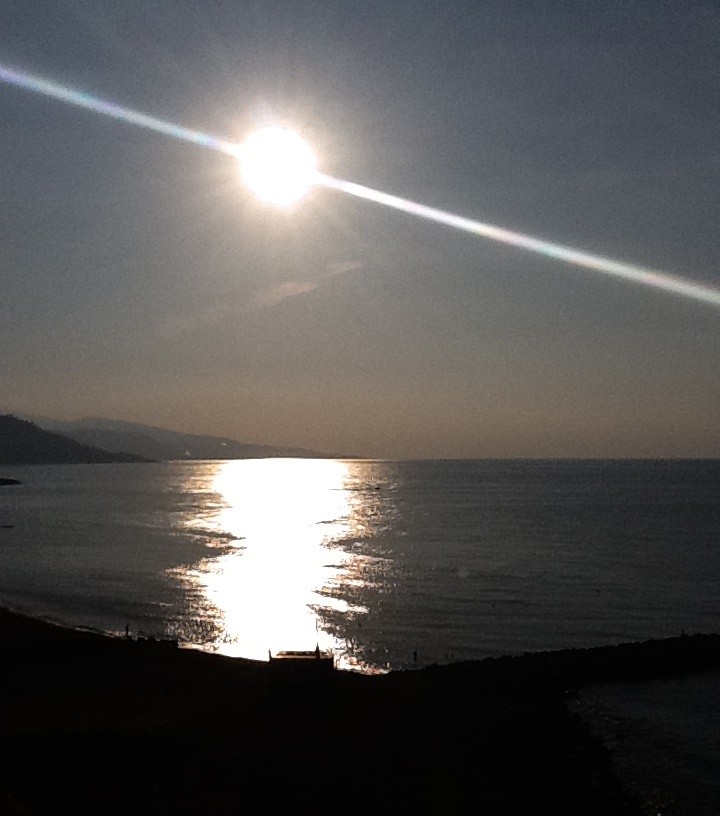
earlz morning menton

Abba Poemen said about Abba Pior

that every single day he made a fresh beginning.

Abba Poemen (c. 340–450) was an Egyptian monk and one of the early Desert Fathers