Wonder and Happiness

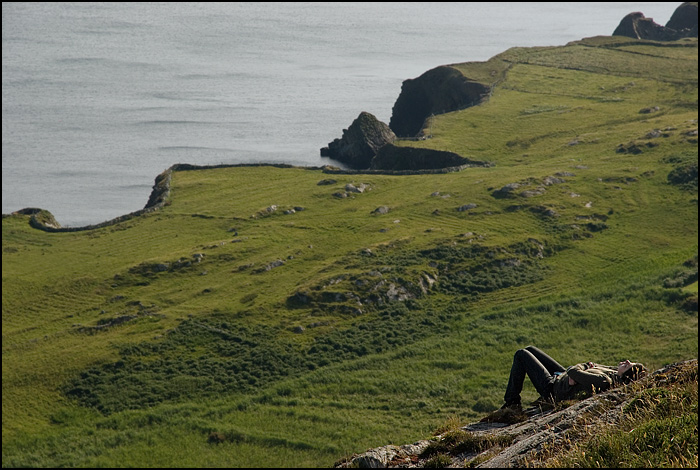
A person I have known for some years now just recently got engaged. It is a time of celebration and joy. Moments like these bring a smile to all and has made me realize how much I like the word happiness  However I am slow to use it and it nearly always provokes a strange look on the faces of those who hear. It seems almost presumptious to speak as if we have any right to expect full happiness. And yet happiness has been the concern of humans since earliest times, as we can see in the Greek Philosophers reflections on happiness. And we are told that among Jesus’ first words in his early Sermon on the Mount was “Happy are those who…. ”  In  more recent times, Daniel Gilbert has made the focus of his study happiness and what makes us happy, as seen in his excellent book Stumbling on Happiness.

We are told that happiness is deep within us, even if we do not feel it.  However,  it seems to me that we have to work at it every day. It can occur even when times are tough, if we cultivate a spirit of noticing and wonder. We can practice the brain’s capacity for happiness by explicitly noting to ourselves the moments which are pleasant in each day, even the simplest.  As in response to my friend’s engagement we can mentally toast these moments. And we can go further: we can create occasions  of celebration in even the smallest events in our lives. This reminds us that life is not there just to be endured but to be celebrated. As Brother Roger of Taize used to say, we should ensure that the spring of jubilation will never dry up in our hearts.

The eye is meant to see things. The soul is here for its own joy.

Rumi

Where we worship

It may indeed be phantasy, when I essay to draw from all created things

Deep, heartfelt, inward joy that closely clings;

And trace in leaves and flowers that round me lie,  lessons of love and earnest piety.

So let it be ; and if the wide world rings in mock of this belief, it brings  Nor fear, nor grief, nor vain perplexity.

So will I build my altar in the fields,

And the blue sky my fretted dome shall be,

And the sweet fragrance that the wild flower yields

Shall be the incense I will yield to Thee…

Samuel Taylor Coleridge

Leaves

Autumn is a second
season when every
leaf is a flower.

Albert Camus

Comfort for the soul

Like Saint Francis yesterday, Mary Oliver finds comfort in the singing of a bird. For us too, nature is a great place to find comfort in our moments of difficulty. Sometimes we get glimpses of a deeper reality, when our heart opens wide and time seems to stand still:


….. finally I heard him among the first leaves—
then I saw him clutching the limb

in an island of shade, with his red-brown feathers, all trim and neat for the new year.

First, I stood still

and thought of nothing.
Then I began to listen.
Then I was filled with gladness—
and that’s when it happened,

when I seemed to float, to be, myself, a wing or a tree—
and I began to understand what the bird was saying,

and the sands in the glass
stopped
for a pure white moment

while gravity sprinkled upward

like rain, rising, and in fact
it became difficult to tell just what it was that was singing—
it was the thrush for sure, but it seemed

not a single thrush, but himself, and all his brothers,
and also the trees around them,
as well as the gliding, long-tailed clouds
in the perfectly blue sky— all, all of them

were singing.
And, of course, yes, so it seemed,
so was I.
Such soft and solemn and perfect music doesn’t last

for more than a few moments.
It’s one of those magical places wise people
like to talk about.
One of the things they say about it, that is true,

is that, once you’ve been there,
you’re there forever.
Listen, everyone has a chance.
Is it spring, is it morning?

Are there trees near you,
and does your own soul need comforting?
Quick, then— open the door and fly on your heavy feet; the song
may already be drifting away.

Mary Oliver, Such Singing in the Wild Branches (2003)

Welcoming wolves to the table

Today is the feastday of St Francis of Assisi (1182 – 1226), perhaps the most popular and likeable Christian saint. The example of his extraordinary heart reminds us of the joy that can be found in a life of meaning and service. Unlike some other saints he seems approachable. In his connection to nature he opens us out to all of creation. I am reminded of two stories from his life, both, not surprisingly, involving animals.

The first is the famous story about the wolf which was terrorizing the people of the town of Gubbio. It had killed several people, and they were now afraid to leave their homes. Francis heard about this and decided to go approach the wolf . When he came upon the wolf, it lunged at him, mouth open wide, about to bite. Francis simply, gently,  greeted the wolf as “Brother Wolf” and spoke to it, telling it not to harm him.  It stopped and lay down at his feet.  Francis and the wolf made a deal: the town would provide food for the wolf for the rest of its life, in exchange for the wolf’s ceasing to harm them. We are told the wolf  placed its right paw into Francis’ hand, and so the wolf lived in peace with the people of Gubbio for the rest of its life.

It is clear Francis was a peacemaker and reconciler – in this case helping the people in a society deal with what pushed them in fear to close their doors and withdraw. But I like to think of this story as a way that we can deal with our fears, the emotions that arise within us and scare us, like anger, jealousy and dislike of others. The stuff that relationships bring up in our lives.  Our normal first response is to be disturbed or frightened by these strong emotions and we move to push them away. However, in themselves,  these are not the problem, but it is our mind’s relationship to them that is. So what learn from Francis is to approach the things that frighten us – not to be afraid of the frightening wolves within us – but to begin by simply, gently looking at them directly. What would it be like to experiment with seeing them just as part of who we are at that moment and instead of pushing them away, to invite them to come close and to stay. As if they are part of the family – “brother wolf”, “brother anger” “brother fear” – and welcome them to the table? This is the practice: to first experience the anxiety you are going through – if it is not too overwhelming – as an embodied feeling, with no shoulds or shouldn’t about it. Our wounds – even the most frightening,  shameful, or self-inflicted ones – do not need to become a moment for showing ourselves further violence. They are, like all our practice, to be occasions of self-compassion and a letting go of judgment.

A second story tells us that Francis and Brother Leo were about to eat when he heard a nightingale singing. Francis seemed to have a special fondness for birds. So he suggested to Leo that they should also sing out their love along with the bird. Leo made the excuse that he was no singer, but Francis lifted up his voice and, line after line, sang a duet with the nightingale, until, late into the night, he tired and had to admit that the bird sang out his joy better than he could. I love the way that Francis opened his heart with all of creation and did not let the self- conscious, doubting “I am not a singer” story – which we all tell ourselves – get in the way. His heart naturally wanted to share and he did not let his fears get in the way.

Allowing ourselves some quiet in our busy lives

Finding quiet time isn’t a luxury; it’s essential for protecting our health.  It allows us to rest the body and the mind in a world that increasingly values speed and distraction.

After a pebble touches the surface of the river, it allows itself to sink slowly. It will reach the bed of the river without any effort. Once the pebble is at the bottom of the river, it continues to rest. It allows the water to pass by.

I think the pebble reaches the bed of the river by the shortest path because
it allows itself to fall without making any effort. During our sitting meditation we can allow ourselves to rest like a pebble. We can allow ourselves to sink naturally without
effort to the position of sitting, the position of resting.

Resting is a very important practice; we have to learn the art of resting. Resting is the first part of meditation. You should allow your body and your mind to rest. Our mind as well as our body needs to rest. The problem is that not many of us know how to allow our body and mind to rest. We are always struggling; struggling has
become a kind of habit.

When an animal in the jungle is wounded, it knows how to find a quiet place, lie down and do nothing. The animal knows that is the only way to get healed-to lay down and just rest, not thinking of anything, including hunting and eating.  What it needs is to rest, to do nothing, and that is why its health is restored.  In our consciousness there are wounds also, lots of pains. Our consciousness also needs to rest in order to restore itself. Our consciousness is just like our body. Our body knows how to heal itself if we allow it the chance to do so.

Thich Nhat Hahn