We can develop how content we are

Until recently, psychologists believed that the degree to which a person can naturally experience happiness, referred to as a “set point”, was innate and unchangeable. We now know that, like weight, it’s more of a predetermined range of potential rather than a single fixed number. Genetics influence about half of a person’s total happiness level and circumstances another 10 percent.

But the other 40 percent is affected by “intentional activity”, meaning anything we do consistently and on purpose, whether a positive habit, such as regularly meditating, or a negative one, such as drinking excessively every night

Terri Trespicio, “Thank-You Therapy”, Body & Soul Magazine, Spetember 2008

May nothing disturb you: Nada Te Turbe

Today is the feastday of Teresa of Avila, another formidable nun, this time from the 16th Century. She lived in an age of great social change, somewhat like today, and was a strong leader, founding monasteries at a time when most preferred women to be relegated to the kitchen and the home. She was intensely practical and deeply human. However she combined her achievements with a very profound interior life. She reminds us not to neglect the dimension of the soul in this age with our focus on progress and speed.

Despite suffering ill health she had a great trust that a Higher Power was guiding her life and her work. Even if she could not see where things were leading she trusted. These handwritten words were found after her death. May they support all who struggle this evening. The musical version comes from the monastery at Taize, not too far away from here in Bourgogne.

Let nothing disturb you,
Let nothing frighten you,
Everything passes.

God does not go away.
Patience
can attain anything.
He who has God within,
does not lack anything.

Nada te turbe, nada te espante; quien a Dios tiene nada le falta.

Wonder and Happiness

A person I have known for some years now just recently got engaged. It is a time of celebration and joy. Moments like these bring a smile to all and has made me realize how much I like the word happiness  However I am slow to use it and it nearly always provokes a strange look on the faces of those who hear. It seems almost presumptious to speak as if we have any right to expect full happiness. And yet happiness has been the concern of humans since earliest times, as we can see in the Greek Philosophers reflections on happiness. And we are told that among Jesus’ first words in his early Sermon on the Mount was “Happy are those who…. ”  In  more recent times, Daniel Gilbert has made the focus of his study happiness and what makes us happy, as seen in his excellent book Stumbling on Happiness.

We are told that happiness is deep within us, even if we do not feel it.  However,  it seems to me that we have to work at it every day. It can occur even when times are tough, if we cultivate a spirit of noticing and wonder. We can practice the brain’s capacity for happiness by explicitly noting to ourselves the moments which are pleasant in each day, even the simplest.  As in response to my friend’s engagement we can mentally toast these moments. And we can go further: we can create occasions  of celebration in even the smallest events in our lives. This reminds us that life is not there just to be endured but to be celebrated. As Brother Roger of Taize used to say, we should ensure that the spring of jubilation will never dry up in our hearts.

The eye is meant to see things. The soul is here for its own joy.

Rumi

Where we worship

It may indeed be phantasy, when I essay to draw from all created things

Deep, heartfelt, inward joy that closely clings;

And trace in leaves and flowers that round me lie,  lessons of love and earnest piety.

So let it be ; and if the wide world rings in mock of this belief, it brings  Nor fear, nor grief, nor vain perplexity.

So will I build my altar in the fields,

And the blue sky my fretted dome shall be,

And the sweet fragrance that the wild flower yields

Shall be the incense I will yield to Thee…

Samuel Taylor Coleridge

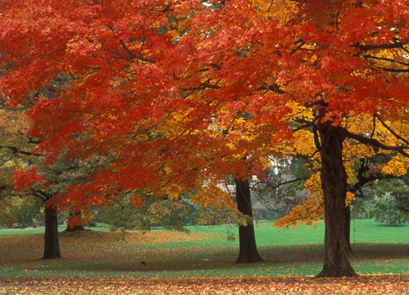
Leaves

Autumn is a second
season when every
leaf is a flower.

Albert Camus

Comfort for the soul

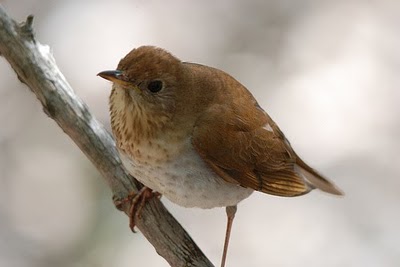
Like Saint Francis yesterday, Mary Oliver finds comfort in the singing of a bird. For us too, nature is a great place to find comfort in our moments of difficulty. Sometimes we get glimpses of a deeper reality, when our heart opens wide and time seems to stand still:


….. finally I heard him among the first leaves—
then I saw him clutching the limb

in an island of shade, with his red-brown feathers, all trim and neat for the new year.

First, I stood still

and thought of nothing.
Then I began to listen.
Then I was filled with gladness—
and that’s when it happened,

when I seemed to float, to be, myself, a wing or a tree—
and I began to understand what the bird was saying,

and the sands in the glass
stopped
for a pure white moment

while gravity sprinkled upward

like rain, rising, and in fact
it became difficult to tell just what it was that was singing—
it was the thrush for sure, but it seemed

not a single thrush, but himself, and all his brothers,
and also the trees around them,
as well as the gliding, long-tailed clouds
in the perfectly blue sky— all, all of them

were singing.
And, of course, yes, so it seemed,
so was I.
Such soft and solemn and perfect music doesn’t last

for more than a few moments.
It’s one of those magical places wise people
like to talk about.
One of the things they say about it, that is true,

is that, once you’ve been there,
you’re there forever.
Listen, everyone has a chance.
Is it spring, is it morning?

Are there trees near you,
and does your own soul need comforting?
Quick, then— open the door and fly on your heavy feet; the song
may already be drifting away.

Mary Oliver, Such Singing in the Wild Branches (2003)