 Níl aon suáilce gan a duáilce féin. Irish Proverb
(lit. There is no virtue that does not have its own vice = There are no unmixed blessings in life)
Acceptance of life’s up and down’s may be a wiser way to start the New Year and may reflect the wisdom worked out over the centuries in some of the religious and wisdom traditions. However, it does not mean that it is easy to do. The fact that we are continually surprised and upset by changes in our life is testimony to the resilience of our belief in – and wish for – something unchanging and permanent. We want things to last, to stay as they are, as indeed sometimes they should. Therefore, every time we have an experience that brings us face to face with the reality of impermanence, such as when someone moves away, a friendship ends or we lose something we care about, we suffer, sometimes deeply. It is a reminder that it is in the nature of the human heart to form attachments, and of the flip side of being fully involved in life. However, when we come to really understand that things are not guaranteed to remain the same, or that people are not always consistent , it frees us from always reading what happened as a story about us. It also saves us from defaulting to the usual pattern of interpretation that we use, such as that we are to blame or that we did not try hard enough.
It would seem that some awareness of the impossibility of holding onto things exactly as we would like to has been around since time began. Different cultures have tried to understand it in different ways. We can see this in the Irish proverb quoted at the start of the post. The Ancient Greeks tried to understand it by blaming the gods. As we can see in this extract from the Iliad, they believed that humans received either a mixture of up’s and down’s, good and evil, or received suffering, but never received pure good times that lasted forever: On the floor of Jove’s palace there stand two urns, the one filled with evil gifts, and the other with good ones. He for whom Jove the lord of thunder mixes the gifts he sends, will meet now with good and now with evil fortune; but he to whom Jove sends none but evil gifts will be pointed at by the finger of scorn, the hand of famine will pursue him to the ends of the world, and he will go up and down the face of the earth, respected neither by gods nor men.
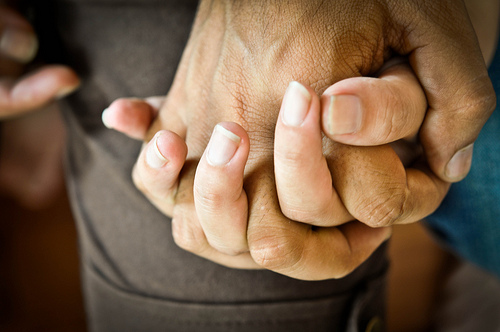 Happiness, anxiety, joy, resentment — we have many words for the many emotions we experience in our lifetimes. But deep down, there are only two emotions: love and fear. All positive emotions come from love, all negative emotions from fear. From love flows happiness, contentment, peace, and joy. From fear comes anger, hate, anxiety and guilt.




 Mindfulbalance