How to develop calm in the heart

A beautiful quote from the Buddha on how to develop our heart and move it towards happiness. We let go of the past’s hurts and our worries about the future by staying in the present. Then we hold whatever is happening within us,  in awareness, without getting hooked by it or identifying with it. Mindfulness is really re-mindfulness, remembering to come back, non-judgmentally, to the here-and-now. It allows us work with the inner fabric of what is happening in our heart and mind at this very moment.

You shouldn’t chase after the past
or place expectations on the future.
What is past is left behind.
The future is as yet unreached.
Whatever quality is present
you clearly see, right there,
right there.
Not taken in; unshaken.
That’s how you develop the heart.

Bhaddekaratta Sutta

Recommended Summer Reading 4

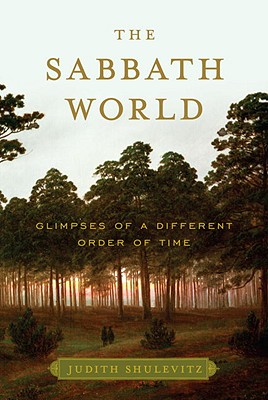
A book that is not directly about Meditation or Mindfulness, but which does impact upon stress reduction, The Sabbath World: Glimpses of A Different Order of Time, is a beautiful work which discusses our use of time by reflecting on the millenia-old practice of the Sabbath rest. The author, Julie Shulevitz,  a successful journalist at the New York Times, found herself increasingly uneasy with  the speeded-up and frantic pace of modern life. She decided to return to look at the meaning and value of  the practice which had been honoured in her Jewish childhood – and which she rebelled against –   the setting aside of a special time which was the Sabbath, and see if it made any sense in this modern age:

Americans, once the most Sabbatharian people on earth, are now the most ambivalent on the subject. On the one hand we miss the Sabbath. When we pine for escape from the rat race; when we check into spas, yoga centers, encounter weekends, spiritual retreats; when we fret about the disappearance of a more old-fashioned time, with its former, generally agreed-upon rhythms of labor and repose; when we deplore the increase in time devoted to consumerism; when we complain about the commercialization of leisure, which turns fun into work, and requires military-scale budgeting and logistics and interactions with service personnel – whenever we worry about these things we are remembering the Sabbath, its power to protect us from the clamor of our own desires.

The book that unfolds from this starting point is partly a personal memoir, partly a reflection on the role of the spiritual in life, part history and cultural analysis, and is written in a lovely, engaging prose. I picked it up two weeks ago and read it easily over a few days as it deals with its big topic – and the philosophical and life reflections prompted by it –   quite lightly, without being superficial. Although it takes as its starting point a religious practice, it is really a long reflection on the anthropological roots beneath all religious acts, the need for balance and the difficulty we have today in finding it. What makes it appealing is that one can sense the author’s desire to find what is meant by home and meaningful ritual,  and her search for the  inner space to find rest in them. Her reflections can help us all consider the need to set aside some silence to reflect upon why we work in the first place  and to see the wonder and depth in life:

So why remember the Sabbath? Because the Sabbath comes to us out of the past – out of the bodies of our mothers and fathers, out of the churches on our streets, out of our own dreams – to train us to pay attention to it. And why do we need to be trained? Consider the mystery surrounding God’s first Sabbath. Why did God stop anyway? In the eighteenth century, Rabbi Elijah of Vilna…ventured this explanation: God stopped to show us that what we are creating becomes meaningful only once we stop creating and start remembering why it was worth creating in the first place.

Push beyond lazy thinking

We are so close to our thoughts, including the negative ones, that we frequently simply accept them as the truth, and in that way allow them determine how we act in certain moments. Practice allows us to not give as much substance to our thoughts and to see them simply as one of the many energies that pass through the mind. It is said that the Dalai Lama was amazed to hear that people in the West suffered from poor self-esteem or self-hatred, and replied that such a stance was not one he was familiar with. In this light it is interesting to see how this meditation teacher describes self- critical or attributional thoughts as “lazy”, hinting that there are better ways of working with the mind:

There is the laziness of feeling ourselves unworthy, the laziness of thinking, “I can’t do this. Other people can meditate, other people can be mindful, other people can be kind and generous in difficult situations, but I can’t, because I’m too stupid.” Or, alternatively, “I’m always an angry person;” “I’ve never been able to do anything in my life;” “I’ve always failed, and I’m bound to fail.” 

Jetsunma Tenzin Palmo

Moving in the right direction

Had a conversation this week which reminded me that not everything works out the way that we anticipate or wish. Life rarely proceeds so smoothly that we maintain the pure clarity or carefree existence which we glimpsed at times when we were children. It is much more complex – a succession  of ebbs and flows, of good moments and bad, of integrity and mixed motives.   In later life, the challenge is more that we reconcile the opposites that have emerged within us – the Shadow and the light, the steps forward with the setbacks – and transform them into a wholeness which allows us fully move on in  the project which is our life.  At times, however, it can be hard to see a positive direction in where we currently are, as the maps and guidelines which had guided us up to now seem hopelessly inadequate. A new paradigm is needed. We are forced to acknowledge the mystery and work out a path on our own, moving into a larger life and not the one we unconsciously thought had been mapped out for us.

Everyone should be born into this world happy
and loving everything.
But in truth it rarely works that way.
For myself, I have spent my life clamoring toward it.
Halleluiah, anyway I’m not where I started!

 And have you too been trudging like that, sometimes
almost forgetting how wondrous the world is
and how miraculously kind some people can be?
And have you too decided that probably nothing important
is ever easy?
Not, say, for the first sixty years.

Halleluiah, I’m sixty now, and even a little more,
and some days I feel I have wings.

Mary Oliver, Halleluiah.

Natural Goodness

Our mind is often very self-critical. and replays the faults and shortcomings of our life, over and over again, like a broken record.  To work with this, some meditation traditions emphasize that we focus instead on our deep underlying goodness – our true nature –  and this focus allows a practical confidence to grow, which counteracts the critical voice. We can see this approach – which shifts the orientation in our life –  in the following quotation from the great Zen teacher, Dogen. It helps balance the suggestion that our life would be better if only this or that happened, or indeed, if this or that had not happened to us.  It also recalls what is said in the first week of the MBSR programme: No matter where you are in you life, or what difficulties you are going through, there is more right with you than wrong. It is grounded in the belief that everyone, in their very essence, is in one sense fully complete. There is a gentle confidence in this perspective – no one will fall short and all things will come together to achieve that. The practice is to come to know this deeply, by direct experience.

No creature ever falls short of its own completion.

Wherever it stands it does not fail to cover the ground

Dogen

Travels outward and inward

It is no easy matter to stop short at just seeing.  Mahasi Sayadaw.

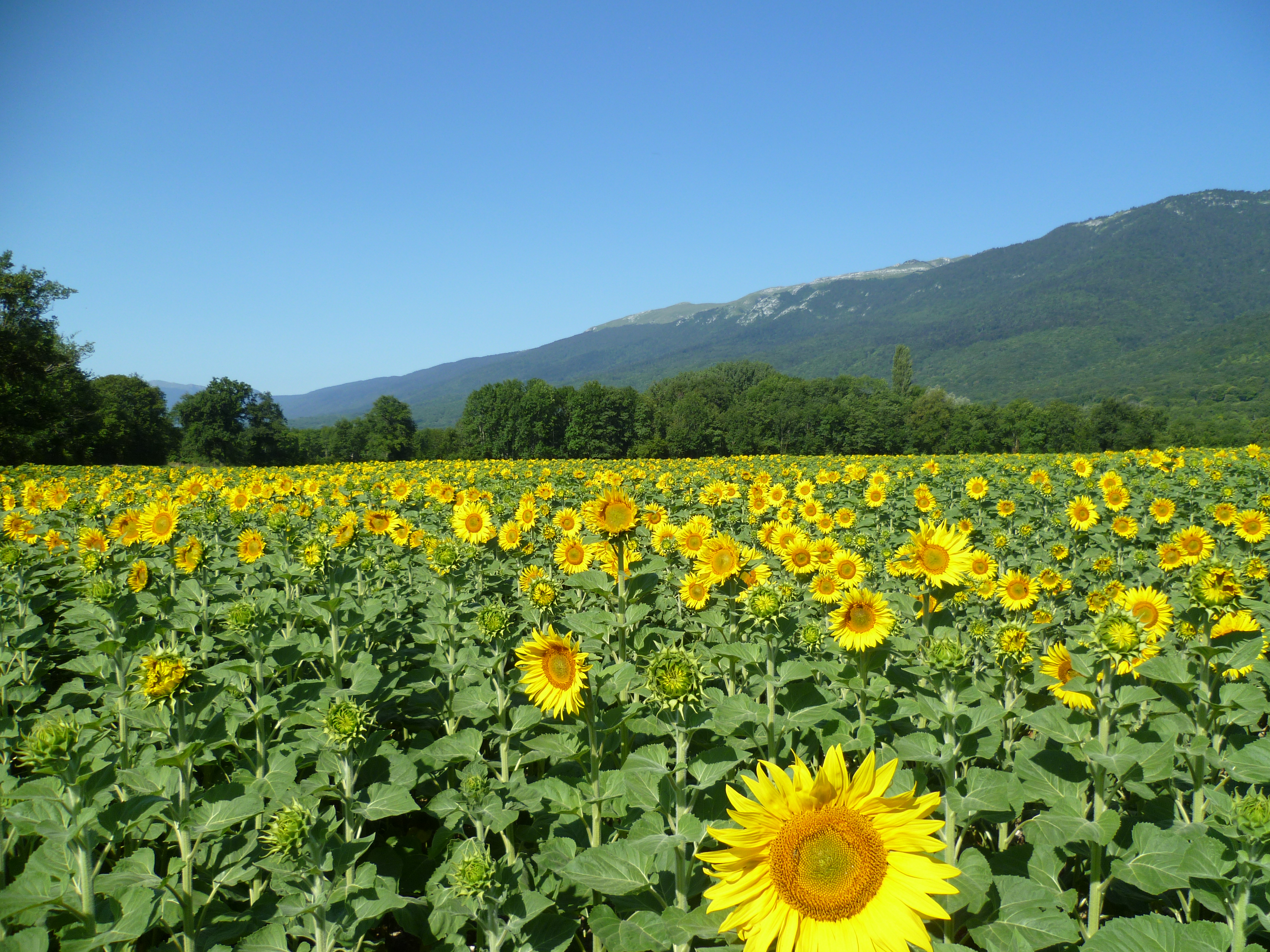
These days a lot of us are travelling, or on holidays, and come face to face with new environments or with sights of great beauty.  Breaks are good as they allow us discover a new gear between the full fast-forward at which life is normally conducted and full reverse – a kind of slowed-down,  steady pace of reflection and ease. However, sometimes the travel and the changes involved, or even seeing places of great beauty can trigger sadness or lead us into a sense of questioning or comparing the current state of our life and its history to date. This is maybe not surprising since all travel is perhaps related to our inner sense of “home”. So we notice that it is sometimes hard to just see things directly, without them setting off the continual chatter and commentary that accompanies our daily experience.  I once read Thomas Merton where he stated that he longed for some moments in which he was able to live a life without always examining it. It seems to me that we are all striving for that inner peace that allows us inhabit our lives without regret. To this end, the ascetic Bahiya came to the Buddha with the simple request – one which we all share  – to teach him the path that leads to happiness. The Buddha’s reply was incredibly simple and seems in some ways uninspiring : “When seeing, just see; when hearing, just hear; when knowing, just know; and when thinking, just think.”.  However, there is a great practical wisdom here that both points to the end result and is at the same time the method that leads to contentment. Real happiness can be learnt. It is related to the peace we get when we reduce the inner questioning and critical commentary, allowing us pay complete attention to whatever is before us, and thus live each moment fully, for what it is.

I should be content

to look at a mountain

for what it is

and not as a comment

on my life.

David Ignatow