
You don’t find peace on a mountain or in a cave;
you can travel to the place of the Buddha’s enlightenment
without getting closer to enlightenment.
What matters is being aware wherever you are, whatever you’re doing.
Ajahn Chah
You don’t find peace on a mountain or in a cave;
you can travel to the place of the Buddha’s enlightenment
without getting closer to enlightenment.
What matters is being aware wherever you are, whatever you’re doing.
Ajahn Chah

Ajahn Sucitto, Kamma, Self and Liberation
 We start by paying attention, which we all have the capacity to do. Yet when we get interested in this practice, how is it that our ability to stay calmly connected to the present moment gets somehow disrupted? People who meditate will sometimes think that the disruption is the problem. Disruption sounds like a bad word: “I got disrupted.” I got caught. When we do this meditation practice, we try to not judge anything as being bad or inappropriate. Rather we try to fold everything back into the attention. In other words, to notice this. Pay attention. What’s going on. Notice this, notice this. “Ah, I just got caught. I heard someone cough, and it reminded me that my friend was sick, and I wondered if I should visit my friend in the hospital, …… Rather than saying that I shouldn’t have had that train of thought, what we try to do is fold everything back into the attention. “Oh, look at that, that’s what a disruption is like. That’s what it’s like for the mind to get hooked, get carried away. That’s what it’s like.” If you learn to pay attention well, there is freedom to be found in attention. In paying attention, there is a way of doing it where you are not caught, trapped, oppressed, influenced, or driven by what’s going on, inside or outside yourself. And that gives you a tremendous power to go about your life. If you have the ability not to be pushed around by your inner compulsions or the pressures from the outside. We learn this by learning how to use the attention in a new way.
Gil Fronsdal
 Over the weekend I watched a documentary on Auschwitz Concentration Camp. It reminded me to go back to the book of Jacques Lusseyran, who was blinded in a school accident at the age of 8, and who became a French Resistance fighter once war broke out. In 1943, Lusseyran was arrested and sent to Buchenwald. There he helped keep a spirit of resistance and hope within the camp, nourished by a strength which he discovered within himself. In this passage he describes the approach he adopted towards life:
We had to live in the present; each moment had to be absorbed for all that was in it…. When a ray of sunshine comes, open out, absorb it to the depths of your being. Never think that an hour earlier you were cold and that an hour later you will be cold again. Just enjoy…. The amazing thing is that no anguish held out against this treatment for very long. Take away from suffering its double drumbeat of resonance, memory and fear. Suffering may persist, but already it is relieved by half.
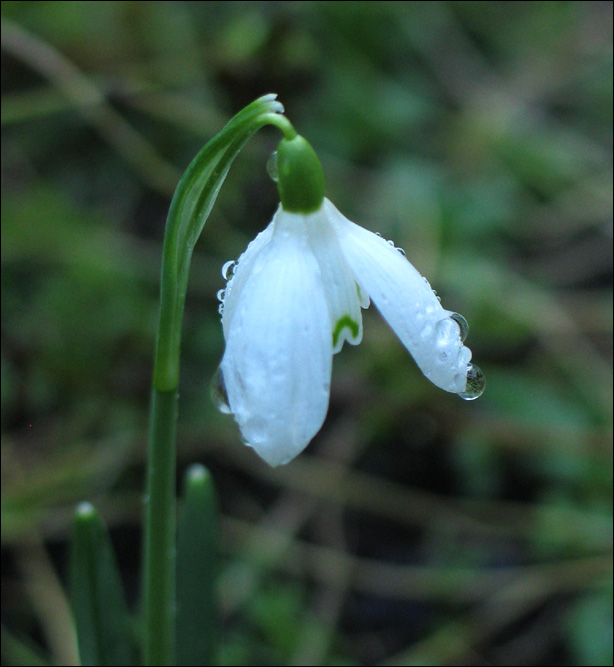 Happiness is the cessation of suffering. It is well-being. For instance, when I practice this exercise of breathing in, I’m aware of my eyes; breathing out, I smile to my eyes and realize that they are still in good condition. There is a paradise of form and colors in the world. And because you have eyes still in good condition, you can get in touch with the paradise. So when I become aware of my eyes, I touch one of the conditions of happiness. And when I touch it, happiness comes.
Thich Nhat Hahn
 Felt meanings are volatile: they move our hearts and affect how we act. Yet real as it all these feelings seem, they do change; and if I follow them, then who I seem to be changes in accordance with them. When I am being ‘me, the harassed, overworked’ my manner will have a different flavour than when I’m ‘me, welcoming you to my home.’ Actually, I have quite a few selves, or subsidiary personalities, which take centre stage dependent on the situation, pressures and natural conditions like health. My world-view and motivation may change between one of these personae (these selves that we have within us) and the next – sometimes I can hardly believe it when someone reports back to me what I said when I was in a difficult mood. In fact, I might comment that ‘I wasn’t quite myself then.’ These ranging personae, of which any one can be occupying the ‘me’ space at a given time, are based on felt meanings that arise around one’s role, function, and relationship – as well as on physical health and current attitude. The most residual ones, the ones that really feel like me, are the ones carried in the heart: ‘I am the one who has to do all the work (and receives no recognition)’; ‘I am the one who can’t manage and needs others to make decisions for me…’ and so on. They direct us through event after event, and yet we might not even recognize them as such because the mind will imagine that the feeling is being created not from some internal bias, but from the situation that’s occurring around us.
Ajahn Succitto, Kamma, Self and Liberation

